
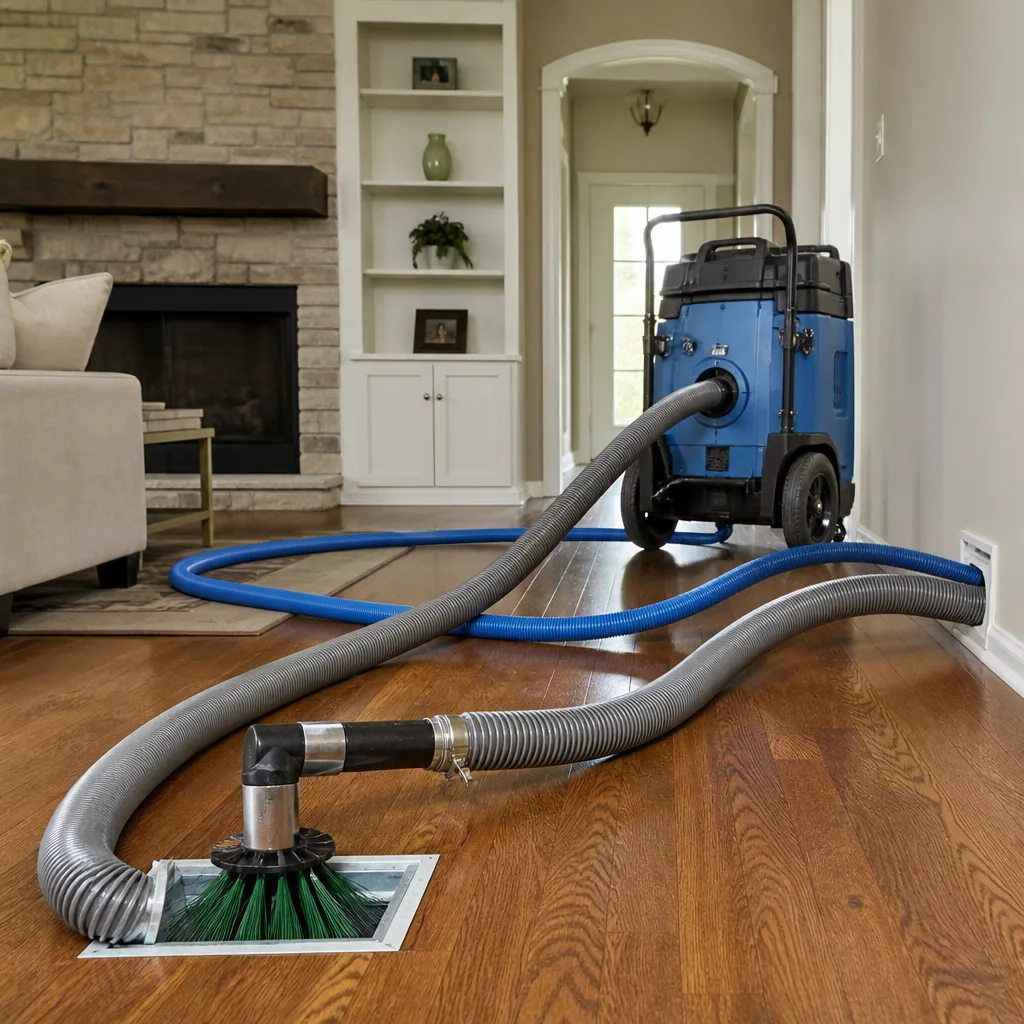
 Whole-home duct cleaning
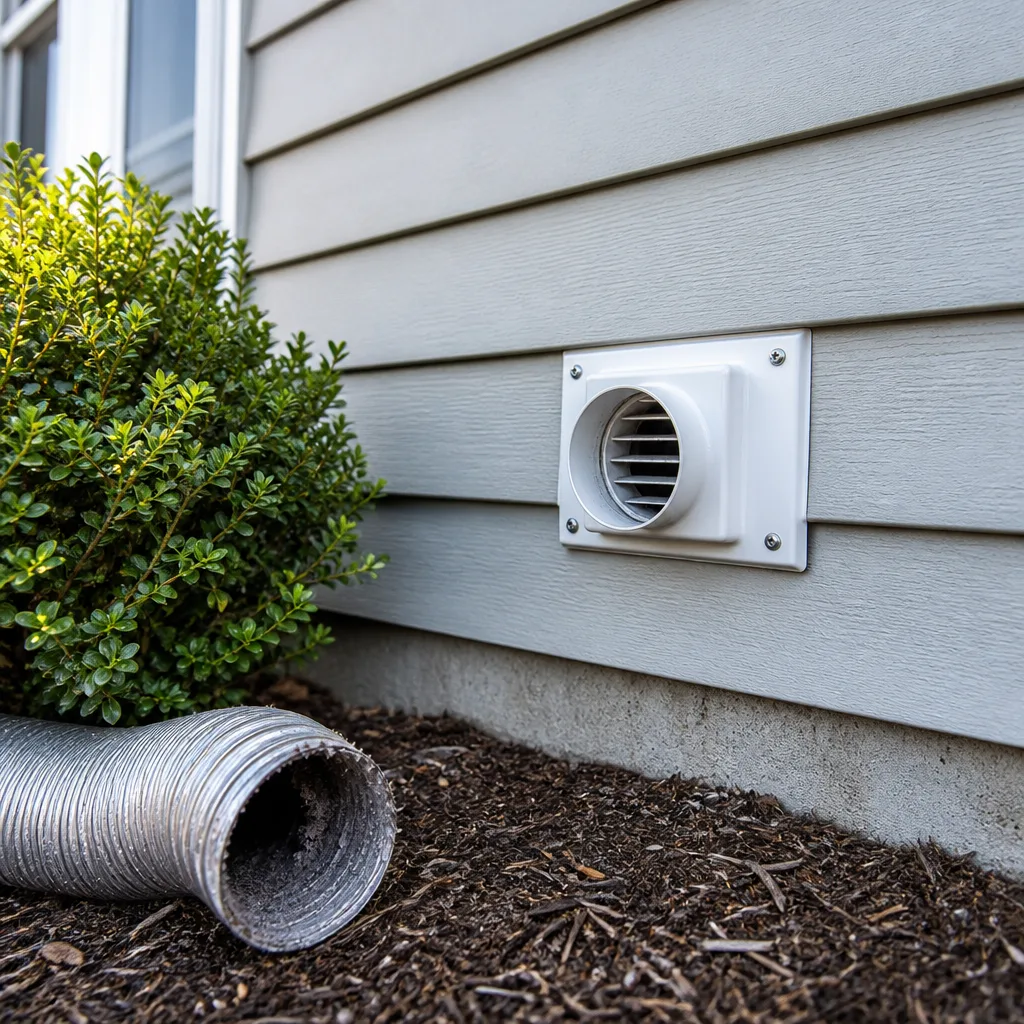 Dryer vent cleaning
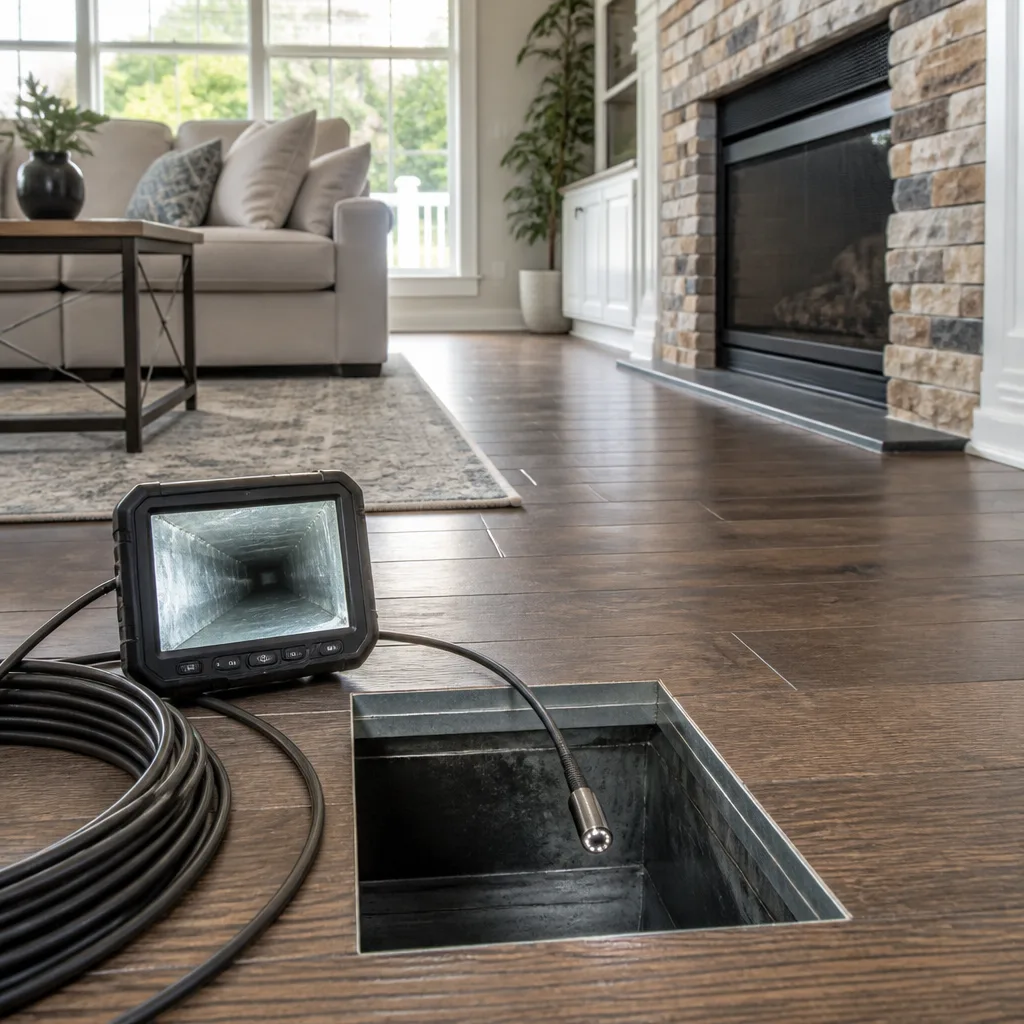 Camera inspection
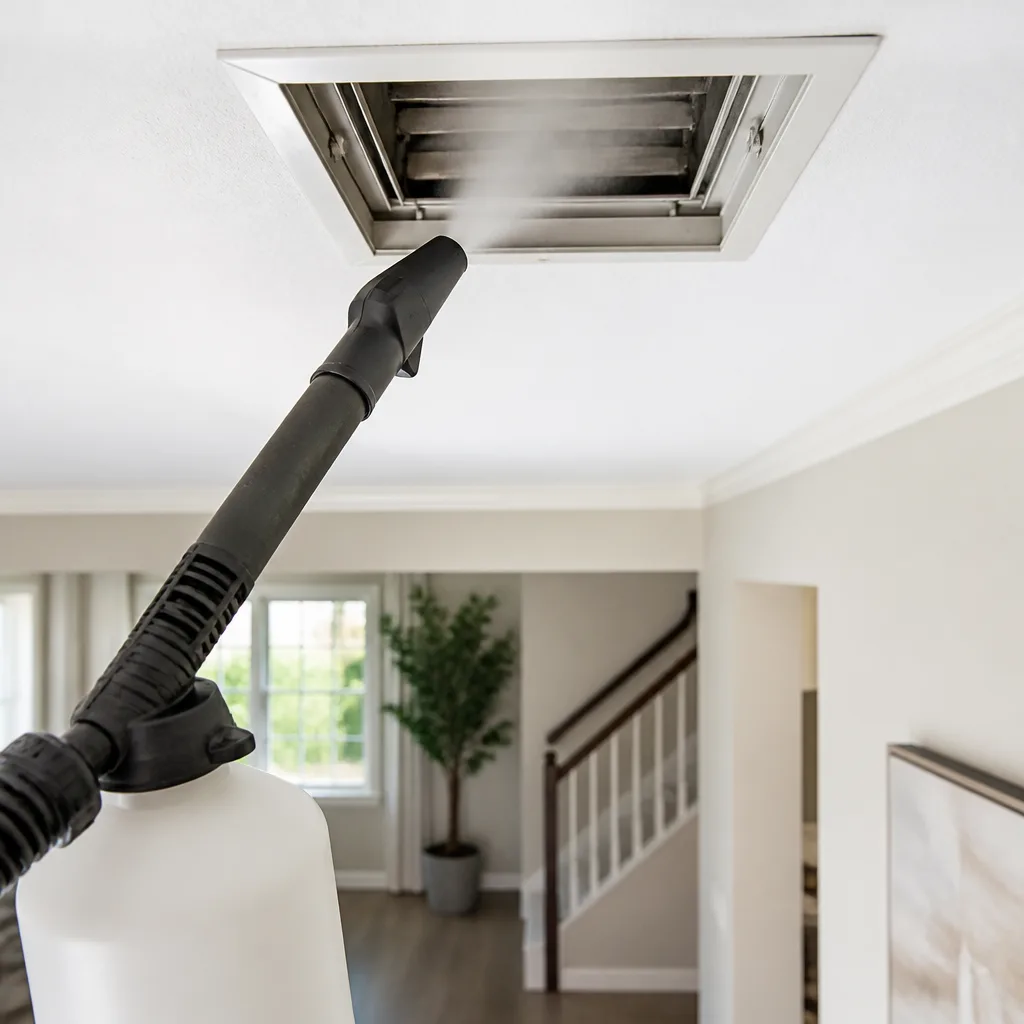 Sanitizing & deodorizing
Whole-system duct and dryer vent check with before-and-after photos - you see exactly what came out of your vents
That "$99 whole-house special" is a bait ad - the real number appears once they are in your hallway, or the "clean" is a shop-vac at the register. We photograph the inside of your ducts before and after instead.
Abatement Technologies Register & Grille Cleaning: The Houston Owner’s Guide
We stock Abatement Technologies-compatible registers and grilles and clean the surrounding duct openings on service calls across Houston. Most register and grille cleaning for a full home runs between $150 and $350, depending on how many openings you have and how heavily they’re coated with the dust-and-humidity paste Houston air is known for. Homeowners usually discover the problem when a register that used to open and close smoothly now sticks, or when they pull a grille down and find a gray felt mat of dust and condensation welded to the back side.
Here’s the thing about Abatement Technologies registers and grilles: they’re built for filtration-focused systems, so they run tighter than the big-box vents most homes have. The louvers sit closer together, and the frames seal more firmly against the duct opening. That’s good for airflow control when the system is clean. But in Houston, where a summer attic can hold 130 degrees and 80 percent humidity, that same tight construction means dust and condensation bond to the metal faster. The register becomes a filter you never asked for, and that’s exactly what we find when we pull them.
The fix is straightforward: we remove each register or grille, clean the blades and frame by hand, clean the register boot (the metal collar inside the drywall opening), and reinstall with the louvers moving freely. Most homes are done inside two hours.
Call (254) 347-2738 for a written price before any work begins.
Which Abatement Technologies Models This Applies To
Abatement Technologies manufactures registers and grilles for their HEPA-filtered and negative-pressure air systems, most commonly seen in homes that have a whole-home air purification setup installed alongside standard HVAC. The brand’s residential registers come in a few distinct styles: stamped-steel fixed-blade grilles (no damper), adjustable-barrel registers with a wheel-operated damper, and flush-face aluminum registers used on their higher-end filtration returns.
If you have an Abatement Technologies register, you’ll find a small embossed logo on the outer frame, usually in one corner. The size is stamped on the back of the louver assembly. The most common Houston installation sizes are 4×10, 4×12, 6×10, and 6×12, though older homes with punched steel registers run into nonstandard dims like 5×11 that need a custom trim plate. That’s a real gotcha: the register might be a stock 4×10, but the boot behind it could be a 1950s leftover measuring 3.75×9.5. We measure both before quoting because a register that doesn’t seat flush lets air bypass around the frame.
OEM vs aftermarket: Abatement Technologies OEM registers run higher than equivalents from Hart & Cooley or Shoemaker, and in most single-family homes the aftermarket option performs identically. The exception is on air-scrubbing or negative-pressure systems where the tighter OEM blade spacing matters for back-pressure. We’ll tell you which one applies to your setup before you spend a dollar.
Kestrel Air Duct Houston is an independent service provider and is not affiliated with Abatement Technologies.We also work on systems built around Lennox, Trane, and Carrier equipment, so if your register mismatch traces back to a mixed-brand install, we’ve seen it before.
Styles & brands we work with
Signs Your Abatement Technologies Register & Grille Cleaning Is Failing
- The damper wheel won’t turn, or turns with a gritty crunch. This is condensed humidity and fine dust binding the pivot mechanism. On Houston ground floors, especially homes on pier-and-beam with humid crawl spaces, registers seize up within two or three years of install if the boot isn’t sealed.
- Dust streaks radiating on the drywall around the register. This is “blow-by” – air escaping around the register frame instead of through the louvers. It means the frame-to-boot seal has failed and the register is doing less work than the gap around it.
- The grille is discolored or shows rust speckling at the corners. Houston’s coastal humidity will oxidize stamped steel if the finish is scratched during install. Once rust starts at a screw point, it spreads under the powder coat.
- You hear a faint whistle when the system runs with the register closed. That’s air being forced through a louver gap that’s packed with debris. The register isn’t just dirty. It’s restricting airflow and raising static pressure on your blower.
- Visible mold or mildew on the back of the grille or inside the boot. Condensation + Houston heat + dust = a biology experiment. This is the one that gets us moving fastest, especially on return-side grilles where that growth can pull straight into the air path.
Dale Whitmore has pulled registers in Heights bungalows that looked clean from the front but carried a half-inch of gray felt on the backside, and in Galleria high-rises where the issue is drywall dust from substandard boot sealing rather than outdoor humidity. Both fail differently. Both need the same first step: pull the register and look at what’s behind it.
See the difference
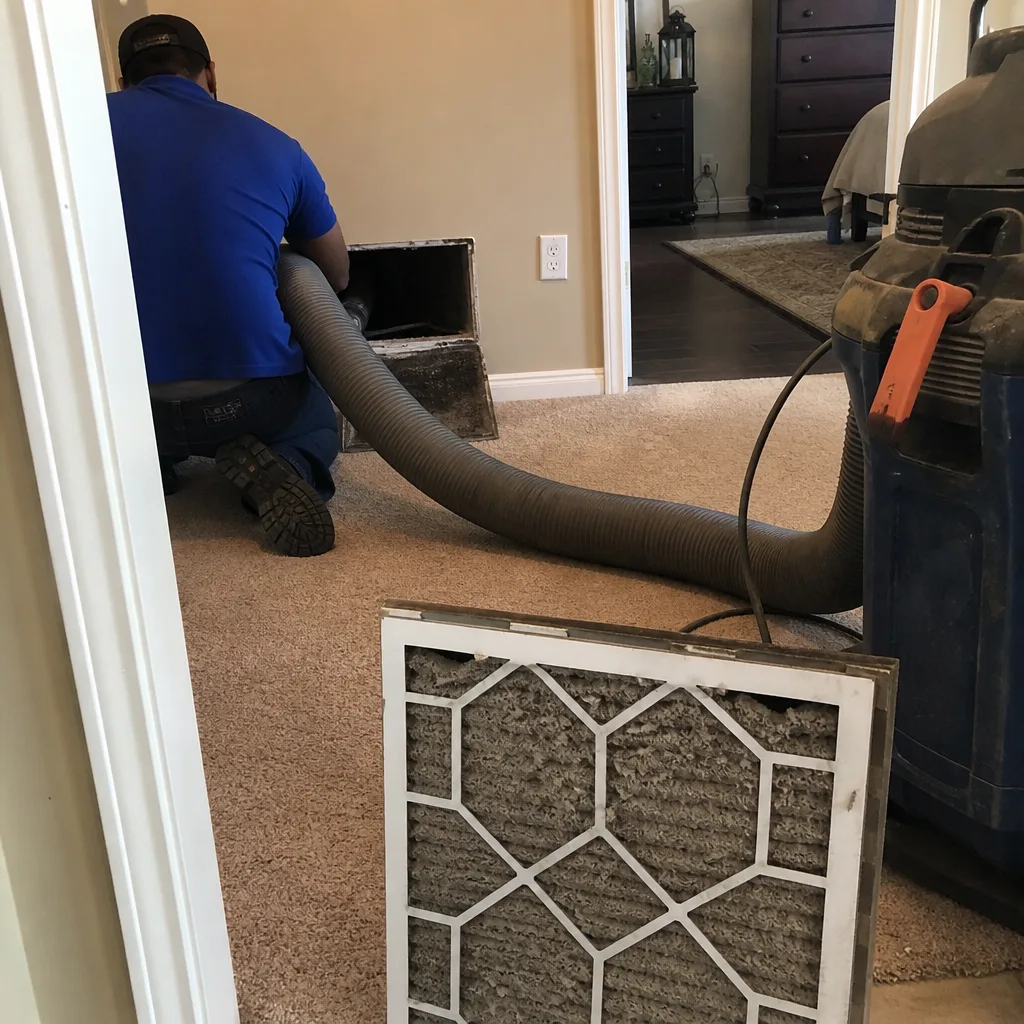 Before
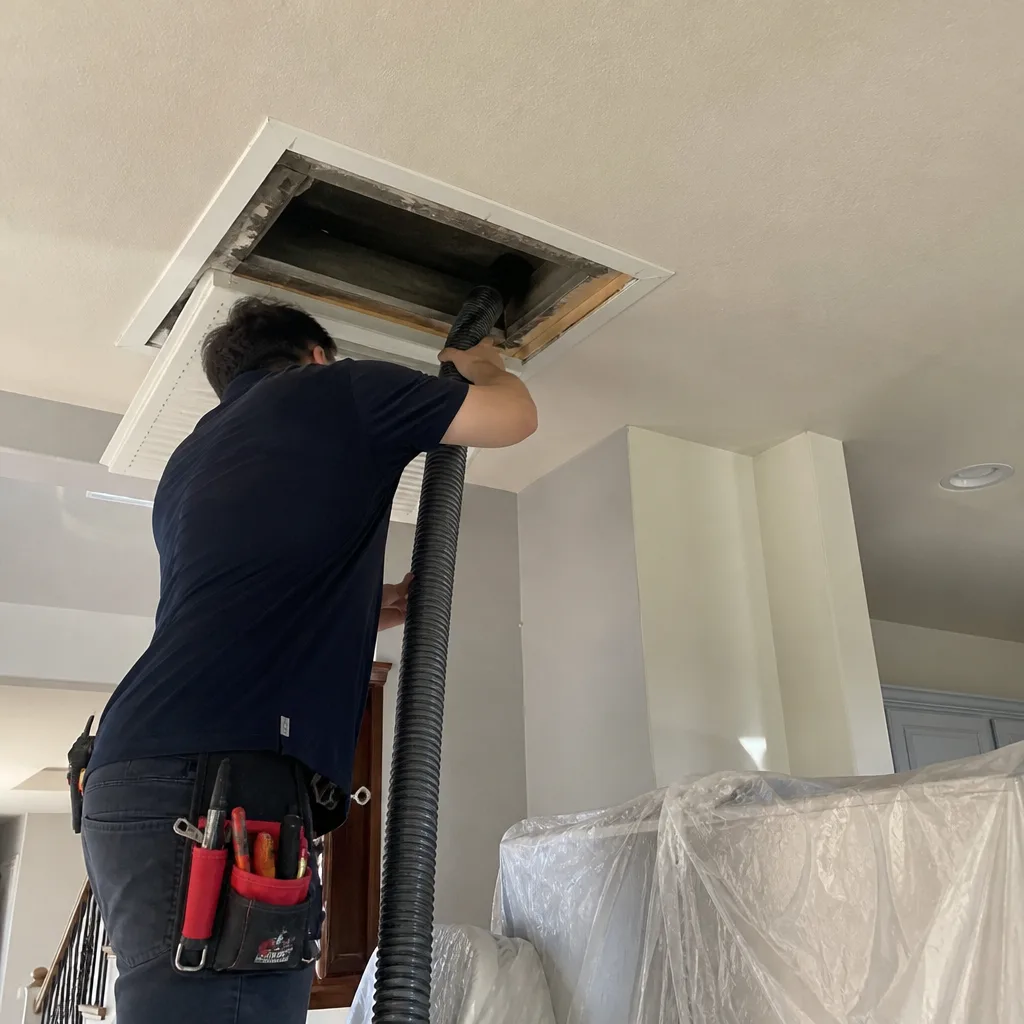 After
After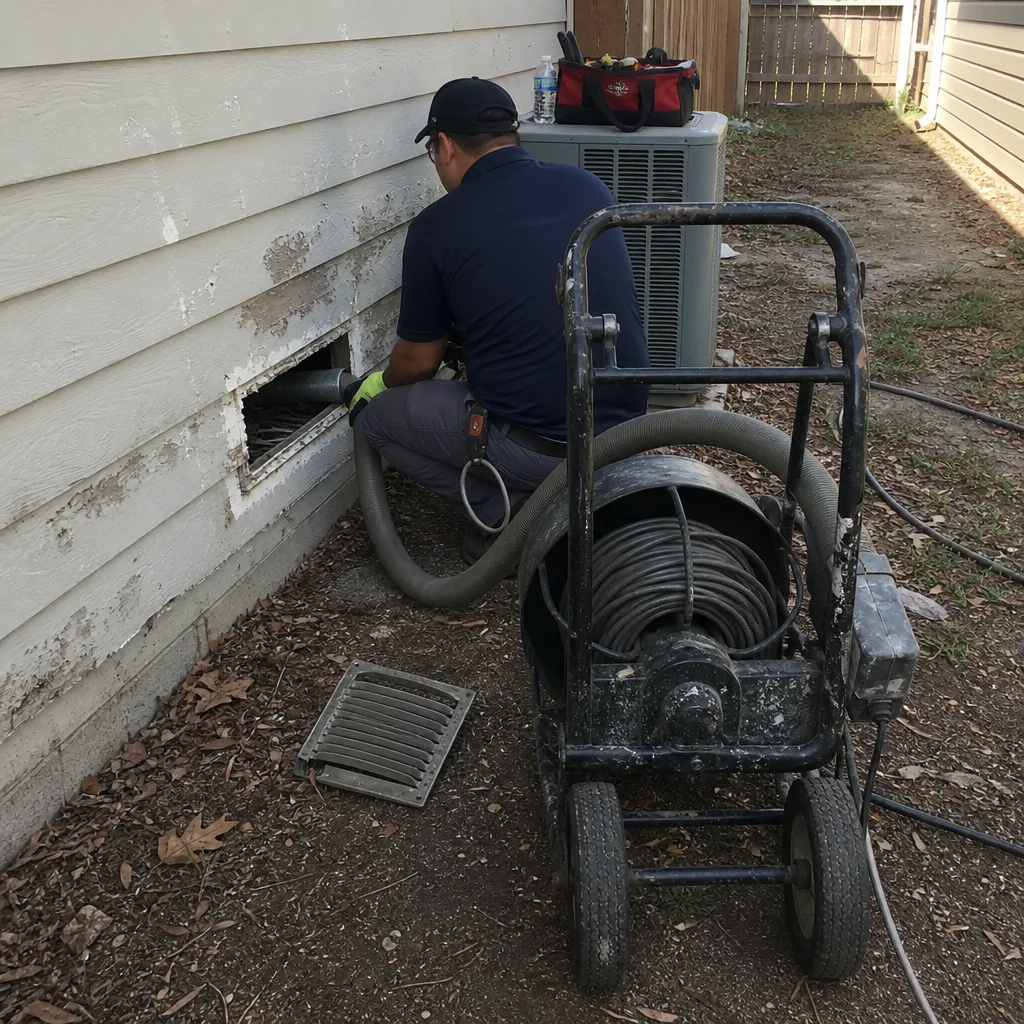 Before
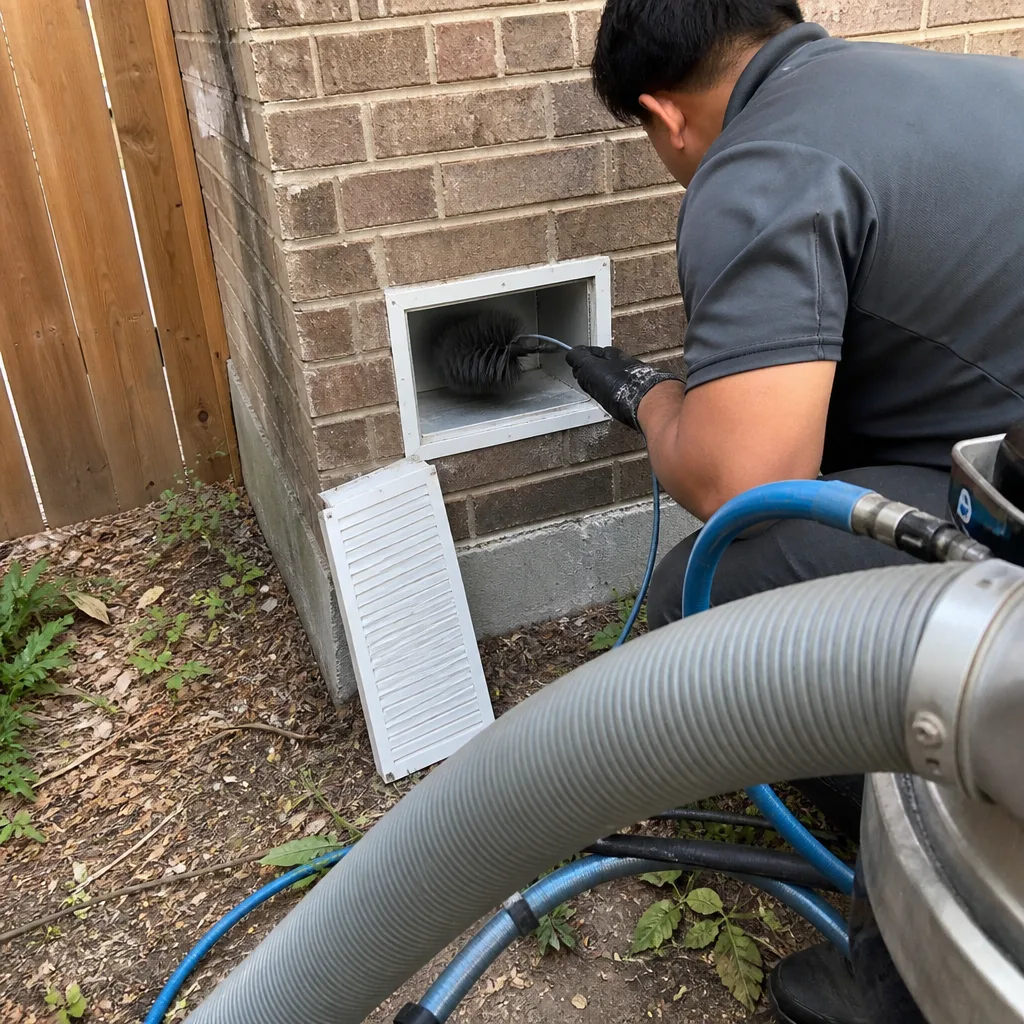 After
After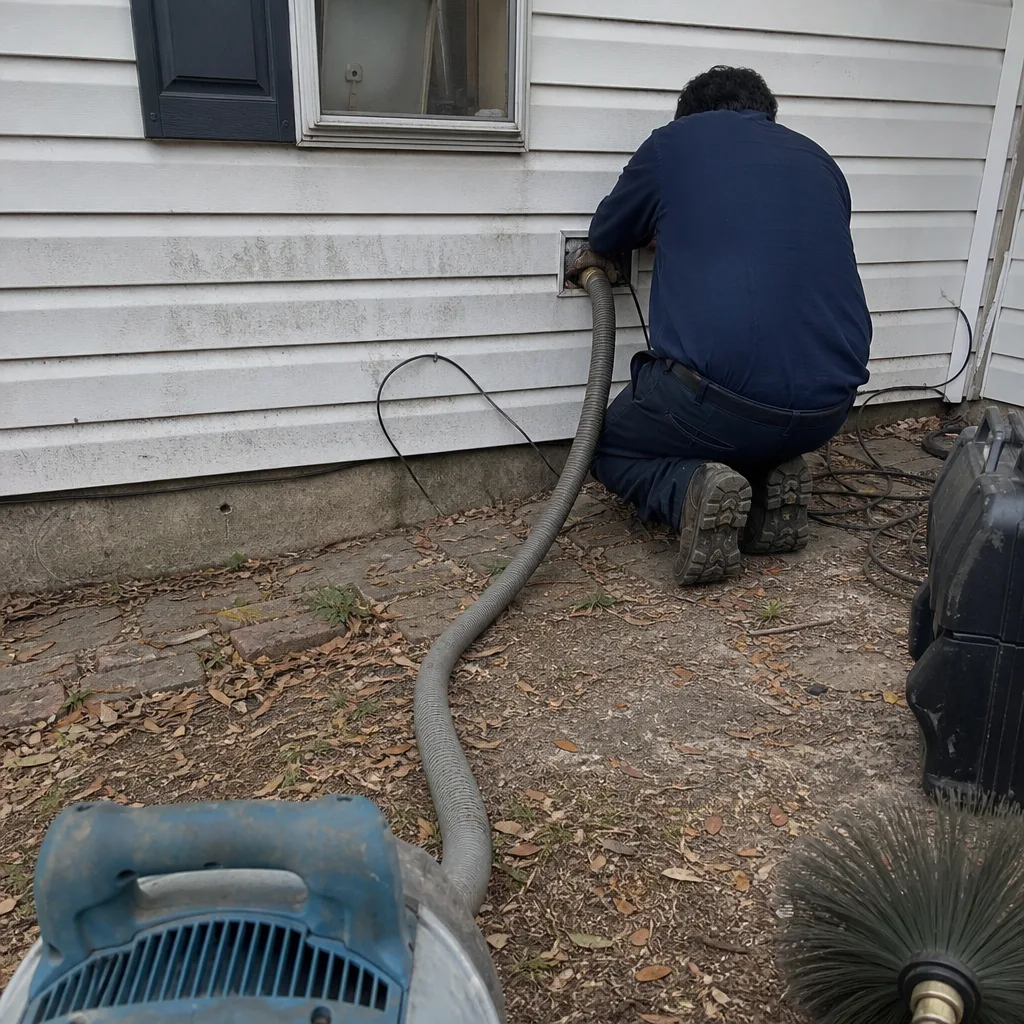 Before
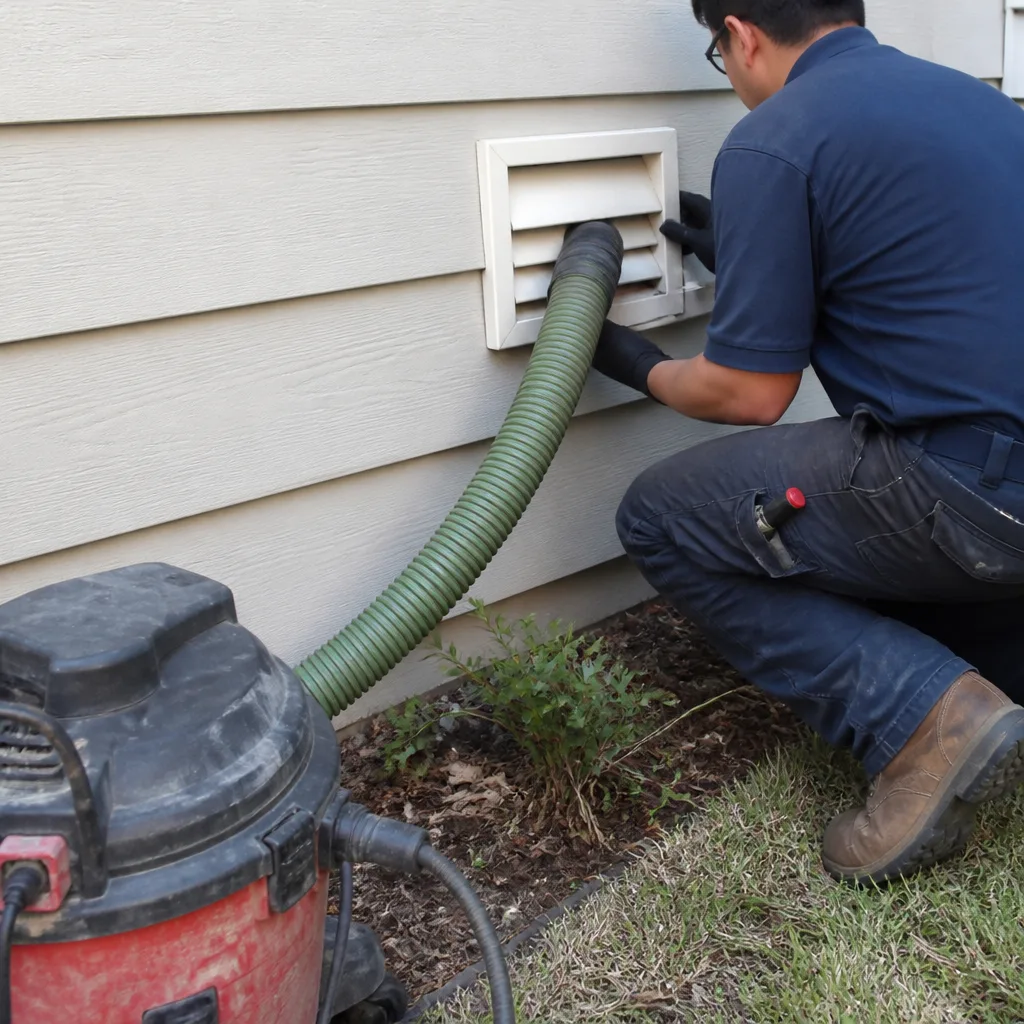 After
AfterReplacement Cost & What’s Included
Register and grille cleaning for a typical 2,000-square-foot Houston home with 10 to 14 openings runs between $150 and $350. The price covers removal of every register and grille, hand-cleaning of blades, frames, and the visible boot interior, degreasing of damper mechanisms, and reinstallation with the louvers set to the correct position for each room’s airflow load. If we find a register that’s too corroded or mechanically stripped to salvage, a standard replacement register adds $12 to $45 per unit, and we’ll show you the damaged part before we swap it.
What drives the cost is condition, not the brand name on the register. A home where registers come off easily and just need a good wash sits at the bottom of the range. A home where every boot is sealed with old paint, caulk, and a decade of Houston grime sits at the top.
Every quote is a single flat price – the price you approve before we open the first register is the price on the invoice. That’s the Kingswell Guarantee, and it’s in writing on every job. If the cleaning falls short within 365 days, we come back and make it right at no charge under the 365-Day Done Right Promise.
DIY or Call Us?
You can absolutely remove a basic fixed grille, vacuum the front face, and wipe it down with a damp cloth. That’s maintenance, and it’s worth doing twice a year in Houston, particularly after the spring pollen bloom and again after the summer’s dust-and-humidity cycle.
What goes wrong in DIY is the stuff behind the register. A homeowner unscrews the faceplate and sees the boot. The boot is sheet metal with sharp edges. The damper linkage has tension. The boot may be packed with dust, but it may also contain rodent droppings, fiberglass shed from degraded duct liner, or mold. We’ve had customers attempt this and wind up with a louver assembly in pieces on the floor, or a boot jammed with a dropped screw, or worse – a hand sliced on an unhemmed metal edge. None of that is worth saving $150.
If the register pulls off easily and the boot looks clean within arms reach, clean the faceplate and put it back. If you see anything past the opening that you wouldn’t want in your lungs, call (254) 347-2738 and we’ll bring the negative-air extraction gear that pulls it out instead of pushing it into the room.
FAQs
A quality register in a Houston home typically lasts 10 to 20 years before the finish fails or the damper mechanism wears out, but the useful life drops sharply if the boot behind it isn’t sealed. Humidity condenses on the metal, dust binds to the condensation, and the whole unit seizes in a third of that time. Call (254) 347-2738 and we’ll tell you honestly whether yours are cleanable or replacement-ready.
Often yes, if the seizure is caused by dust-and-humidity buildup in the pivot mechanism. We disassemble, degrease, and rebuild the damper assembly on-site in many cases. If the metal itself has rusted through at the pivot, replacement is cheaper than repair, and we’ll show you the failure before quoting it.
Most Houston homes are done in 1.5 to 2.5 hours, including removal, cleaning, boot inspection, and reinstallation. The work creates no dust in the living space because we use negative-pressure extraction, which pulls contaminants out of the opening rather than brushing them into the room.
Yes. Our trucks carry common Abatement Technologies-compatible sizes including 4×10, 4×12, 6×10, and 6×12, plus trim plates for oversize openings. If you need an oddball size, we order it and return to install, usually within a few days. Call (254) 347-2738 and we’ll confirm stock for your opening size before you waste a trip.
Clean ducts, straight price, no guesswork.
Written by Dale Whitmore, Owner, Kestrel Air Duct Houston at Kestrel Air Duct Houston, serving Houston and nearby areas.