
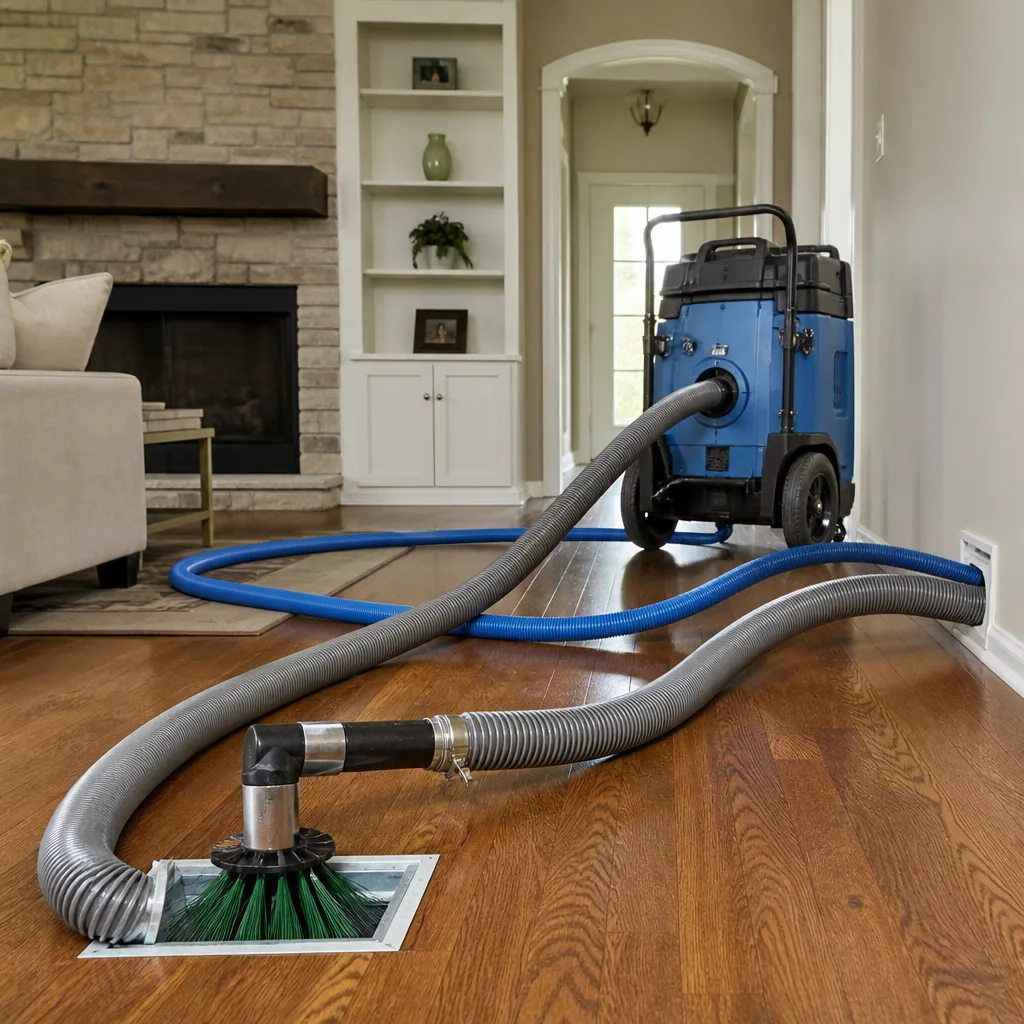
 Whole-home duct cleaning
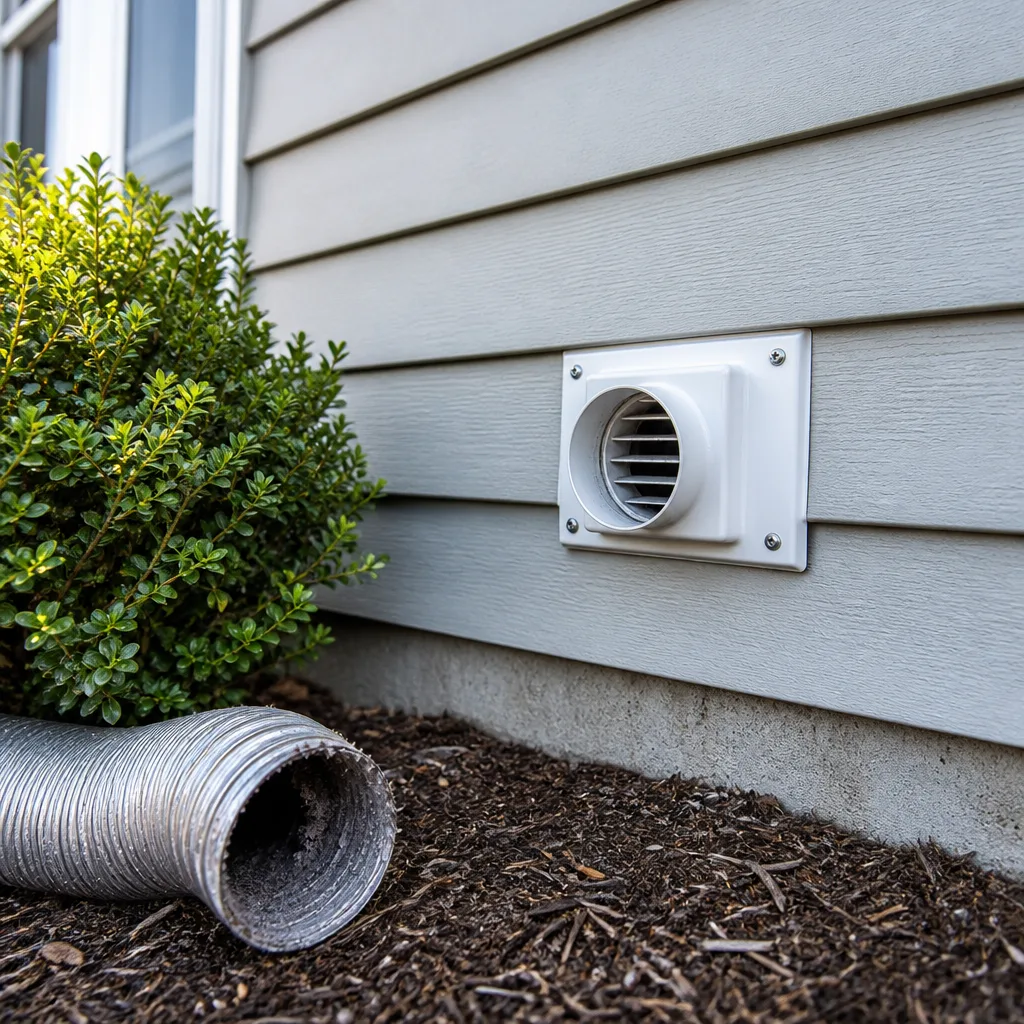 Dryer vent cleaning
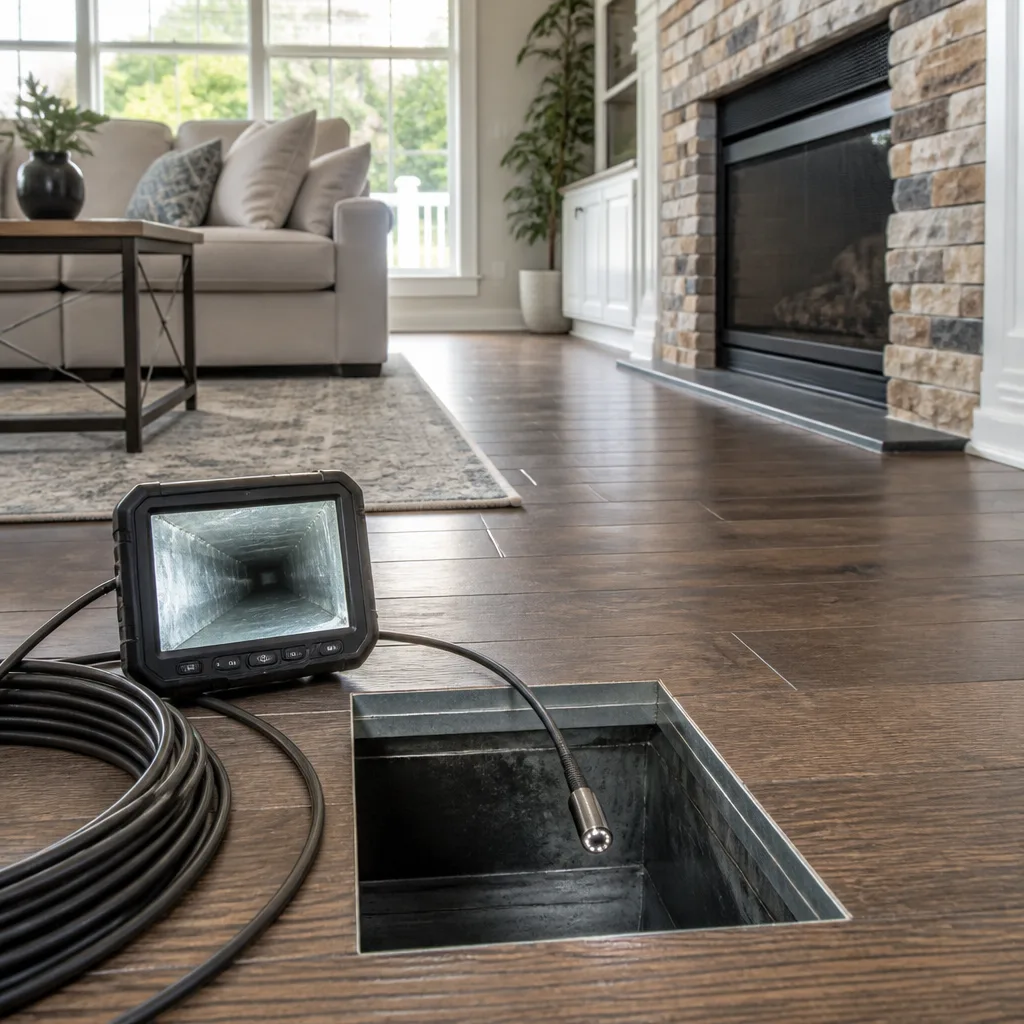 Camera inspection
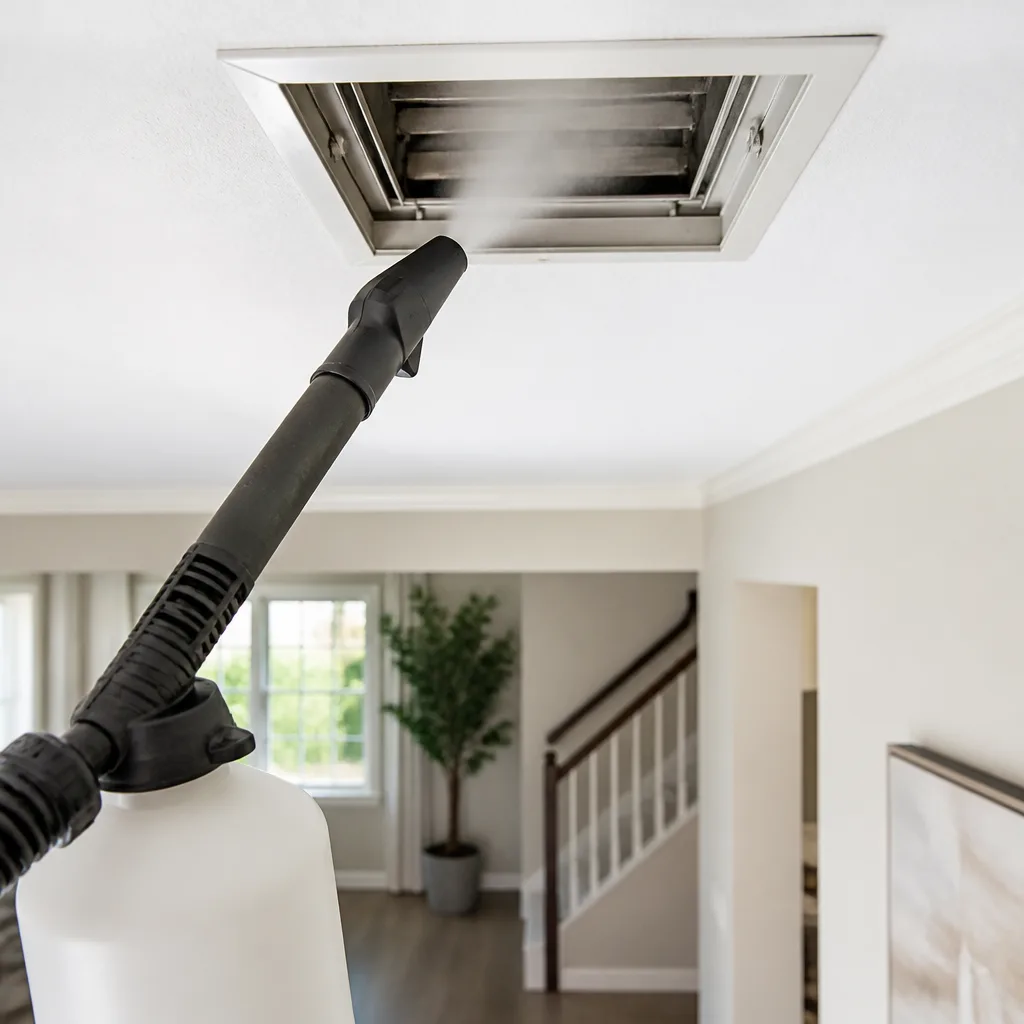 Sanitizing & deodorizing
Whole-system duct and dryer vent check with before-and-after photos - you see exactly what came out of your vents
That "$99 whole-house special" is a bait ad - the real number appears once they are in your hallway, or the "clean" is a shop-vac at the register. We photograph the inside of your ducts before and after instead.
Rotobrush Vent Sanitizing: The Houston Owner’s Guide
If you own a Rotobrush system and the vent sanitizing function has quit, here’s the straight answer: we stock Rotobrush-compatible sanitizing components on our trucks, and most Houston homes pay between $180 and $340 installed, depending on which Rotobrush model you’re running and whether the atomizer tip, the solution line, or the pump itself is the culprit. We’re usually able to complete the swap in a single visit. The way most owners find us: they press the sanitizer trigger mid-job and get a weak mist, no mist at all, or a puddle on the floor instead of fog in the duct.
You don’t need to describe the problem perfectly over the phone. You need someone who knows the difference between a Rotobrush aiR+ sanitizer module and an sdS system attachment, and who won’t sell you a whole new machine when a $20 fitting is all that failed. That’s what this page is for.
Key Takeaways
- We carry Rotobrush-compatible vent sanitizing parts on the truck: atomizer heads, solution tubing, quick-connect fittings, and replacement pump assemblies for common Rotobrush series units.
- Installed pricing in Houston typically runs $180 – $340, parts and labor included, quoted before we start.
- Kestrel Air Duct Houston is an independent service provider. We’re not affiliated with Rotobrush, and we’ll tell you honestly when an OEM part is worth the money or a quality aftermarket equivalent does the same job for less.
- Every repair carries the 365-Day Done Right Promise in writing. If the sanitizer fails again within a year, we come back and make it right at no charge.
Which Rotobrush Models This Applies To
The vent sanitizing components we replace most often fit the Rotobrush aiR+ series, the older Rotobrush 1000RX units still in service around Houston, and the compact Rotobrush BOSS systems some owner-operators run in condo and townhome work. The failure point differs by series. On the aiR+, it’s usually the fine-gauge solution line that kinks or splits at the quick-connect near the handle. On the 1000RX, the atomizer tip clogs with dried sanitizer residue, especially in Houston’s heat, where chemical evaporates faster inside the line between jobs. On the BOSS, the pump diaphragm hardens over time and stops drawing solution.
Identifying the right part means checking two things: the model tag on your machine body (not the wand, the body), and the fitting size at the sanitizer connection point. Rotobrush uses both 1/4-inch and 3/8-inch quick-connect styles depending on production year, and they are not interchangeable. If you can’t read the tag, measure the fitting with a ruler and call us. We’ll sort it from there. For the Rotobrush specifically, we lean OEM on pump assemblies because the pressure specs are tuned to Rotobrush’s atomizer design; for tips and lines, a quality aftermarket equivalent is often identical in function at a third less cost.
Styles & brands we work with
Signs Your Rotobrush Vent Sanitizing Is Failing
- Weak or sputtering mist from the wand. This usually points to a partially clogged atomizer tip or a pinhole in the solution line. The pump is working but pressure is bleeding off before it hits the nozzle. In Houston’s humidity, dried sanitizer film builds up faster than it does in drier climates.
- No mist at all when you pull the trigger. If you hear the pump whine but nothing comes out, the quick-connect fitting has likely failed or the line has separated inside the handle. If the pump is silent, the pump itself has quit. Both are repairable on-site.
- Sanitizer puddling under the machine body. This is almost always a cracked solution line or a failing O-ring at the pump outlet. Left alone, it will damage the pump and turn a $40 line into a $220 pump job.
- Uneven sanitizer smell after a job. If some vents smell treated and others don’t, the atomizer isn’t producing a consistent fog, which means the vent sanitizing isn’t actually reaching all the ductwork. The tip or the pump pressure is fading.
- Pump cycles continuously after the trigger is released. That’s the pressure switch wearing out, and it will eventually burn out the pump motor. It’s a common failure we saw a lot this past Houston summer, when heat-soaked garage storage stressed older units.
See the difference
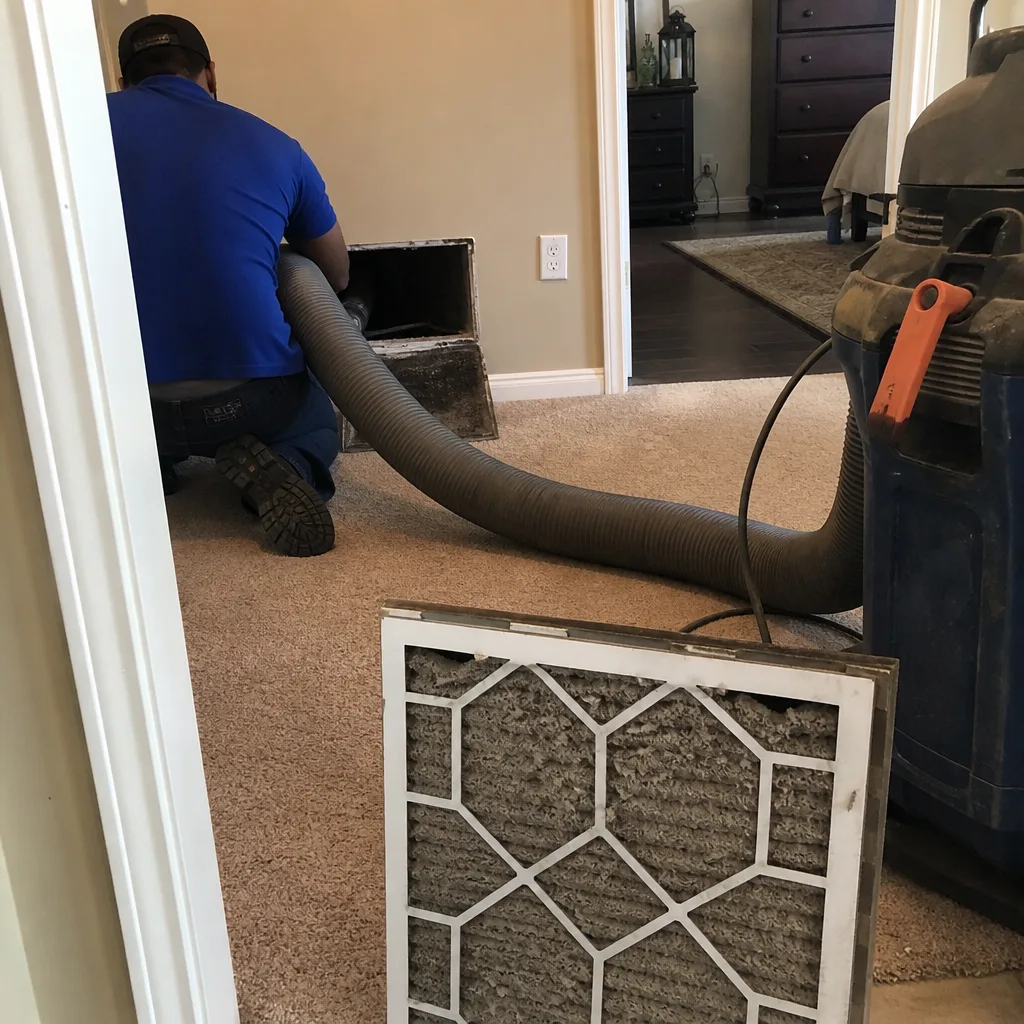 Before
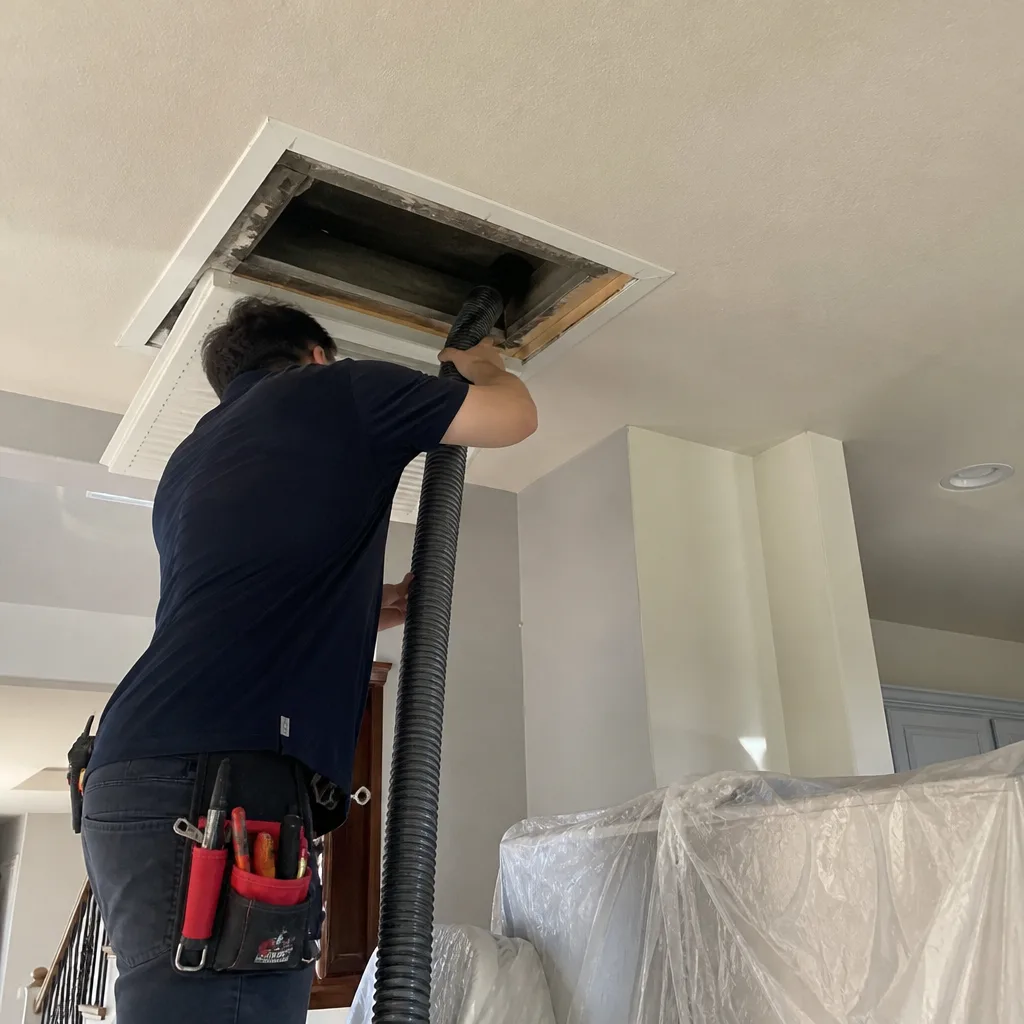 After
After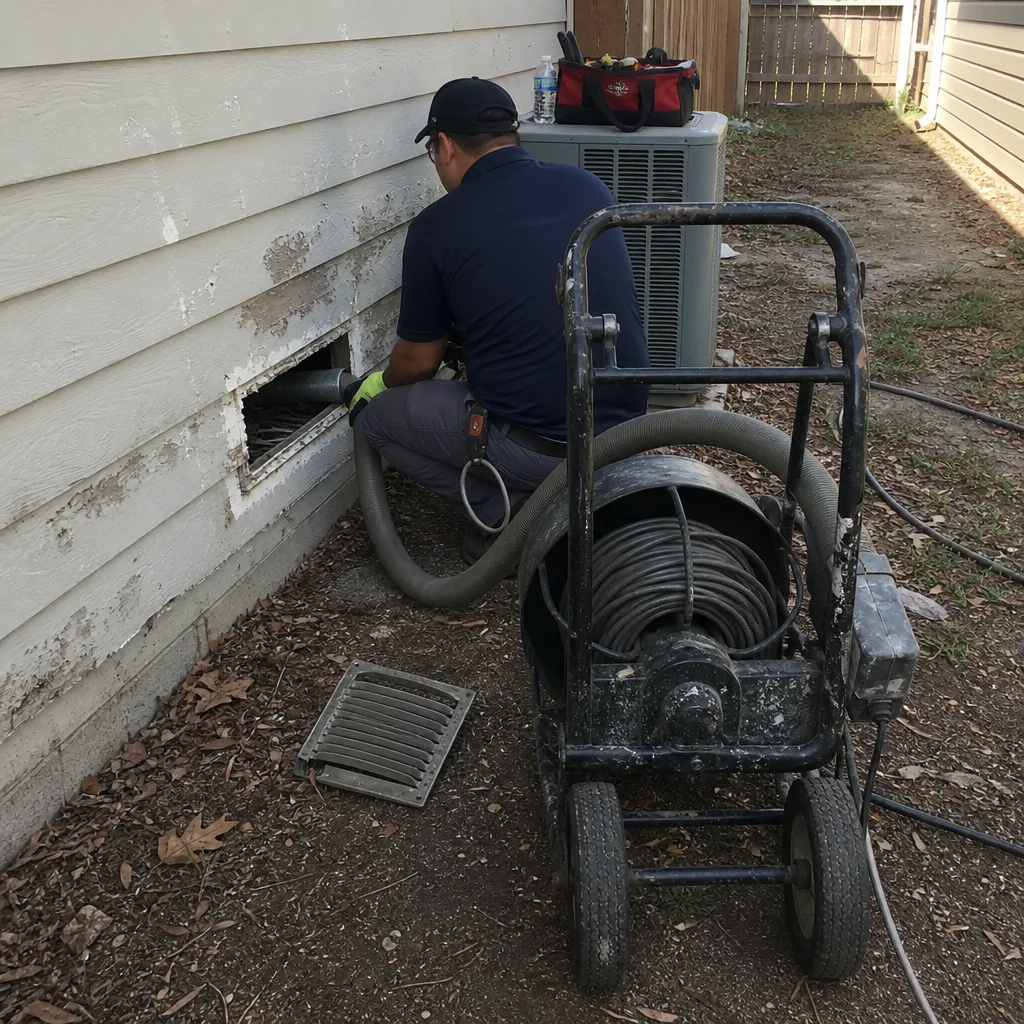 Before
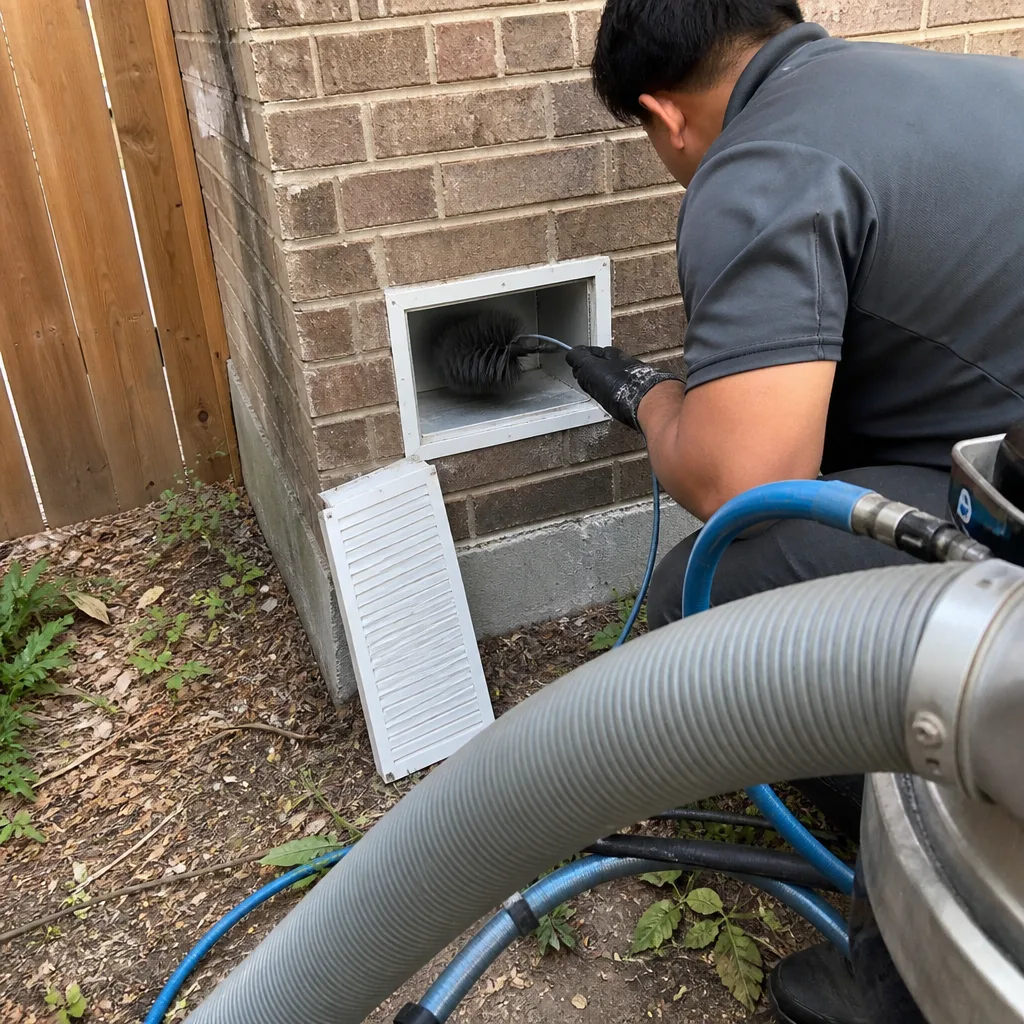 After
After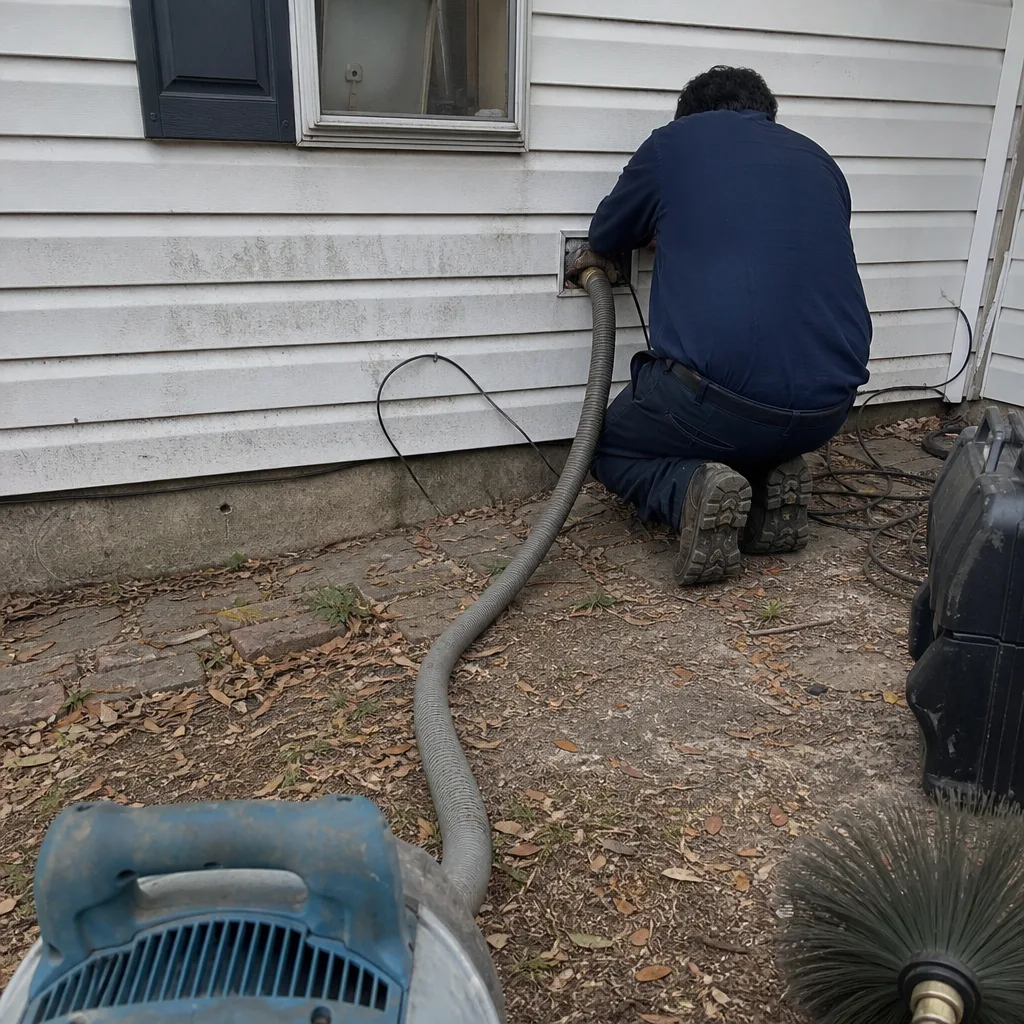 Before
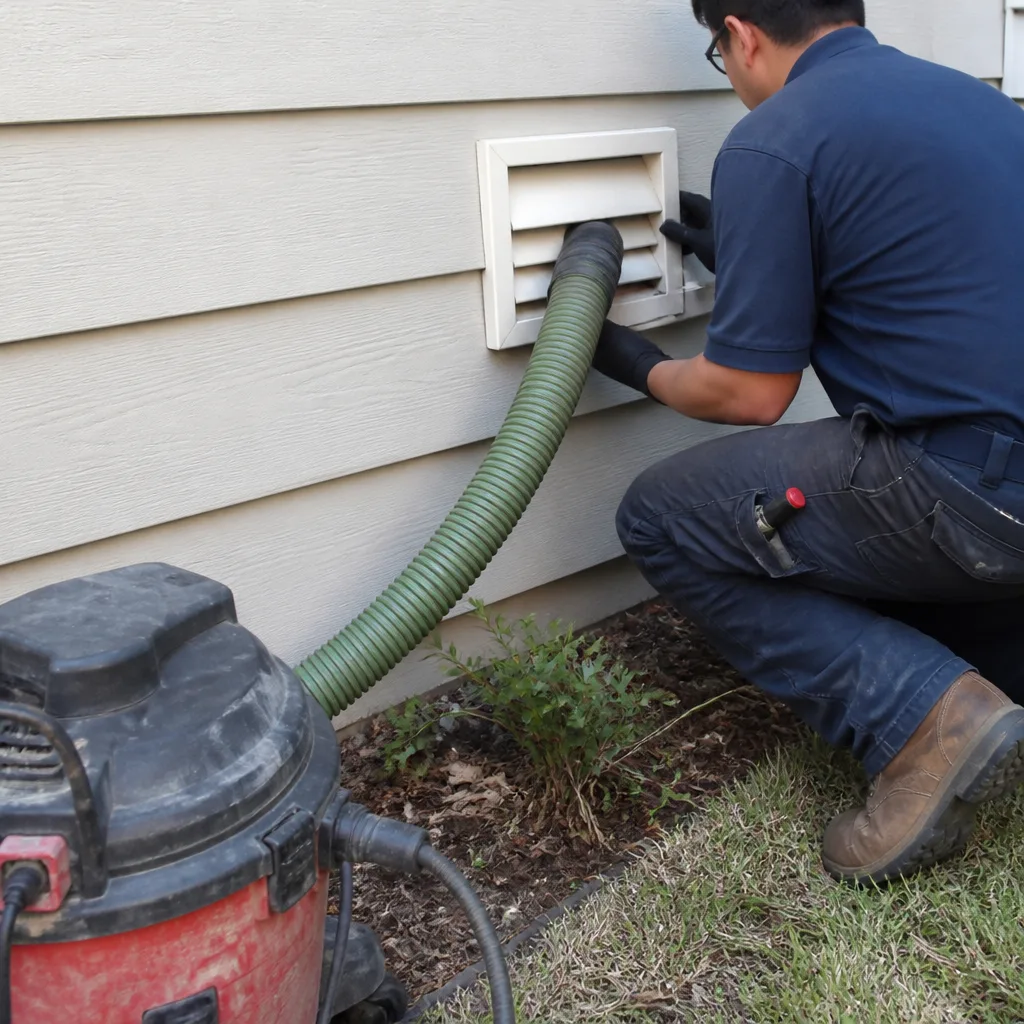 After
AfterReplacement Cost & What’s Included
Here’s what vent sanitizing repair costs in the Houston market, based on the work we do week to week:
| Repair Type | Typical Installed Price | What It Includes |
|---|---|---|
| Atomizer tip replacement | $180 – $220 | New tip, fitting check, system test on-site |
| Solution line and quick-connect replacement | $200 – $260 | New line, new fittings, pump pressure verification |
| Pump assembly replacement | $280 – $340 | New pump, calibration, full sanitizer cycle test |
| Full sanitizing system refresh | $300 – $360 | Tip, line, fittings, pump check, and full test run |
What drives the range is your Rotobrush model and whether we’re replacing one component or several. You get a written price before we touch a single fitting. That price includes the part, the labor, the test run, and the 365-Day Done Right Promise on the repair. No door-step revisions, no surprise line items on the invoice. Dale Whitmore built this shop on the rule that the quote you approve is the price you pay. We also keep Lennox, Trane, and Carrier filtration parts in stock for the broader HVAC side of your system, but when it comes to vent sanitizing, Rotobrush is the equipment we know best.
DIY or Call Us?
The honest split: you can safely replace a Rotobrush atomizer tip yourself if you can identify the model and the fitting size, and if you’re comfortable removing and reinstalling a threaded nozzle. Tips are designed to be swapped in the field. But if the mist is weak, if you smell sanitizer but don’t see fog, or if you’ve got liquid pooling under the machine, that’s where DIY goes sideways. Opening a Rotobrush pump housing without knowing the internal pressure switch layout will turn a repairable pump into a dead one, and sanitizer solution is a chemical you don’t want to guess your way through. The line holds residual pressure. The pump is calibrated to Rotobrush’s atomizer specs. A wrong aftermarket pump off a parts website will over-pressure the line and spray sanitizer where it doesn’t belong.
If it’s a tip, go ahead. If it’s anything upstream of the tip, call (254) 347-2738 and let us put eyes on it. We’ll tell you what’s wrong, what it costs, and what we’d do if it were our machine. Then you decide.
FAQs
In Houston’s heat and humidity, we typically see atomizer tips lasting two to three years and pump assemblies lasting five to seven years, depending on how often the unit runs and how it’s stored between jobs. A Rotobrush stored in a non-climate-controlled Houston garage in August will degrade seals and diaphragms noticeably faster than one kept in a conditioned space. Call us at (254) 347-2738 if you want us to assess your specific unit.
It depends on what inside the pump has failed. A worn pressure switch or O-ring can often be replaced for less than a full pump. A burned-out motor or cracked diaphragm means replacement. We’ll tell you which one yours is when we open it up, and the price is set before the work begins either way.
Most Rotobrush sanitizing repairs take 45 to 90 minutes on-site, including the test run to confirm the fog pattern is right. Tip swaps run faster; pump replacements run longer. We work on your schedule and you’ll know the arrival window before we show up.
Yes. We keep Rotobrush-compatible atomizer tips, solution lines, quick-connect fittings, and pump assemblies in our Houston service vehicles for the aiR+ series, the 1000RX, and the BOSS. If your unit needs a part we don’t have with us that day, we’ll have the lead time to you before we leave your property.
Written by Dale Whitmore, Owner, Kestrel Air Duct Houston at Kestrel Air Duct Houston, serving Houston and nearby areas.