
Last updated October 15, 2026
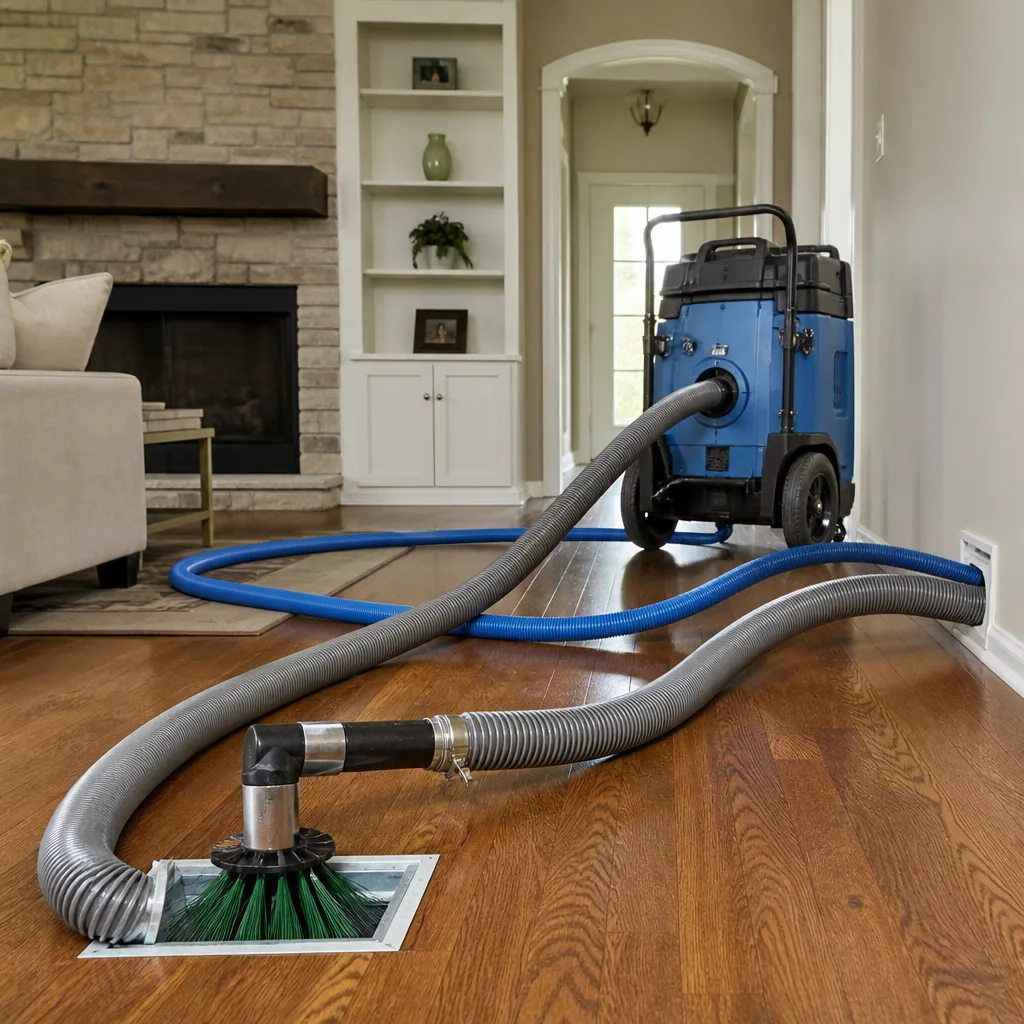 Whole-home duct cleaning
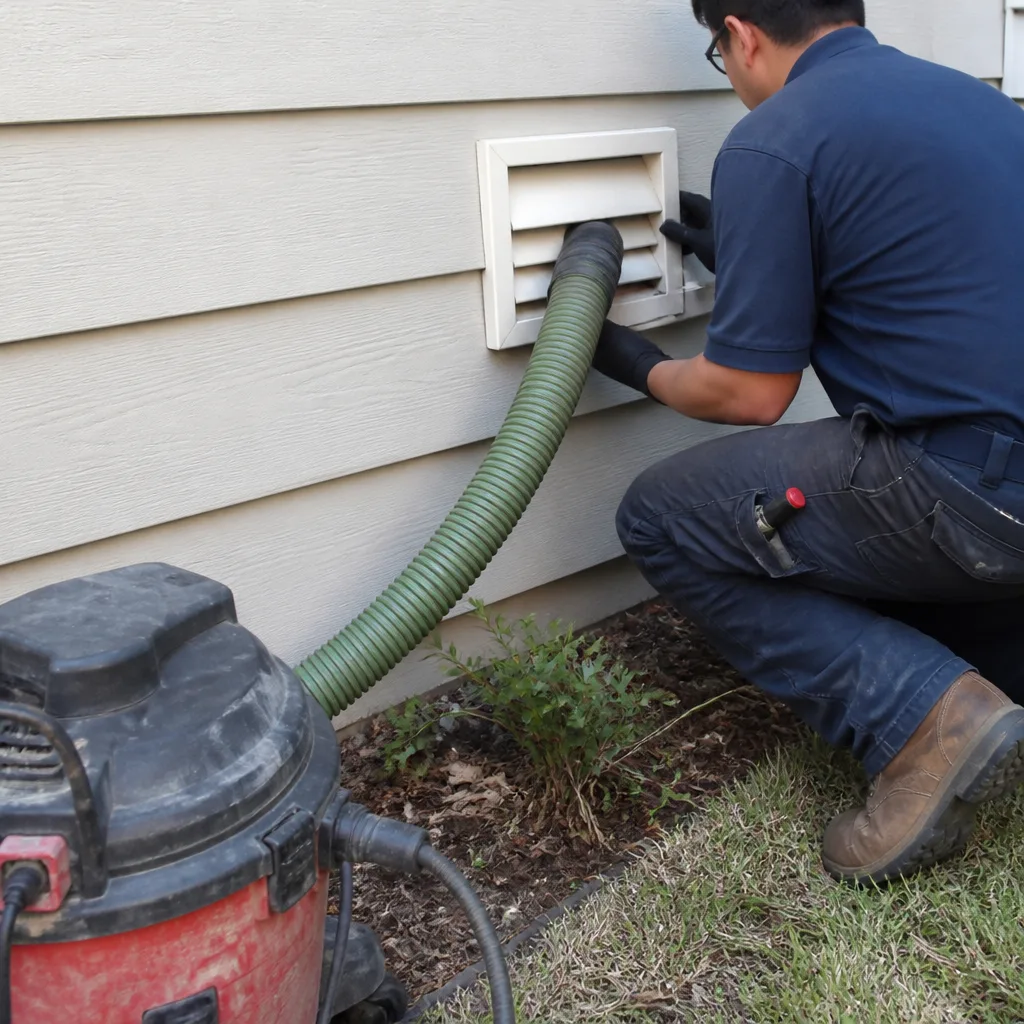
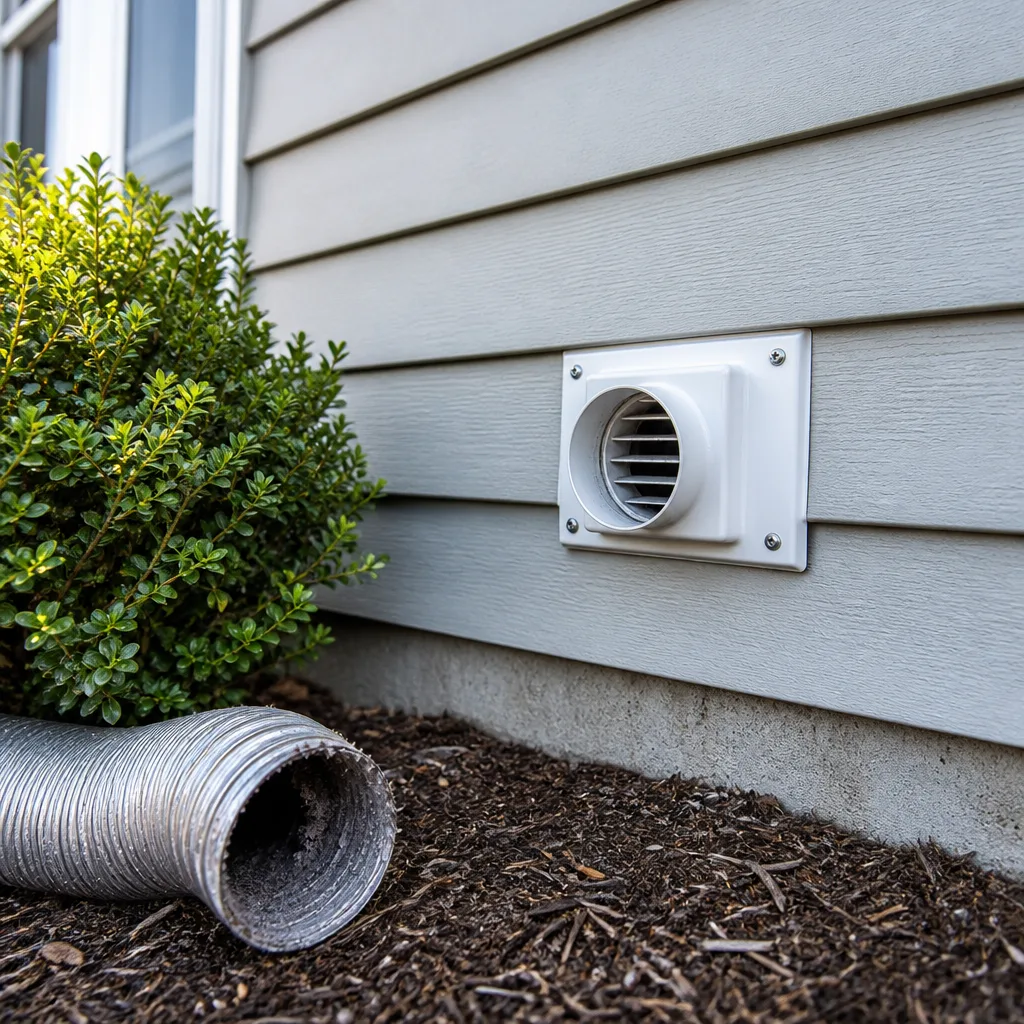 Dryer vent cleaning
 Camera inspection
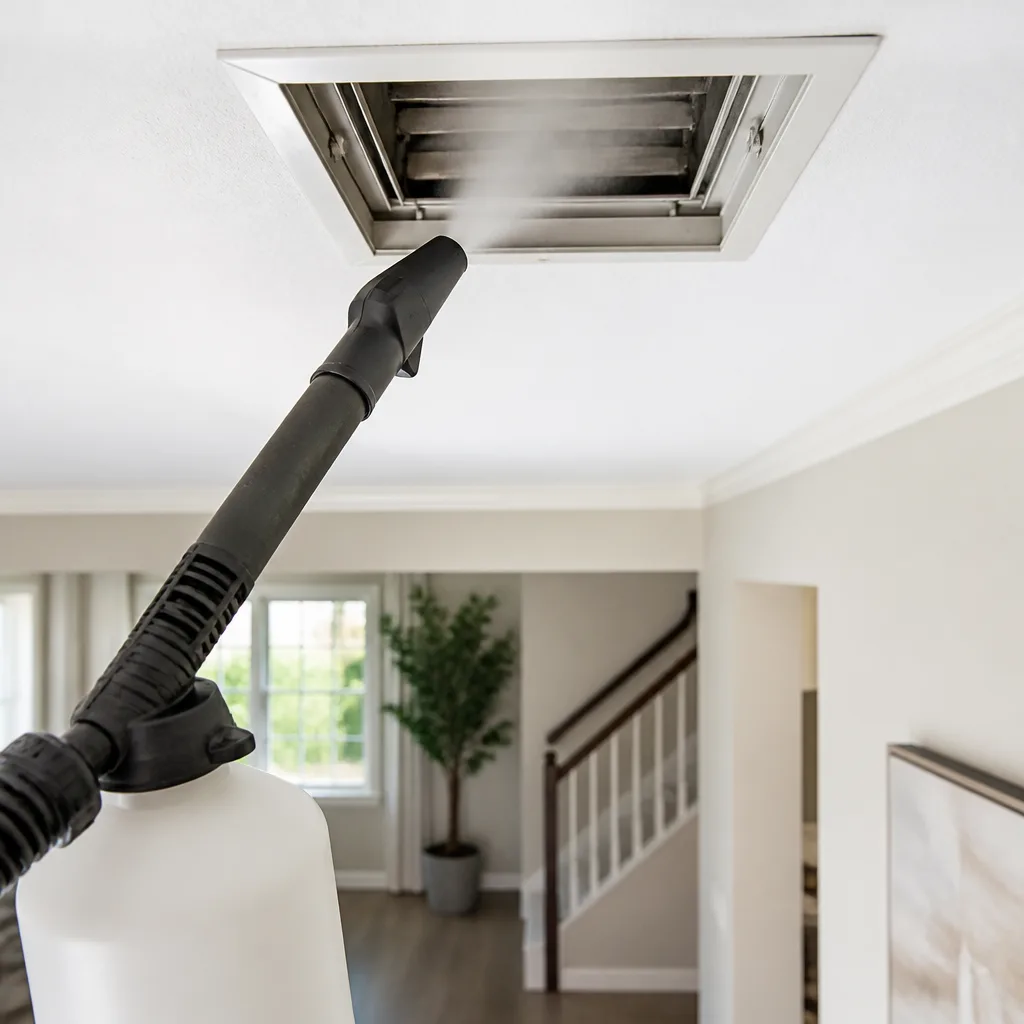 Sanitizing & deodorizing
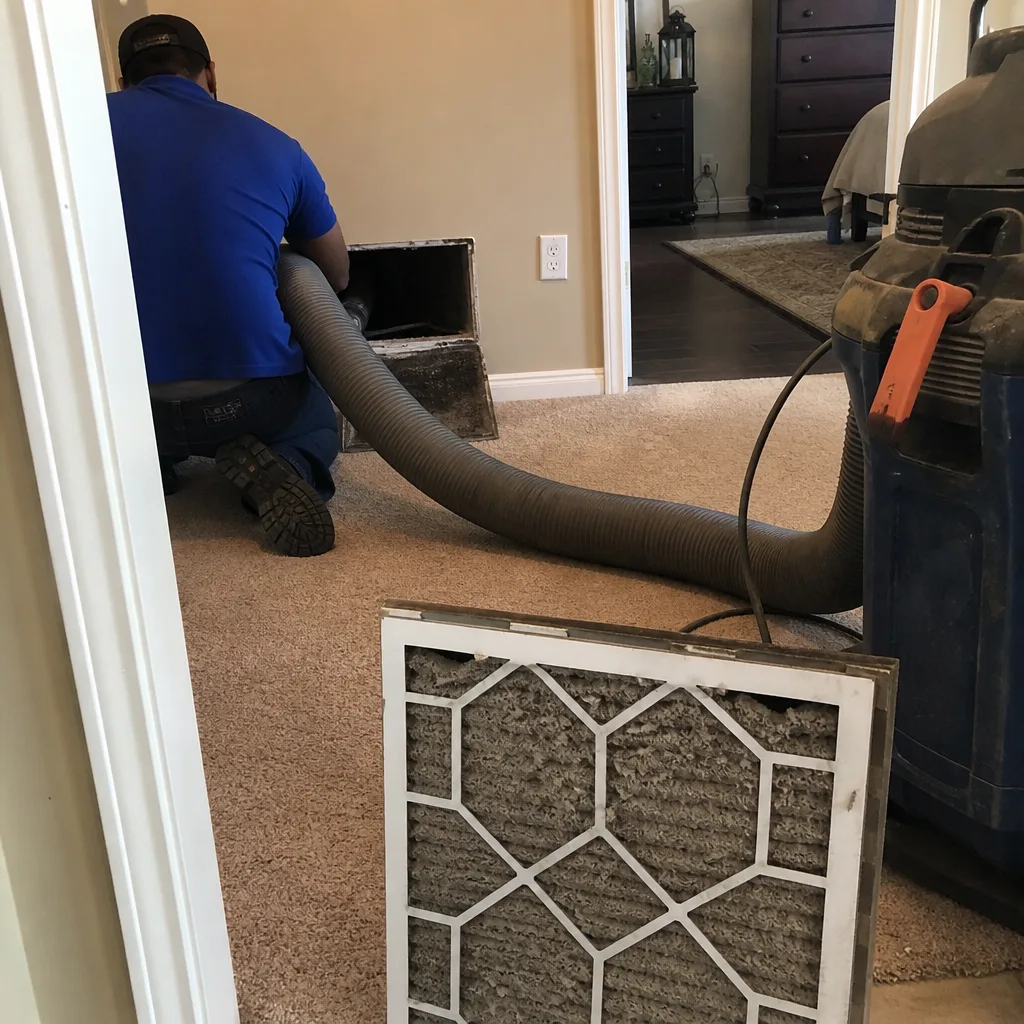
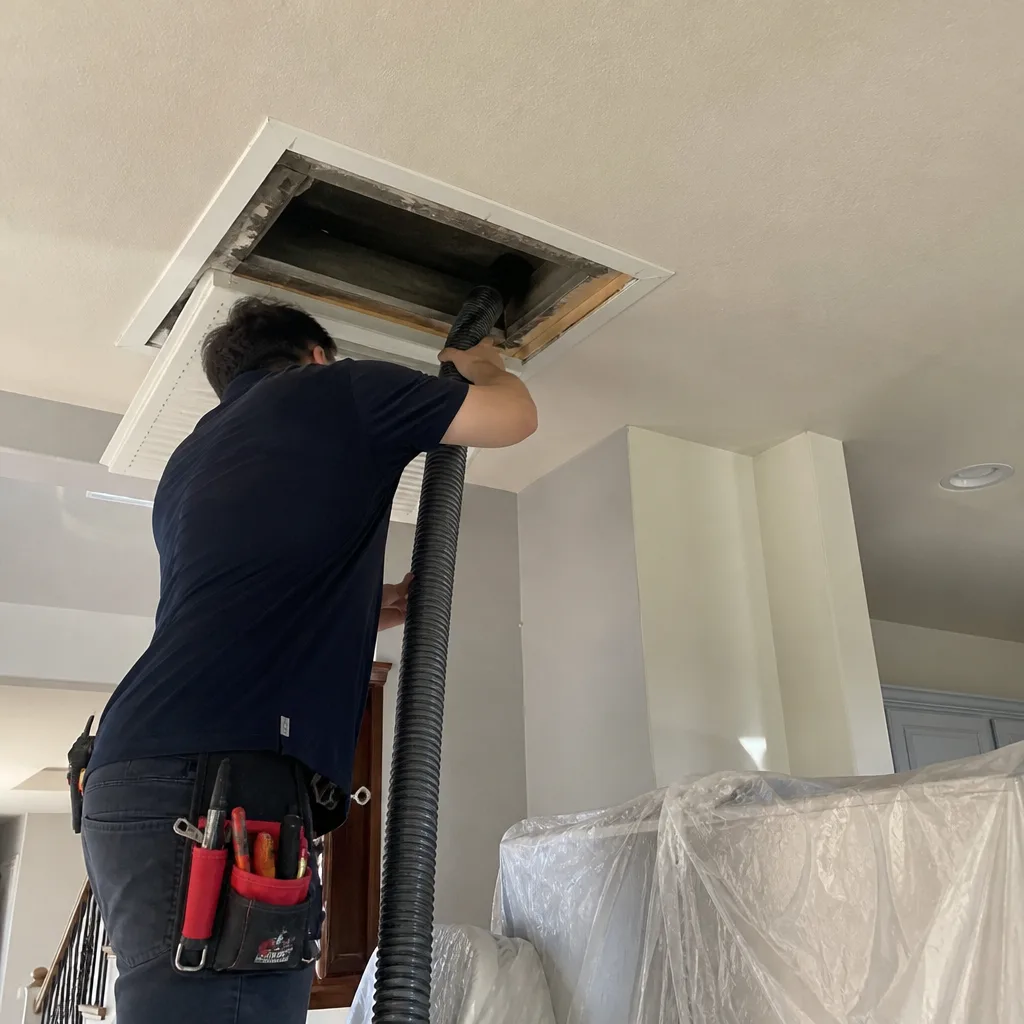
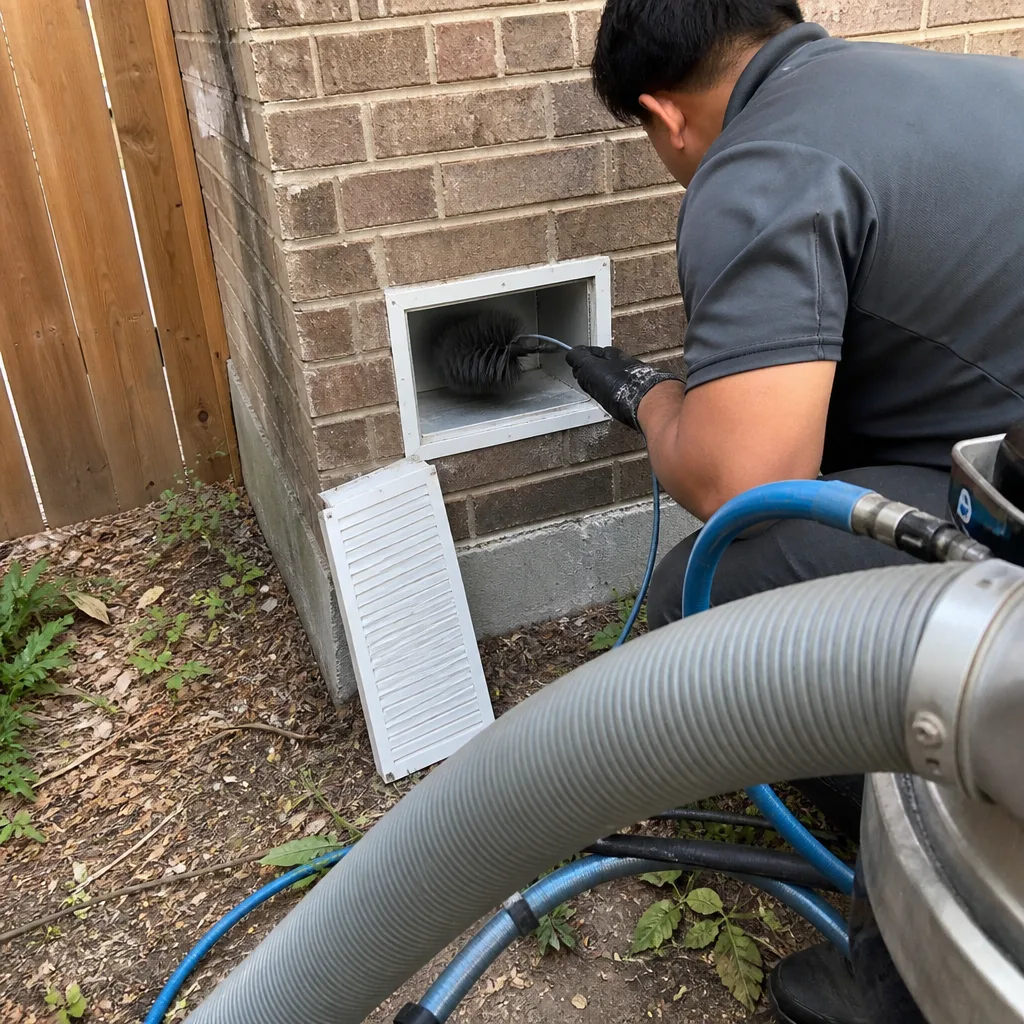
Whole-system duct and dryer vent check with before-and-after photos - you see exactly what came out of your vents
That "$99 whole-house special" is a bait ad - the real number appears once they are in your hallway, or the "clean" is a shop-vac at the register. We photograph the inside of your ducts before and after instead.
Air Duct Cleaning Maintenance Checklist for Houston Homeowners
Here’s something that catches most Houston homeowners off guard: the air filter you replace every 90 days does a fine job protecting your HVAC equipment, but it tells you almost nothing about what has already settled inside the ductwork itself. Those trunk lines running through your attic spend seven months a year in a hot, humid environment, and whatever collects inside them, dust, construction debris, pet dander, sometimes a fine layer of biological growth, stays there. This checklist walks you through what to check, when to check it, and what the findings actually mean. We’re going to give you real thresholds for Houston’s climate, not vague reminders to “inspect your ducts occasionally.”
Styles & brands we work with
Quick Answer
Air duct cleaning maintenance for Houston homeowners means checking supply registers, return grilles, and airflow balance every 30 to 60 days, watching indoor humidity like a hawk during spring and fall, and scheduling Air Duct Cleaning services with a professional negative-pressure cleaning every three to five years, sooner if you see dust rings around supply vents, smell mustiness when the blower kicks on, or measure indoor relative humidity above 60% for more than a few days. The single most important Houston-specific habit is tracking humidity, because moisture is the variable that turns dusty ducts into a mold problem.
Table of Contents
- Why Houston Ducts Need a Different Checklist
- Tools and Record Keeping
- The Three DIY Checks Any Homeowner Can Do Without Tools
- Month-by-Month Houston Checklist
- Humidity Thresholds That Trigger a Professional Inspection
- What Your Findings Actually Mean
- When to Clean vs. When to Wait
- Common Mistakes to Avoid
- When to Call a Professional
- Frequently Asked Questions
- The Bottom Line
Why Houston Ducts Need a Different Checklist
A duct maintenance checklist written for Phoenix or Denver falls apart in Houston. Here’s why. Houston’s average relative humidity runs between 60% and 90% for large stretches of the year, and the dew point, the temperature at which moisture condenses out of the air, sits so high that any unconditioned space becomes a condensation risk. Your attic ductwork, and any runs through unconditioned wall cavities, operates inside an environment that is actively trying to make things wet. Dust and debris inside a duct system act like a sponge in those conditions. When attic air hits a cool duct surface and condensation forms, even briefly, that moisture binds to whatever debris is present. Over time, the result is a damp, matted layer inside the duct that can support mildew, mold spores, and a musty odor that cycles through your living space every time the air handler runs.
Contrast that with a dry climate, where dusty ducts stay dusty but inert. In Houston, the same layer of dust becomes a substrate for biological growth. That is why the checklist below treats humidity measurements as critical information, not a weather footnote. We have cleaned ducts in Houston homes where the air duct cleaning reveals a paste-like coating inside the trunk line, still damp from condensation that happened six weeks earlier. The homeowner noticed nothing because the moisture never made it to a visible surface. That is the Houston-specific failure mode this checklist is built around.
The second Houston factor is hurricane season. From June through November, coastal storms push wind-driven rain, and sometimes floodwater, into places it does not belong. Debris from trees, shingle granules from roofs, and a surprising amount of fine grit can enter duct systems through roof vents, return air leaks, or even around air handler cabinets that are not fully sealed. A post-storm duct inspection is not a nicety in Houston. It is the difference between catching a small problem and discovering rusted components, soaked insulation, and biological growth months later.
Tools and Record Keeping
Most of the checks below require no tools at all. Two items make the full list easier, and a simple written log turns your observations into useful history. Here is what you need:
- An inexpensive hygrometer (humidity gauge). You can buy a reliable one for under $15 at any hardware store in Houston, or order one online. Place it near the return air grille where your air handler draws air from the home. Check it whenever you change the filter and write the number down.
- A flashlight or your phone’s camera flash. For looking into return grilles and register boots. You are not going to see deep into the duct this way, but you will spot surface dust, debris, and visible moisture.
- A simple notebook or a note on your phone. The goal is a running log with dates. Something like: “March 12, supply register in hallway has light dust ring, humidity 58%.” This log is valuable if you ever sell the house, because it shows prospective buyers that the system was maintained. It also matters if you file an insurance claim for storm damage or mold remediation, because adjusters respond to documentation, not recollection.
If you want to go one step further, a $30 infrared thermometer lets you check temperature differential between supply and return air, which can reveal airflow problems early. But the thermometer is optional. The humidity gauge is not.
The Three DIY Checks Any Homeowner Can Do Without Tools
These three checks take less than ten minutes combined. Do them quarterly at minimum, and monthly during Houston’s April through October window, when heat and humidity are at their worst. Each check tells you something specific about the condition of your ducts.
1. The Supply Register Dust Ring Test
- Turn the HVAC fan on at the thermostat, then walk to a supply register, the ones that blow air out.
- Look at the wall or ceiling around the register opening, especially the surface within two or three inches of the vent cover.
- If you see a darkening or a visible ring of dust on the wall or ceiling surface surrounding the register, that is a pressure leak signal. Air is escaping around the register boot and carrying duct debris with it.
- Remove the vent cover and look inside the register boot with a flashlight. Shine the light as far back as you can. Light surface dust is normal. Clumps, matted material, or anything that looks damp is not.
What the result means: A faint even dusting is normal in any system. A dark ring that reappears within weeks of cleaning means the duct system is pulling debris from somewhere upstream, usually the return side, and pushing it out through every leak point around the register boot. In our experience, the most common source is a return air leak pulling attic air into the system, because Houston attics hold an enormous amount of fine particulate matter. A professional cleaning with negative-pressure extraction, which pulls debris out of the ducts rather than pushing it around with a rotating brush, combined with register boot sealing, is the fix that actually lasts. For more detail on local requirements, see our guide to Air Duct Cleaning Permits, Codes & Inspections in TX: What You Need to Know.
2. The Return Grille Odor Test
- Turn the HVAC fan on, but set the system to fan-only so the heating and cooling elements are not taking off.
- Stand directly at the return air grille, the one that pulls air in, typically located in a central hallway or near the top of a stairwell.
- Take a few slow inhales through your nose. Register what you smell in the first three seconds.
- Then walk to the closest supply register and do the same thing.
What the result means: A musty or wet-sock odor at the return grille that fades as the system runs longer usually means biological material somewhere in the return duct, often the section closest to the air handler where temperatures stay cool. This is the classic early warning in Houston homes, because that section of ductwork sits in the humid band between attic heat and conditioned cool. A smell that intensifies after rain is even more telling: water is entering somewhere and saturating debris or insulation. If you get a burn smell, shut the system down and call an HVAC company immediately. A musty smell calls for a duct inspection. The Kestrel Air Duct Houston approach to this finding starts with camera inspection of the return trunk to determine whether the odor is from debris, moisture, or something that entered the system from outside.
3. The Airflow Balance Check Between Rooms
- Close all doors in your home and turn the system fan on.
- Go room to room holding a tissue or a light piece of paper near each supply register.
- Note which registers produce a strong lift, and which barely move the paper at all.
- Compare rooms on the same floor and same side of the house first, then compare upstairs versus downstairs if you have two stories.
What the result means: Some variation between rooms is normal, especially in a large two-story Houston home where trunk lines run long distances. But if one room is noticeably weak year-round, and the filter is clean, the cause is usually a duct restriction or a leak. In our experience, common Houston causes include ducts that have collapsed in the attic due to age or animals, ducts that have been crushed by stored items, or flex duct that has kinked at the plenum connection. A professional duct cleaning that uses a Rotobrush rotary brush system, which is a rotating brush that agitates debris loose from the duct wall, combined with a negative-pressure collection unit, will restore airflow if the cause is debris buildup. If the duct is collapsed, the cleaning process will reveal it on camera, and you will know the real issue instead of guessing.
Month-by-Month Houston Checklist
If you want a seasonal rhythm that matches Houston’s actual climate, here is the month-by-month approach we recommend. This replaces the generic “change your filter every 90 days” advice with timing that reflects how Houston weather actually behaves.
March: Mold Season Ramp-Up
Houston’s spring humidity begins climbing in March, and that is when biological growth inside duct systems gets going. If you only do one humidity check per year, do it in late March or early April. Run the fan-only test described above and pay attention to the return grille odor. March is also a good month to inspect the exterior portions of your system: the outdoor condenser unit for debris blockages, and any vent terminations on the roof or exterior walls for nests. Birds and squirrels are active in early spring, and creatures entering a dryer vent or attic duct termination are a real issue in Houston neighborhoods with mature trees. We recommend adding a March humidity log entry even if everything checks out. That baseline number helps you track the upward trend through summer.
June: Post-Storm Debris and Early Summer Check
Hurricane season officially begins June 1. By late June, Houston has usually had at least one strong thunderstorm event with high winds and heavy rain. After any storm system moves through, do a quick visual check of roof and exterior wall vent terminations. Look for shingle granules, leaves, small branches, or soaked insulation visible around the opening. Inside the home, check the supply register dust ring test again. High winds can shift poorly sealed duct joints, and even small separations let in attic air. If your home has drop ceilings in a basement or utility areas, look for water staining near any duct lines. Rust-colored drips on the outside of a duct are a clear moisture signal. If you see any of these, get a professional inspection before midsummer, when temperatures rise and any trapped moisture starts to cook. Learn more about spotting trouble early in our guide to Air Duct Cleaning Warning Signs: A Houston Homeowner’s Reference Guide.
September: Peak Allergen Season
September in Houston brings ragweed pollen, mold spores from decaying Houston summer vegetation, and the beginning of fall allergy season. Your ducts are not generating these allergens, but if you have holes or gaps in the return air system, the attic air being pulled in carries them straight to your living space. The airborne allergen load in Houston attics in September is higher than most homeowners realize. This is the month to be strict about the return grille odor test and the airflow balance check. If someone in the household has worsening fall allergies, the likely culprit is either a leaky return drawing attic air, or a dirty coil that is not removing moisture as efficiently. A coil that is not dehumidifying properly leaves indoor air muggier at the same temperature, and many Houstonians mistake that mugginess for an AC sizing problem when it is really a maintenance issue at the coil.
December: Heating Season Switchover
Most Houston homes have either a gas furnace or a heat pump paired with electric auxiliary heat. When the system switches from cooling to heating for the first time in months, any dust or debris that has settled on the heat strips or heat exchanger during the cooling season gets burned off. That is why the first cold snap in Houston often produces a brief burn smell from vents. It should dissipate in a few minutes. If it does not, or if it recurs every time the system cycles, that is a signal. December is also the month to check your humidity gauge trend in reverse. Indoor relative humidity above 60% in winter, especially on a cold day, suggests the system is not running long enough to dehumidify, or that there is a moisture intrusion somewhere. Finally, December is when we recommend reviewing your written maintenance log for the year. If your notes show dust rings, recurring musty odor, or humidity readings trending upward, book a professional cleaning before spring, when mold season starts over again.
Humidity Thresholds That Trigger a Professional Inspection
Indoor relative humidity is the single most useful number a Houston homeowner can track. Here are the thresholds we use to guide our advice:
- Below 50% RH: Good. This is the target zone for Houston homes during cooling season. Your system is dehumidifying effectively, and the ducts are unlikely to be holding excess moisture.
- 50% to 60% RH: Acceptable in the short term, but worth watching. If you keep the house at this level through the spring and fall shoulder seasons, check the return grille odor test monthly. Mold spores begin germinating above 60%, but prolonged conditions near the threshold can still support growth in cool duct interiors.
- Above 60% RH for more than a few days: This is the line. Sustained humidity above 60% means your system is either oversized, short-cycling, or not moving enough air across the coil. More importantly for ducts, it means any particle resting in the ductwork is now damp enough to support biological activity. If you log readings above 60% for a full week, call a professional. The inspection may reveal that the issue is a dirty coil, an undersized return, or a duct leak pulling in outdoor moisture. All three are fixable, but none of them fix themselves.
- Above 65% RH at any point: Treat this as an active moisture problem. Check the ducts for visible condensation, especially where the trunk line runs through the attic, and call for an inspection. In a Houston attic in summer, duct condensation at 65% indoor humidity is almost guaranteed.
One clarifying point: the humidity number inside your living space is not the humidity inside the duct. The duct interior can be cooler than the room, which pushes the local relative humidity inside the duct higher than your gauge reads. That is why we treat a home reading above 60% as the trigger line. A home at 55% might have duct interiors at 60% or 65% under the right conditions. When in doubt, err toward inspection.
What Your Findings Actually Mean
A checklist is only useful if you know what to do with each result. Here is the plain-language interpretation of what each finding tells you, and what the next step should be.
- Dark dust ring around supply registers. Air is leaking around the register boot and depositing duct debris on the wall or ceiling surface. Cleaning alone will not fix the leak. A proper fix includes sealing the boot to the drywall and checking the duct run for the debris source. We see this constantly in Houston homes where the builder used a rough-in register boot that was never sealed. The fix is simple but requires accessing the boot from the attic or removing the register and sealing from inside the home.
- Musty odor at return grille that fades after a few minutes. This means biological material is present somewhere in the return path, usually in the trunk line closest to the air handler. The rapid fading suggests the smell is strongest when air first starts moving, then the nose adapts or the material cools further. The next step is a camera inspection. Without one, any cleaning crew is guessing which section to focus on. Rotobrush’s rotary brush systems are designed to dislodge that kind of matted, adhered debris, and Nikro negative-pressure units pull it out of the system rather than blowing it around.
- Strong airflow in one room, weak in another year-round. This is usually a duct configuration issue, not a cleaning issue. It could be a kinked flex duct, a crushed section under stored items, or a register damper that is closed and forgotten. But if the airflow is uniform and gets progressively weaker over months, the likely cause is debris buildup narrowing the duct interior. In an older Houston home that has never had the ducts cleaned, we have seen trunk lines with half the open area blocked by years of dust and construction debris. The cleaning restores the cross-section and the airflow returns.
- Short burn odor at the start of heating season. This is normal. Dust settled on the heat strips or exchanger during months of cooling burns off the first time they get hot. It should last less than a few minutes and not recur every cycle. A smell that returns on every heat cycle, or that smells like burning plastic or electrical, requires immediate attention. Shut the system off and call an HVAC technician.
- Visible moisture or rust on exterior duct surfaces. This means condensation is forming faster than it can evaporate. The cause is almost always one of three things: inadequate duct insulation, a cold-air leak bringing conditioned air into contact with warm humid attic air, or a system that is moving too little air across the evaporator coil, making the duct runs too cold. A professional needs to inspect. Surface moisture on ducts in a Houston attic is not a minor issue. It will eventually saturate insulation and create exactly the conditions that drive mold growth inside the duct.
When to Clean vs. When to Wait
You do not need to clean your ducts on a fixed annual schedule, and any company that insists you do is selling something. The real service interval depends on what your checklist reveals. Here is the decision framework we use and teach:
Clean the ducts when:
- Your checklist shows dust rings around supply registers that return within weeks of wiping them clean.
- The return grille odor test produces a musty smell that recurs across multiple checks.
- You have visible debris or clumps inside the register boot when you remove the vent cover.
- Any member of the household has unexplained allergy or respiratory symptoms that worsen when the system runs and improve away from home.
- The home has undergone major renovation with drywall dust, and the system ran during construction. Drywall dust is extremely fine and settles throughout the duct system.
- The home is newly built or newly purchased, and you cannot verify whether the builder cleaned the ducts after construction. We regularly find debris in Houston new-build ducts, because construction crews treat the duct openings as a convenient trash drop during framing and sheetrock.
- There is visible mold growth on any interior surface of the duct, register, or air handler that has been confirmed by testing or visual inspection.
Wait and keep monitoring when:
- The only finding is light surface dust on the register grille, which you wipe clean monthly.
- Airflow is balanced and strong throughout the home.
- Humidity readings stay below 60% consistently.
- No one in the home is experiencing unexplained symptoms.
- The system is less than five years old and has had properly sized filters changed regularly.
For most Houston homes, a professional cleaning every three to five years is the right cadence, with the checklist guiding whether you move that timeline up. Homes with shedding pets, smokers, or occupants with severe allergies may need it more often. Homes with tight, well-sealed systems and good filtration may go longer. The checklist, not the calendar, is the authority.
When we do recommend cleaning, the process matters. Air duct cleaning in Houston should include brush agitation to dislodge debris from the duct wall, combined with negative-pressure extraction, which is a vacuum system that pulls loosened debris out of the ducts and into a collection unit, preventing it from re-entering the living space. Abatement Technologies HEPA filtration ensures the air exhausted during the process does not carry contaminants back into the home. Those three elements, brush agitation, negative pressure, and HEPA filtration, are what separate a real cleaning from a surface dusting.
Common Mistakes to Avoid
- Assuming the air filter protects the ducts. The filter protects the equipment downstream, not the duct interior. Everything that bypasses the filter, including air pulled in through return leaks in the attic, enters the duct system unfiltered. In Houston, that often means attic air full of fine dust and insulation fibers.
- Running the fan constantly during high-humidity periods to “air things out.” Constant fan operation can actually increase indoor humidity because when the compressor cycles off, the fan keeps pulling air across a wet coil, re-evaporating moisture back into the home. This is a well-documented issue and it hits Houston homes hard because our coils stay wet for long stretches between cycles.
- Sealing every gap and vent thinking it will improve airflow. Closing too many supply registers increases static pressure in the duct system, which makes leaks worse and can reduce the system’s dehumidification performance. Airflow needs balance, not restriction.
- Cleaning ducts as a first response to every odor. Many musty smells come from a dirty evaporator coil or a condensate pan that is not draining, not from the ducts themselves. A proper inspection should check the coil and drain pan before recommending duct cleaning. Any company that skips that step is guessing.
- Ignoring the humidity gauge. Your thermostat measures temperature, not humidity. Without a separate hygrometer reading, you are flying blind on the most important variable affecting Houston duct health.
- Documenting nothing. Memory is not documentation. A simple log with dates and readings makes a real difference if you file a claim, sell the home, or need to demonstrate that a problem developed over time rather than existing before you moved in.
When to Call a Professional
Call a professional if your checklist turns up any of these: the dust ring test shows dark rings returning quickly after cleaning, the return grille odor test consistently produces a musty smell, your humidity log shows readings above 60% for a full week, or you see visible debris or moisture inside the register boot. Also call if the airflow balance check reveals a room that is persistently weak while the filter is clean, because that may indicate a collapsed or kinked duct that cleaning alone will not resolve. The goal is not to sell you a cleaning when you do not need one. The goal is to find out what is actually happening inside the ducts before it becomes a larger problem. Kestrel Air Duct Houston offers free estimates in Houston, and every quote is a written price before any work begins, so you know the number before a single vent is touched. Call (254) 347-2738 to schedule a check.
Frequently Asked Questions
Most Houston homes need professional air duct cleaning every three to five years, but the real answer depends on what your checklist reveals. If you see dark dust rings around supply registers that return quickly, smell mustiness at the return grille, or log indoor humidity above 60% for a week or more, clean sooner. If your checklist is clean and airflow is balanced, wait. Call (254) 347-2738 for a professional assessment before committing to a date.
The first thing is the return grille odor test with the fan running on fan-only mode. A musty smell at the return that fades after a few minutes strongly suggests biological material inside the return duct, and that finding warrants a camera inspection. The second check is the supply register dust ring test, which tells you whether debris is being pushed through leaks around the register boot. Together, these two checks will catch most developing duct problems in Houston homes.
Sustained indoor relative humidity above 60% is too high, and readings above 65% at any point indicate an active moisture problem. Because duct interiors run cooler than the room, the local humidity inside the duct is usually higher than the reading on your wall gauge, so a home at 55% may have duct conditions at 60% or worse. If you log readings above 60% for a full week, schedule an inspection, because those conditions support biological growth in the duct system.
You can remove vent covers and wipe down register boots, but you cannot clean the interior of the trunk lines without professional equipment. Proper cleaning requires brush agitation to dislodge adhered debris from the duct walls, combined with negative-pressure extraction that pulls loosened material out of the system. Without that combination, you are either pushing debris around or pulling it from a tiny section near the register. A Houston homeowner can do the three DIY checks above in ten minutes, but the actual cleaning is a professional job using equipment like Rotobrush rotary brushes and Nikro negative-pressure collectors.
No. A musty smell can come from a dirty evaporator coil, a clogged condensate drain, or standing water in the drain pan, none of which are fixed by cleaning the ducts. The proper first step is an inspection that checks the coil, drain pan, and duct interior together. If the smell is coming from the coil, cleaning the ducts will not change anything. Call (254) 347-2738 to have a professional diagnose the source before you spend money on a cleaning.
In our experience the most common cause is a leaky return air system drawing attic air into the living space. Houston attics carry a heavy load of pollen, mold spores, and fine insulation fibers in warm months, and a return leak pulls that air into the ducts unfiltered. The second common cause is a dirty evaporator coil that is no longer dehumidifying effectively, leaving the indoor air muggy and uncomfortable. Both issues are diagnosable with an inspection, and both are addressable without replacing the entire system. We recommend starting with a camera look at the return side and a coil check.
The Bottom Line
A Houston duct maintenance checklist is not a housekeeping formality. It is a humidity and airflow monitoring system that catches the specific failures Houston’s climate produces: condensation-driven biological growth, storm debris entry, and attic-air intrusion through return leaks. The three DIY checks, the dust ring test, the return grille odor test, and the airflow balance check, take ten minutes and will surface most problems before they get expensive. The month-by-month calendar tells you when each check matters most. And the humidity thresholds give you a hard number to act on, rather than a vague sense that something “seems off.” Use the log. Watch the gauge. And when the checklist says it is time, call a professional who will show you the written price before the work starts. You can reach Kestrel Air Duct Houston at (254) 347-2738.
Written by Dale Whitmore, Owner at Kestrel Air Duct Houston, serving Houston since 2004.
See the difference
 Before
 After
After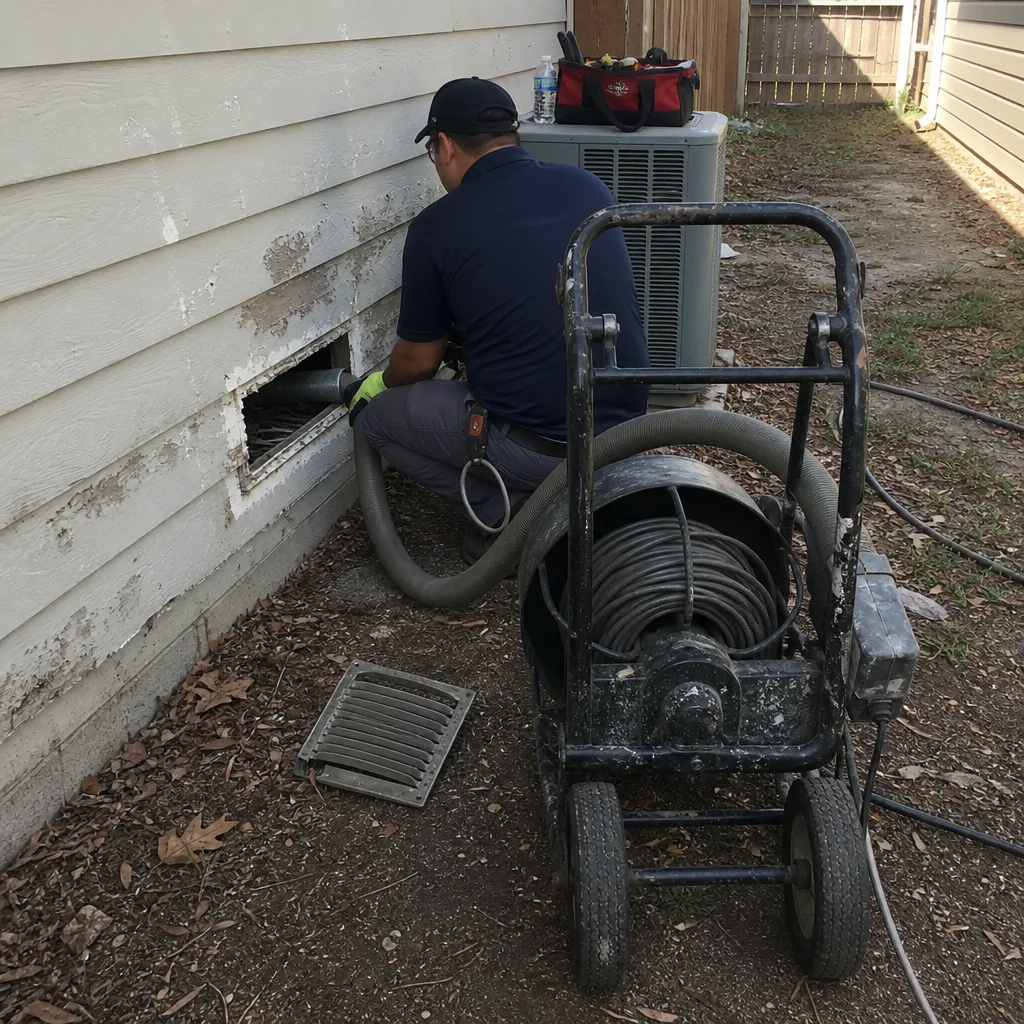 Before
 After
After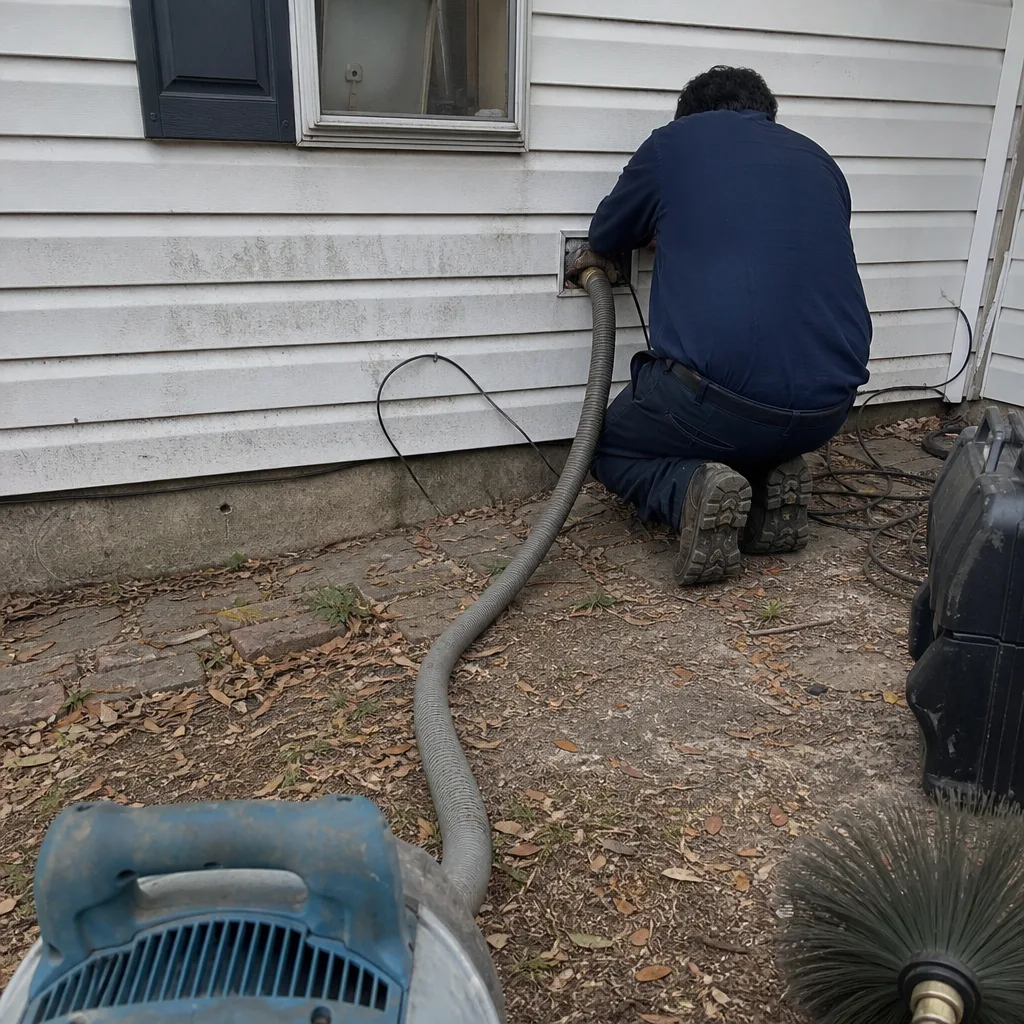 Before
 After
After