
Last updated October 15, 2026
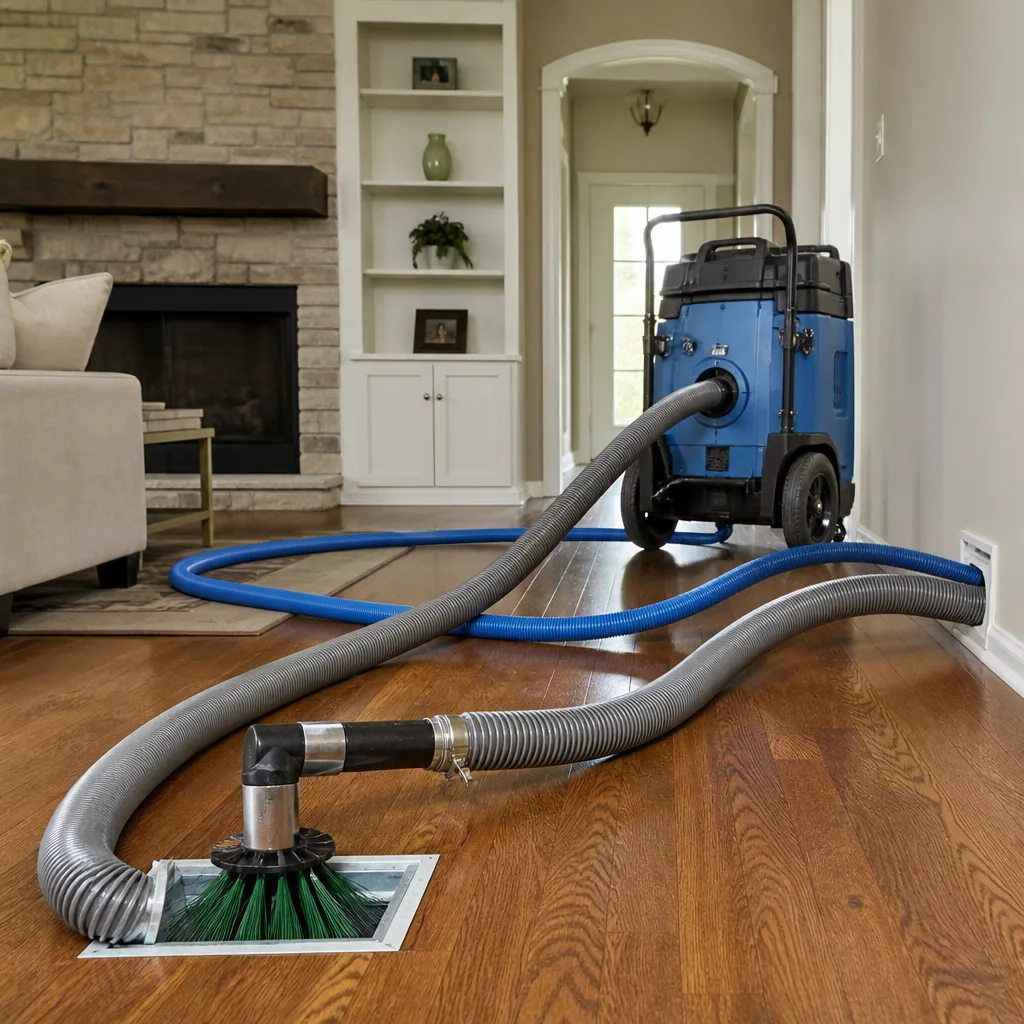 Whole-home duct cleaning
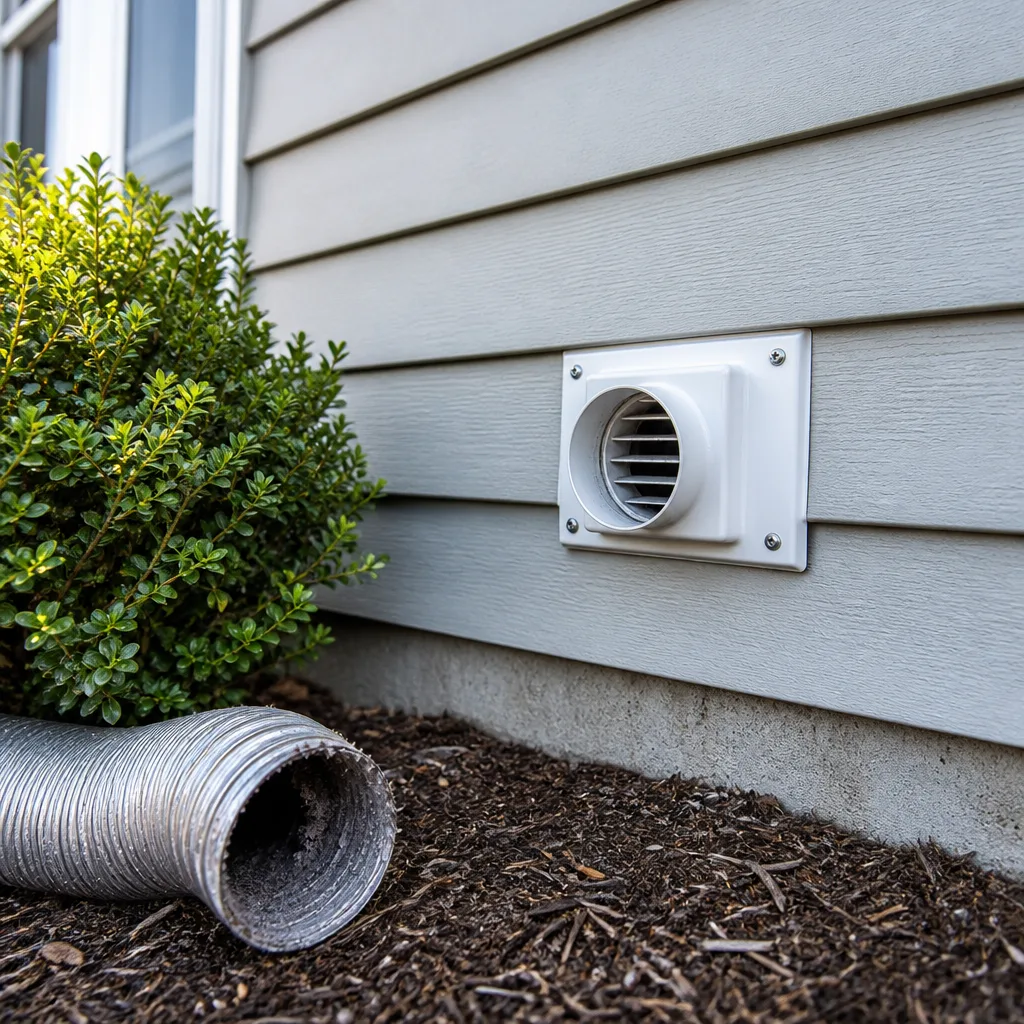 Dryer vent cleaning
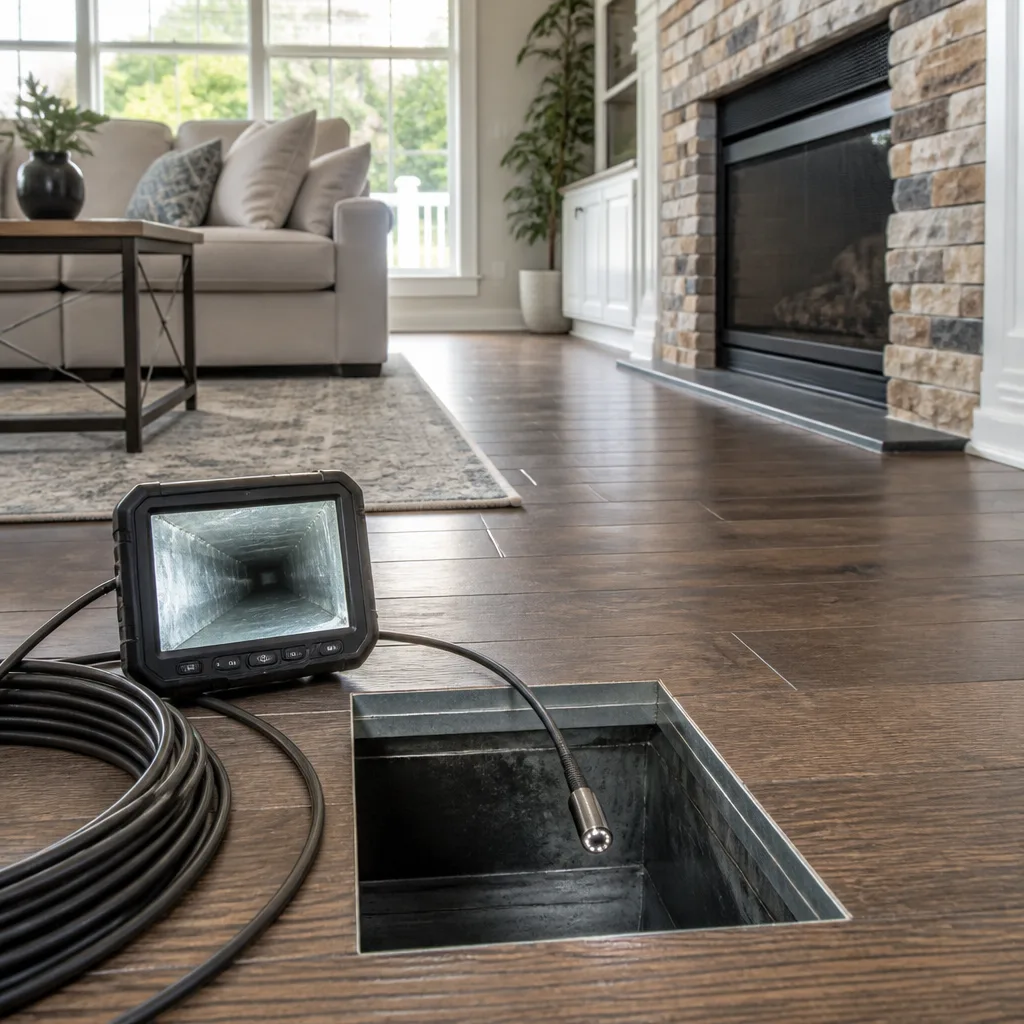 Camera inspection
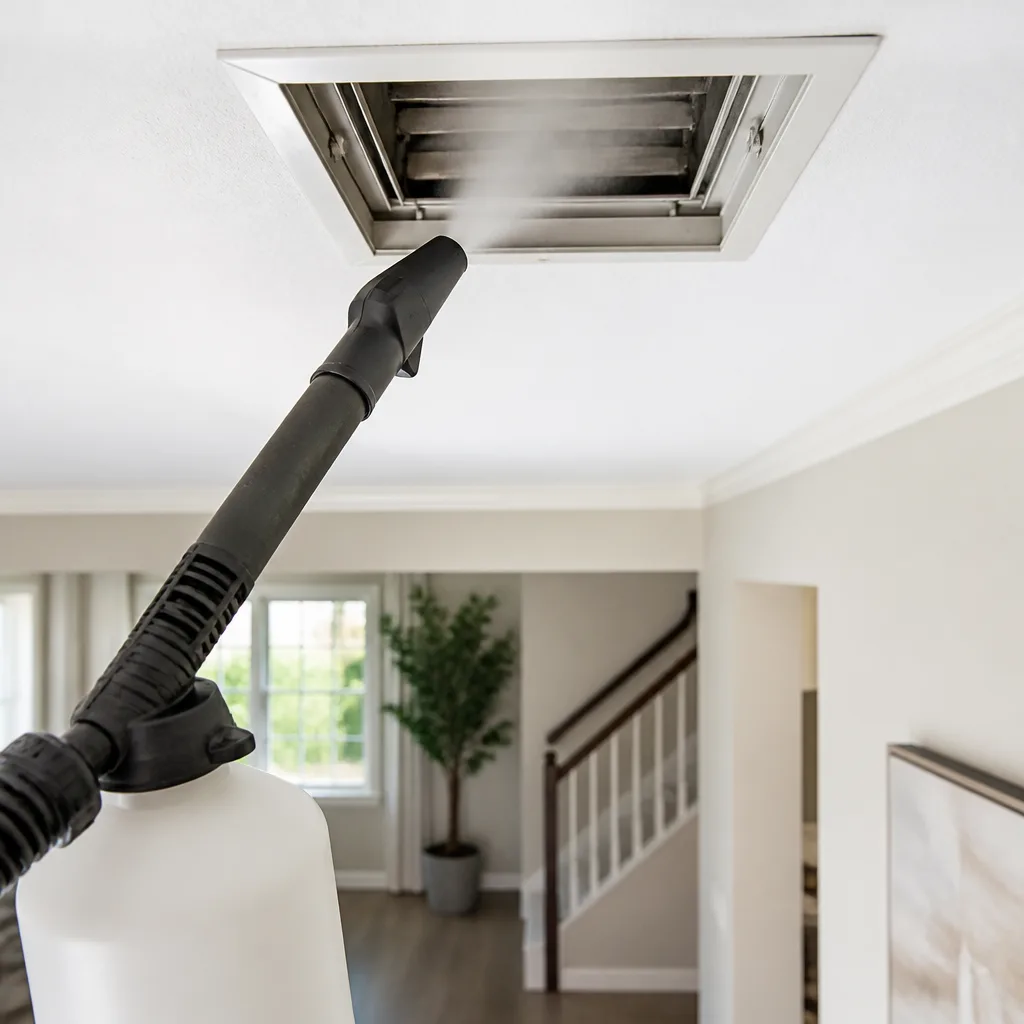 Sanitizing & deodorizing
Whole-system duct and dryer vent check with before-and-after photos - you see exactly what came out of your vents
That "$99 whole-house special" is a bait ad - the real number appears once they are in your hallway, or the "clean" is a shop-vac at the register. We photograph the inside of your ducts before and after instead.
The Complete Guide to Air Duct Cleaning in Houston
Houston HVAC systems run an average of 2,800+ hours per year. That’s nearly double the national average, and it changes everything about how quickly your ducts accumulate debris. Most national guides assume a system that rests for months at a time. Yours doesn’t. This Air Duct Cleaning guide explains what actually happens inside Houston ductwork, what a legitimate cleaning looks like, what it should cost, and how to avoid the pricing games that plague this industry. Written from our two decades of experience serving Houston homes, here’s what you need to know before you hire anyone.
Quick Answer
Air duct cleaning in Houston typically costs between $350 and $750 for a complete whole-home job, depending on square footage, number of access points, and how long it’s been since the last cleaning. A legitimate job uses negative-air extraction paired with rotary brush agitation, and you should receive a written price before any work begins. In Houston’s humidity, cleaning is less about visible dust and more about removing the fine particulate and mold spores that thrive in always-running, condensation-prone duct systems.
Styles & brands we work with
Table of Contents
- Why Houston Ducts Are Different From the Rest of the Country
- What Air Duct Cleaning Actually Involves
- Negative-Air Extraction vs. a Shop-Vac: Why the Difference Matters in Houston
- How Much Does Air Duct Cleaning Cost in Houston?
- What a Legitimate Houston Job Looks Like, Step by Step
- How to Read an HVAC Inspection Report Without Getting Taken
- The One Question to Ask Before You Sign Anything
- Common Mistakes to Avoid
- When to Call a Professional
- Frequently Asked Questions
Why Houston Ducts Are Different From the Rest of the Country
If you’ve read a national guide to air duct cleaning, you’ve read advice written for someone in Ohio or Colorado. Houston breaks those rules. Three factors combine here that you won’t find in most U.S. cities, and they’re the reason generic advice misleads Houston homeowners.
First, the runtime. A typical American HVAC system runs 1,200 to 1,500 hours a year. In Houston, the cooling season stretches from March through November, and many systems run 2,800 hours or more annually. More airflow means more air passing through your ducts, which means more dust, pet dander, cooking grease, and textile fibers deposited on duct walls. The accumulation rate is roughly double what national guidelines assume, so the standard “clean your ducts every 3-5 years” advice needs adjusting. In Houston, a well-sealed home with pets and allergy sufferers may need service every 2-3 years.
Second, humidity. Houston’s average relative humidity hovers between 70% and 90% for most of the year. Inside your ducts, that moisture does something specific: it binds fine dust to duct surfaces, creating a film that dry brushing alone won’t remove. It also creates conditions where mold spores, which are constantly entering your system through outdoor air intakes, can germinate on organic debris. We’ve pulled decades-old dust mats out of Houston ducts that were damp to the touch, even in homes where the occupants swore the system ran dry.
Third, slab-on-grade construction. Most Houston homes sit directly on concrete slabs with ductwork running through the slab or in the attic. Slab ducts in particular are vulnerable to moisture intrusion from below, and any crack or separation at a register boot lets humid air and soil gases into the duct environment. Add Houston’s expansive clay soils, which shift with seasonal wet-dry cycles and stress slab duct joints, and you have a system that’s constantly inviting moisture and micro-particulate into the air stream.
The takeaway: in Houston, duct cleaning isn’t a cosmetic service. It’s the removal of a damp, biologically active accumulation layer that affects what you breathe every time the system kicks on.
What Air Duct Cleaning Actually Involves
Before you spend a dollar, know what you’re buying. Air duct cleaning is the mechanical removal of debris from the interior surfaces of your HVAC air distribution system. That means the supply ducts, return ducts, register boots, and the main trunk lines. A thorough job also includes the air handler cabinet, the blower fan, and the evaporator coil, though not every company includes these by default.
The process has two core mechanical actions:
- Agitation: A rotating brush, compressed-air whip, or similar tool dislodges debris stuck to duct walls. Without agitation, fine dust that’s adhered to surfaces stays put.
- Extraction: A powerful vacuum unit, typically mounted in a truck or portable unit, pulls the loosened debris out of the system through a sealed collection system. This is the negative-air pressure step, and it’s the difference between cleaning and just stirring things up.
In a proper Houston job, the technician seals each access point and register as work proceeds so that loosened debris can’t escape into the living space. This is where equipment quality matters. We use Rotobrush rotary brush systems for the agitation pass, because they reach the duct wall and break the dust film that humidity has baked on. For extraction, we run Nikro negative-pressure units, which pull contaminated air out through HEPA-filtered collection bags. Abatement Technologies HEPA filtration ensures that the air moving through the cleaning zone isn’t recirculating fine particles back into your home.
For Houston homeowners considering a whole-home job, a key detail is the access-point strategy. Every duct system needs openings cut or accessed to insert agitation and extraction tools. A reputable company counts these access points, explains why each is needed, and includes them in the price. A company that quotes by square footage alone may be cutting corners by cleaning from a single access point.
Negative-Air Extraction vs. a Shop-Vac: Why the Difference Matters in Houston
You’ll see wildly different prices for duct cleaning in Houston, from $99 whole-home specials to $600+ professional jobs. The difference is rarely marketing. It’s equipment and method.
A shop-vac, even a powerful one, generates suction at the nozzle only. It can pull loose debris within a few inches of the hose, but it doesn’t create a pressure differential across the entire duct run. In a humid climate like Houston’s, where debris is adhered to duct walls by moisture, a shop-vac simply can’t remove the film. Worse, the exhaust from many shop-vacs isn’t HEPA-filtered, so fine particulate gets blown back into the room.
Negative-air extraction works differently. The vacuum unit creates negative pressure inside the sealed duct system itself, so air is drawn into the ducts through every register and opening, then pulled out through a single collection point. When paired with brush agitation, this creates a continuous flow: brush loosens, negative pressure captures. The debris leaves the system and lands in a sealed bag, not in your living room.
In Houston specifically, this matters for two reasons. First, the humid dust film in ducts here requires actual agitation to break free, and only a negative-air system is strong enough to capture it once loosened. Second, Houston’s outdoor air carries fine silt from the Gulf Coast’s clay soils and pollen from the region’s long growing season. If your cleaning method isn’t capturing and containing what it loosens, you’re dispersing that particulate into your home. A professional system using Nikro negative-pressure units and HEPA filtration contains the debris from start to finish.
How Much Does Air Duct Cleaning Cost in Houston?
Here are honest numbers for the Houston market, based on the homes we’ve cleaned across the metro area:
| System Size | Typical Range | What’s Included |
|---|---|---|
| Small (up to 1,500 sq ft) | $350 – $450 | All supply/return ducts, trunk lines, register boots, blower cabinet |
| Medium (1,500 – 2,500 sq ft) | $450 – $600 | Everything above, plus coil cleaning and access-point count of 6 – 10 |
| Large (2,500+ sq ft or multi-zone) | $600 – $750+ | Everything above, plus additional access points for zoned systems |
These are whole-system prices, not per-vent rates. If a company quotes you a per-vent price, ask for the math. Per-vent pricing almost always inflates the total once the technician counts registers on-site. A legitimate Houston company quotes one flat price for the complete system, in writing, before work starts.
Why do prices vary? Access difficulty is the main factor. Attic systems in older Houston homes with low-pitch roofs can require crawling through tight spaces, which adds labor time. Slab-ducted homes sometimes have rusted register boots that need extra care. Coil cleaning adds time and cost but is worth doing if your coil hasn’t been touched in years.
What should raise a red flag: any price under $200 for a whole home. At that rate, a company can’t afford the time for a real agitation pass, proper negative-air extraction, and post-job inspection. You’ll get a superficial cleaning that leaves the humid dust film intact. In six months, your ducts will look the way they did before.
Call Kestrel Air Duct Houston at (254) 347-2738 for a precise quote on your home. The estimate is free, and the price you’re quoted is the price you pay, in writing, before the first vent is touched.
What a Legitimate Houston Job Looks Like, Step by Step
Here’s what you should expect from a professional duct cleaning in Houston, from the initial call to the final walkthrough:
- Written quote, before work begins. A technician evaluates your system, counts access points, checks the coil and blower, and hands you a written price. Not a verbal estimate. A written price. If anything changes during the job, it’s their cost to absorb, not yours.
- Sealed work area. The technician places drop cloths or protective barriers around the work zone. Register covers come off, and each opening is sealed as needed to direct airflow into the negative-pressure system.
- Agitation pass. A rotating brush system works through each duct run, breaking the debris film from the duct walls. This is the step that compensates for Houston’s humidity-caked dust.
- Negative-air extraction. The vacuum unit runs continuously during agitation, pulling loosened debris into a sealed collection system. This step prevents cross-contamination of the living space.
- Component cleaning. The blower fan, evaporator coil, and air handler cabinet get cleaned. If your coil is caked with years of dust and pet hair, this step improves airflow and system efficiency immediately.
- Post-job camera inspection. The technician runs a camera through key duct runs to show you the result. You should see clean metal or duct board, not just “less dust.” We document this with before-and-after photos you can keep.
- Guarantee in writing. Every Kestrel job includes our 365-Day Done Right Promise, in writing: if anything about the work falls short within a year, we return and make it right at no charge. It’s not a verbal pledge. It’s on paper.
This process, done correctly, takes 3-5 hours for a typical Houston home. A two-hour job billed as a “deep clean” is a warning sign.
How to Read an HVAC Inspection Report Without Getting Taken
HVAC inspection reports create a lot of anxiety, and some companies know it. Here’s how to read one with a clear head and identify what actually needs action in Houston.
A legitimate inspection report typically includes camera images with notes on: duct wall condition, debris accumulation level, evidence of moisture or staining, register boot condition, coil condition, and air handler cleanliness. Findings fall into three buckets.
Bucket one: actual findings that warrant cleaning. Visible debris accumulation thicker than a light dust layer, particulate escaping from registers, clumped debris on duct walls, dark staining that indicates moisture exposure, or visible mold growth on organic debris. Any of these justify cleaning and possibly further investigation.
Bucket two: findings that indicate a maintenance issue, not just a cleaning issue. A cracked duct seam, separated register boot, collapsed flex duct, or a coil so clogged that airflow is restricted. Cleaning addresses the symptom, but the underlying repair is a separate conversation. A good company tells you the difference plainly and doesn’t pressure you to buy a repair on the spot.
Bucket three: upsell triggers. “Enhanced microbial treatment” with no lab confirmation of mold species. “Sanitizing fog” that’s just a fragrance. “Duct sealing” recommended with no evidence of leakage. These are the line items that inflate a $450 job into a $1,200 invoice. In Houston’s humidity, you may legitimately need mold remediation if lab testing confirms active growth, but that’s a specific service with specific testing, not an add-on fog.
Here’s the test: ask the technician to show you each finding on camera, in real time. If they won’t, or if the “evidence” is a stock photo, that’s not an inspection. That’s a script. At Kestrel, you see every finding on screen with your own eyes before you approve work.
The One Question to Ask Before You Sign Anything
If you remember one thing from this guide, make it this.
Ask any contractor: “Will you put the final price and scope in writing before you start?”
That question, asked plainly, tells you almost everything. A company that hesitates, qualifies, or says “we’ll see once we get in there” is setting up the doorway price change. That’s the industry’s most common complaint from Houston homeowners: a coupon price that becomes a much larger invoice once the van is in the driveway. The technician finds “additional issues,” or the scope expands from “basic cleaning” to “the full package you actually need.”
A company that answers without hesitation, and hands you a written quote before any work begins, is operating under a different code. That’s the Kingswell Way at Kestrel: the price is in your hands, in writing, before a single vent is touched. If the job runs long due to access issues, that’s our problem, not an added line item on your invoice. No bait, no switch, no door-step revision. That’s not a promotion. It’s the standing policy, and it’s been in place since Dale Whitmore founded this company in 2004.
Common Mistakes to Avoid
- Hiring by price alone. The $99 whole-home special in Houston is almost always a loss-leader designed to get a technician in the door, at which point the “real” price appears. A legitimate job requires time, equipment, and labor that can’t be delivered at that rate.
- Skipping the post-job inspection. Without a camera inspection after cleaning, you can’t verify the work was actually done. In our experience, Houston homeowners who skip this step are the ones who call us six months later wondering why their allergies never improved.
- Accepting a per-vent quote. Per-vent pricing is the classic bait-and-switch structure. You receive a quote for “up to 10 vents,” and the house has 16. The total balloons. Request a whole-system price instead.
- Treating duct cleaning as a one-time event. In Houston’s runtime-heavy climate, ducts accumulate debris faster than national averages suggest. A one-and-done cleaning restores the system; it doesn’t freeze it in that state. Plan for re-service based on your home’s conditions.
- Falling for the “mold scare” without confirmation. Dark dust in Houston ducts isn’t automatically mold. It may be simple debris. If a technician claims mold, ask for lab confirmation before approving remediation. Real mold testing exists and should produce documentation.
- Not asking about the guarantee. A company that can’t put its guarantee in writing is telling you something. The 365-Day Done Right Promise at Kestrel is documented on every job: if the work falls short within a year, we return and fix it at no cost.
When to Call a Professional
Some signs are clear enough that waiting isn’t wise. If you see visible dust puffing from your registers when the system kicks on, your ducts are past the point of household maintenance. If your allergy symptoms spike indoors but improve away from home, the duct environment is a likely contributor. If you’ve had recent construction, renovation, or a roof replacement in Houston, drywall dust and debris have almost certainly entered the system. If your energy bills have crept upward despite no change in thermostat settings, a clogged coil or blower may be forcing the system to work harder. And if you’ve never had your ducts cleaned in a home you’ve owned for more than three years, it’s time. Kestrel Air Duct Houston offers free estimates throughout Houston, and you’ll speak to a real person any time you call (254) 347-2738.
Frequently Asked Questions
Most Houston homes run between $350 and $750 for a complete whole-home cleaning, with the final price driven by square footage, system type, and access conditions. You should receive a written quote before work begins, with the final price in your hands before a single vent is touched. Call (254) 347-2738 for a free estimate on your home.
In Houston’s climate, every 2-4 years is a reasonable interval for most homes, compared to the national guidance of 4-6 years. Homes with pets, allergy sufferers, or recent renovation work may benefit from a 2-year schedule. The runtime reality is simple: your system moves nearly twice the annual air volume of a typical U.S. home, so debris accumulates faster.
Lower quotes almost always reflect a different method: shop-vac cleaning without negative-air extraction, minimal agitation, or no component cleaning. These jobs leave the humid dust film and fine particulate in place. The price difference is a method difference, not a market inefficiency.
Ask for a post-job camera inspection and before-and-after photos of your own ducts, not stock images. At Kestrel, the technician runs a camera through key duct runs and shows you the results in real time, and you keep the photo documentation. If a company won’t show you the inside of your ducts after cleaning, that’s an answer in itself.
For many Houston allergy sufferers, yes, removing accumulated pollen, dust mites, and mold-bearing debris from the system reduces the particulate load circulating through the home. The benefit depends on source removal being real: brush agitation plus negative-air extraction, not a surface pass. Combine cleaning with quality filtration, such as Honeywell or Aprilaire media filters, for ongoing protection.
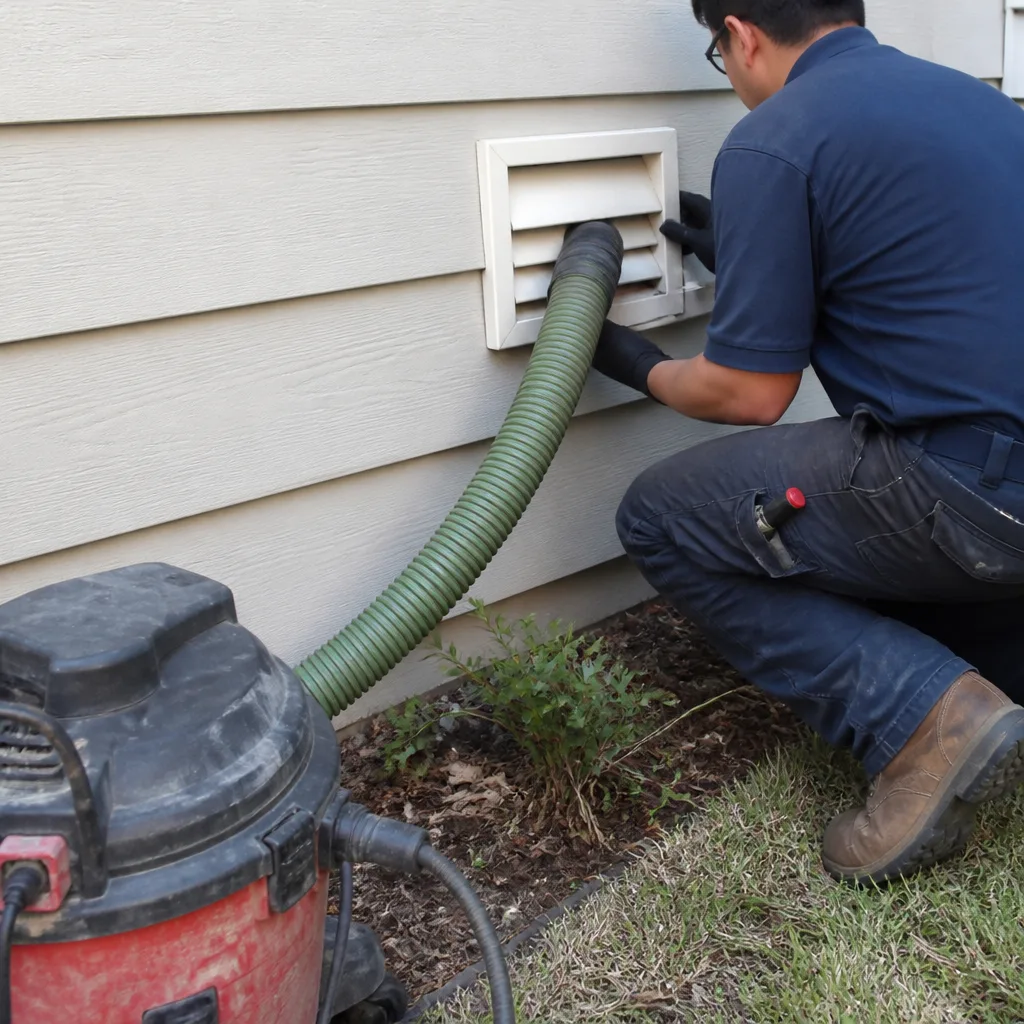
Air duct cleaning addresses the HVAC distribution system: supply ducts, return ducts, trunk lines, boots, coil, and blower. Dryer vent cleaning in Houston targets the exhaust line from your clothes dryer to the exterior vent, where lint accumulation creates a fire hazard. These are separate services requiring separate equipment and methods, and a reputable company will quote them independently.
The Bottom Line
Houston’s climate punishes inattention to duct systems. Almost double the national average in runtime, persistent humidity that bonds dust to duct walls, and slab construction that invites moisture intrusion all add up to a specific set of conditions that generic duct cleaning advice fails to address. A legitimate Houston job means written pricing before work starts, brush agitation paired with negative-air extraction, component cleaning, and photographic proof. It means a company that answers the phone and puts its guarantee in writing. That’s the standard Dale Whitmore founded in 2004, and it’s the standard we’ve held through every job since. Ready to find out what’s in your ducts? Explore our more guides & resources, or call (254) 347-2738 for a free estimate. You’ll get a real person, a written price, and no surprises.
Written by Dale Whitmore, Owner at Kestrel Air Duct Houston, serving Houston since 2004.
See the difference
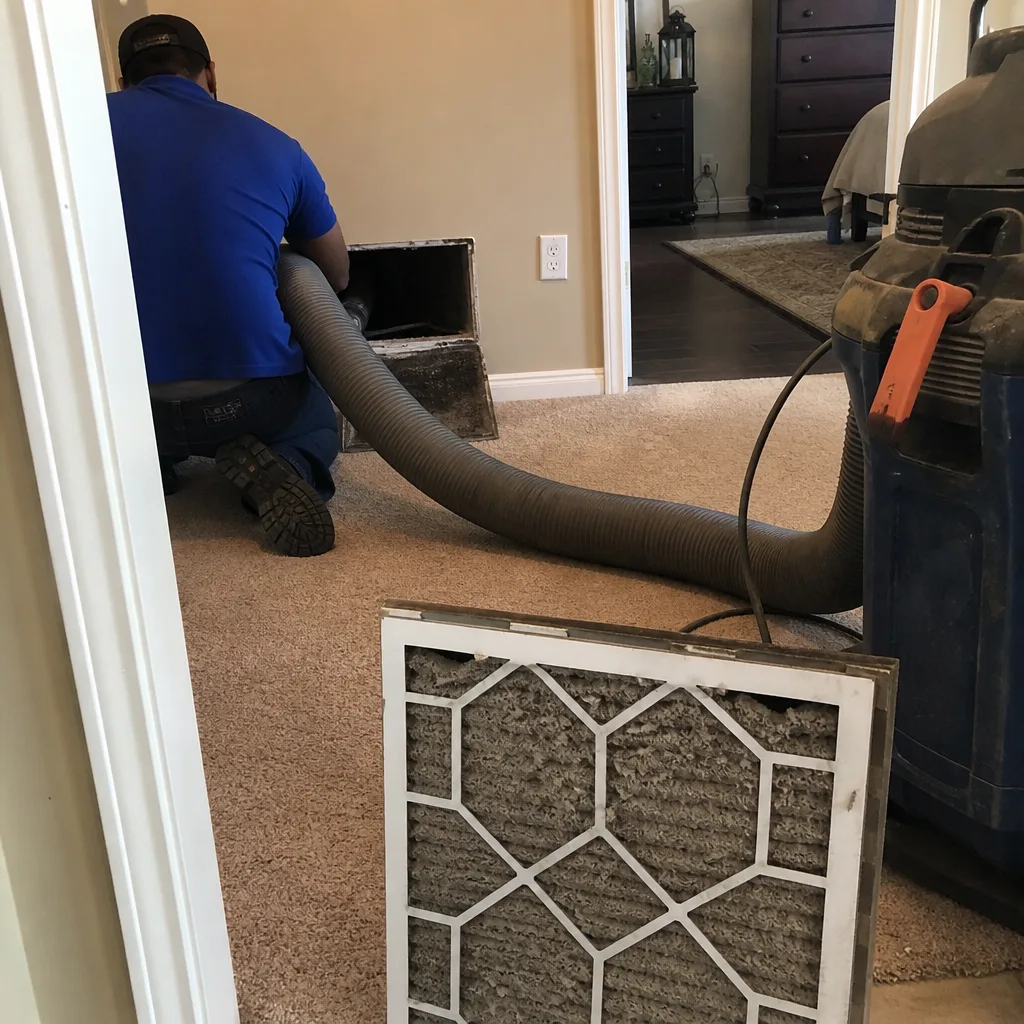 Before
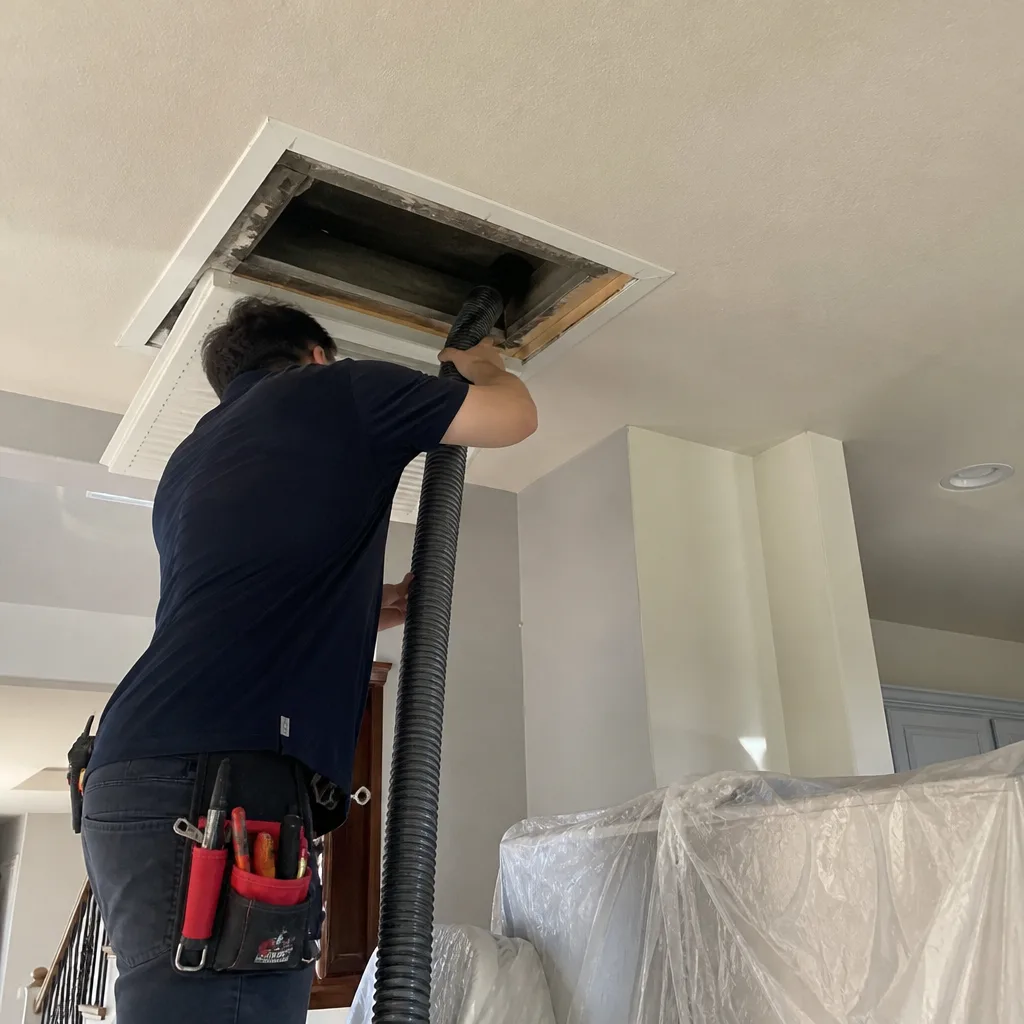 After
After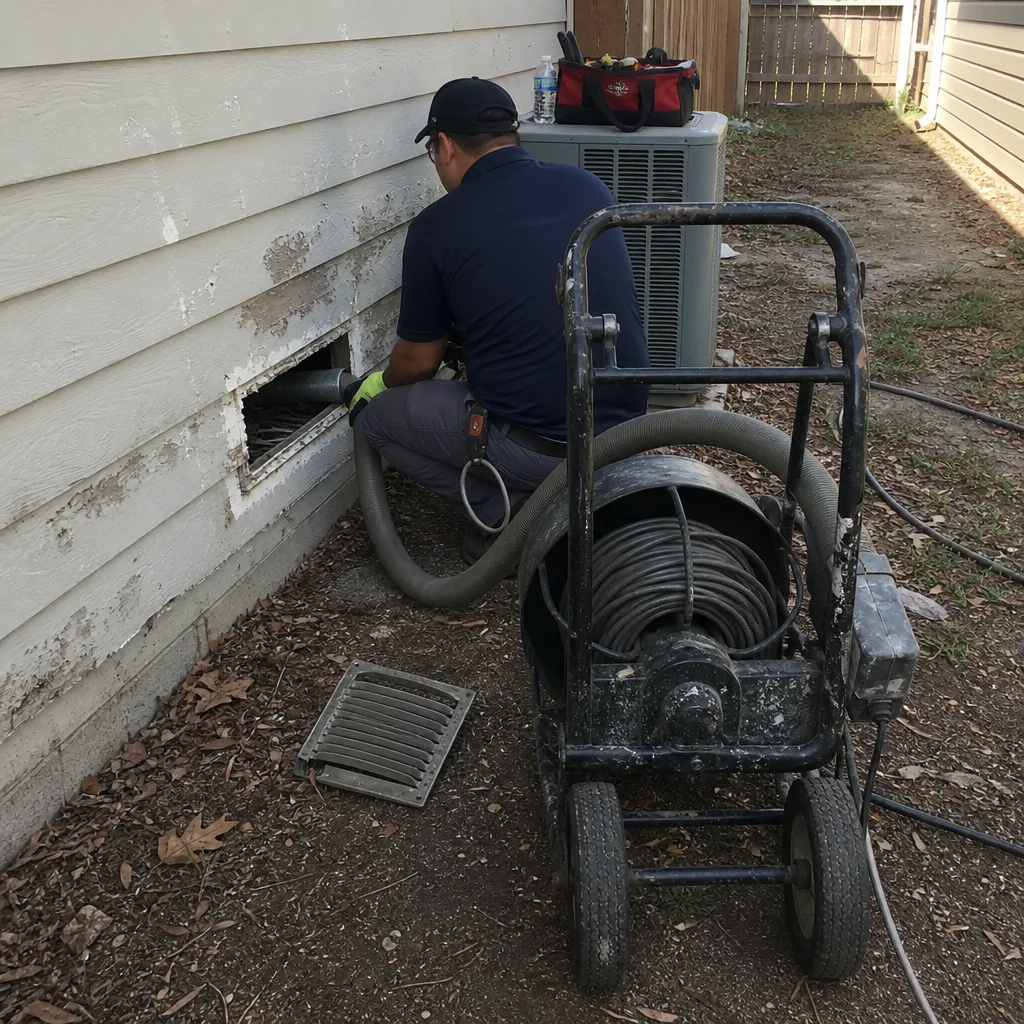 Before
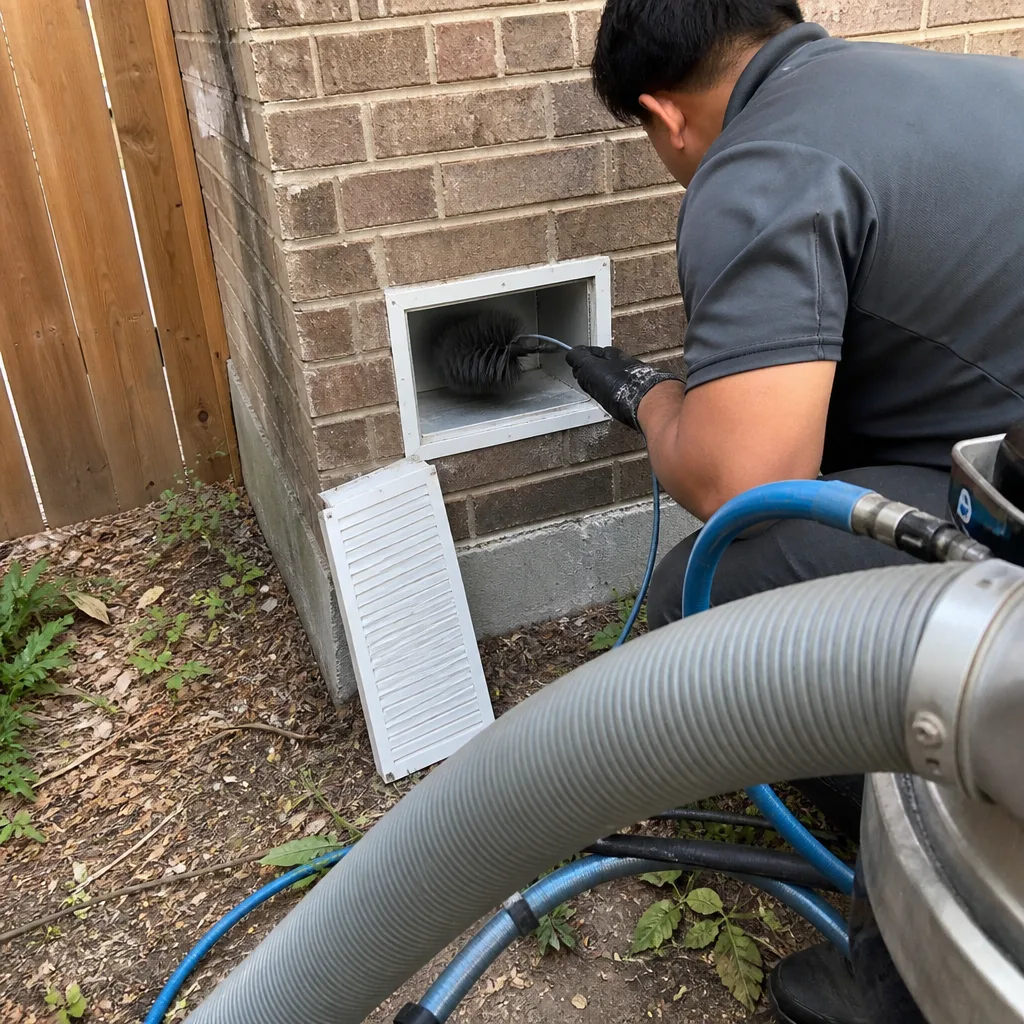 After
After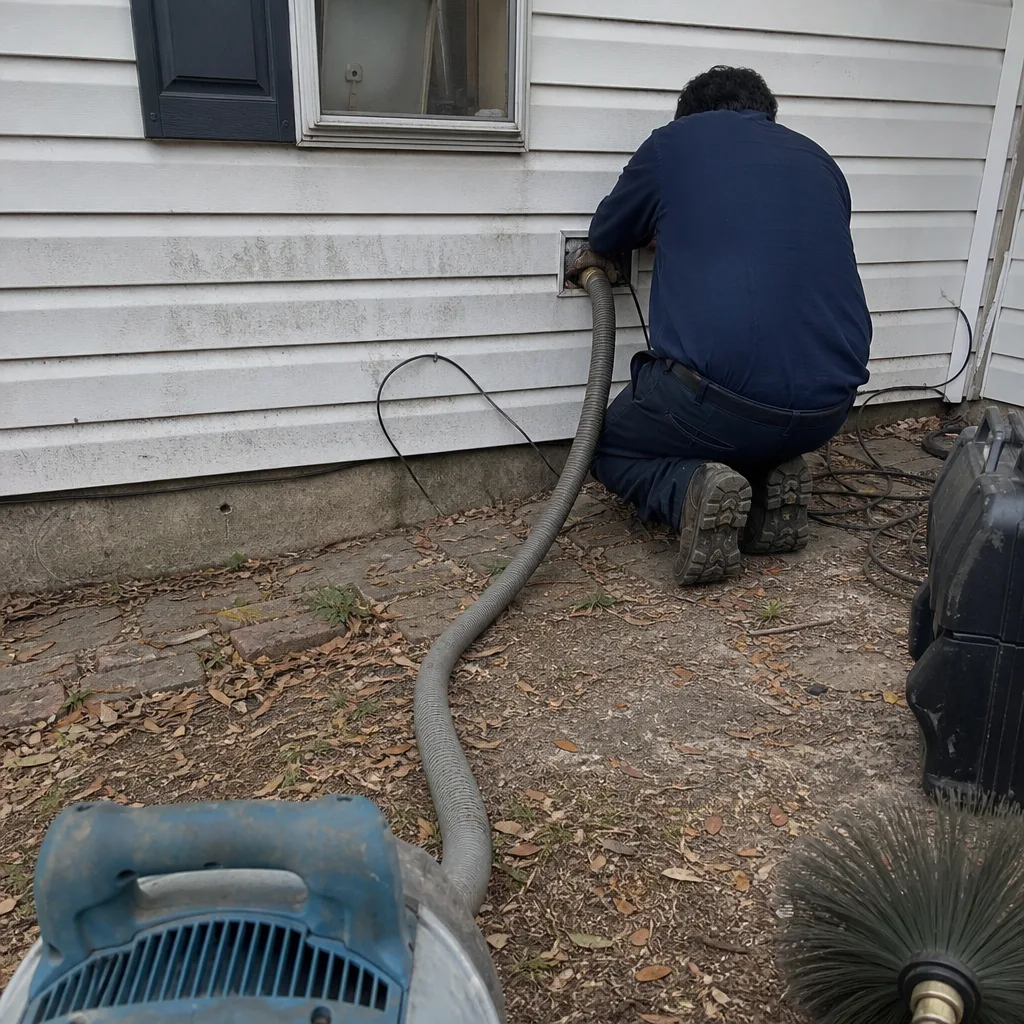 Before
 After
After