
Last updated October 15, 2026
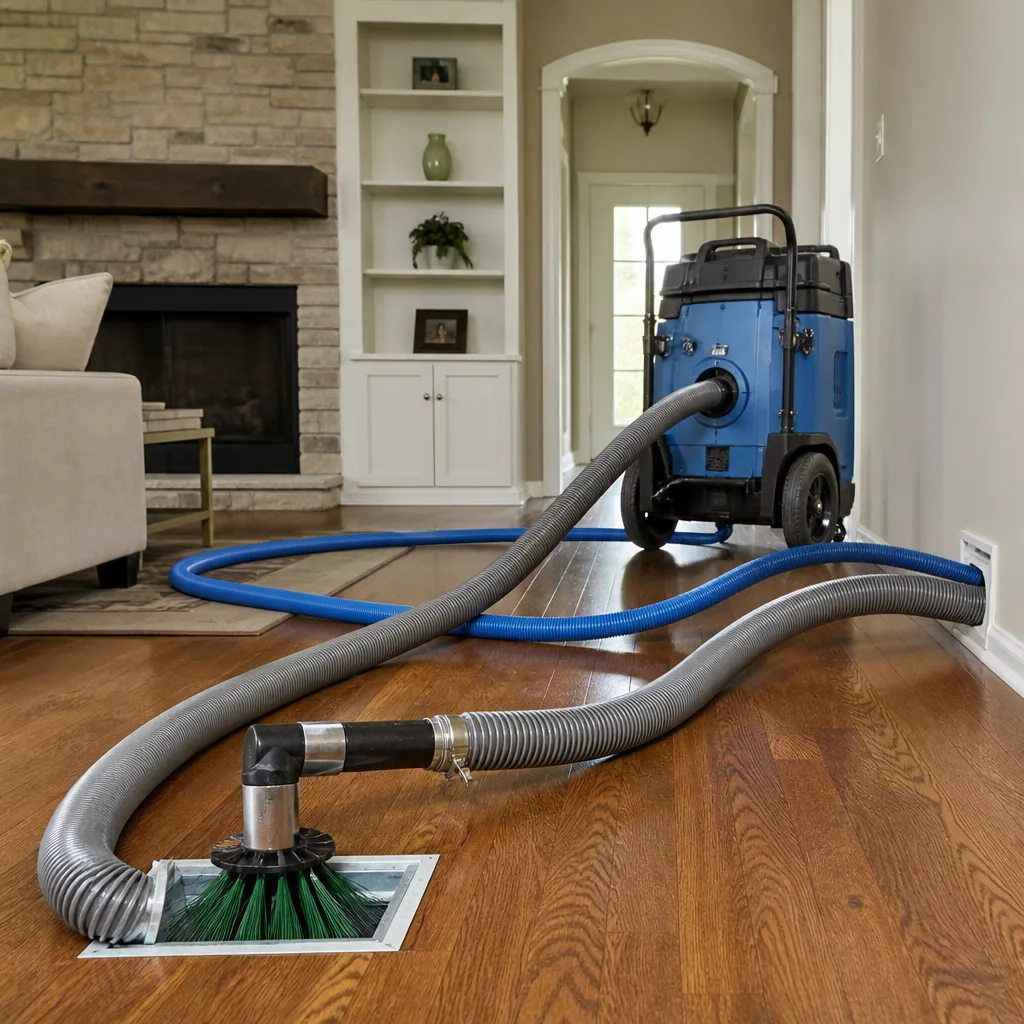 Whole-home duct cleaning
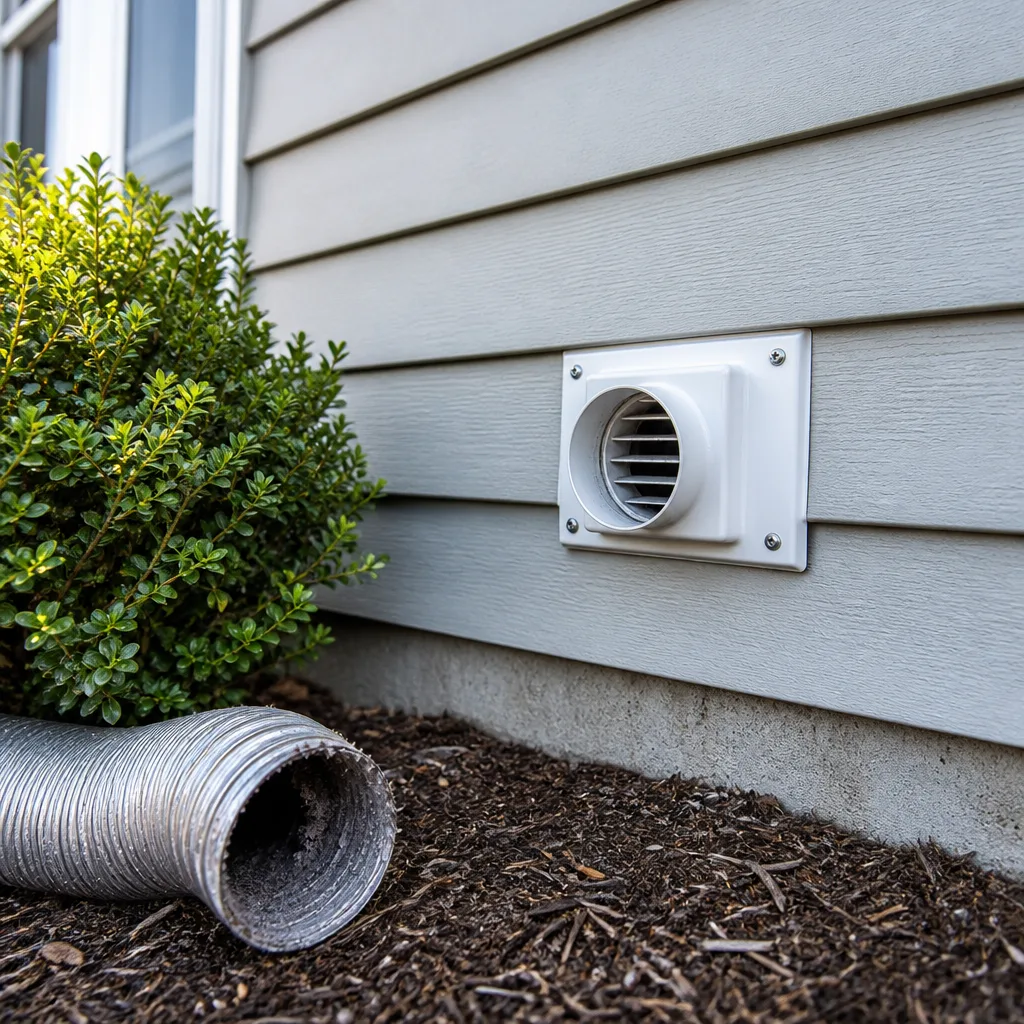 Dryer vent cleaning
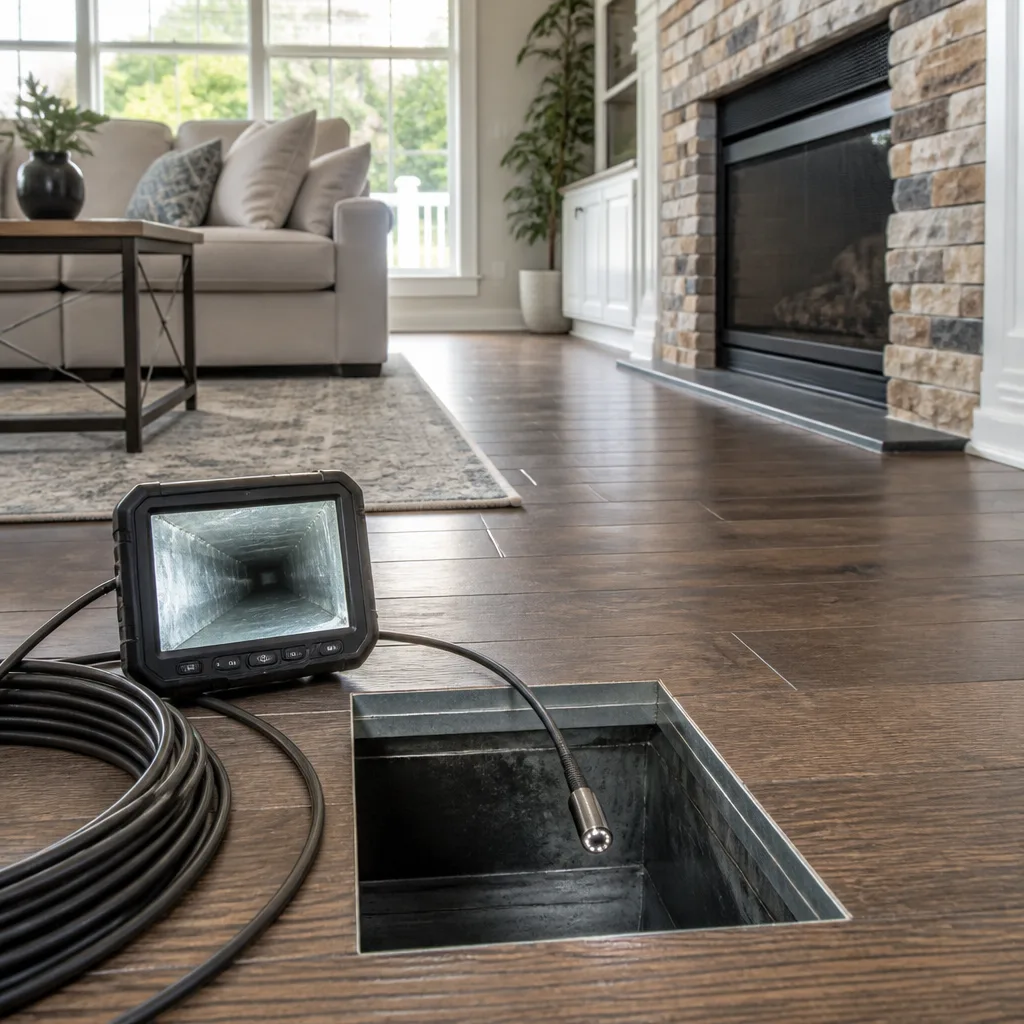 Camera inspection
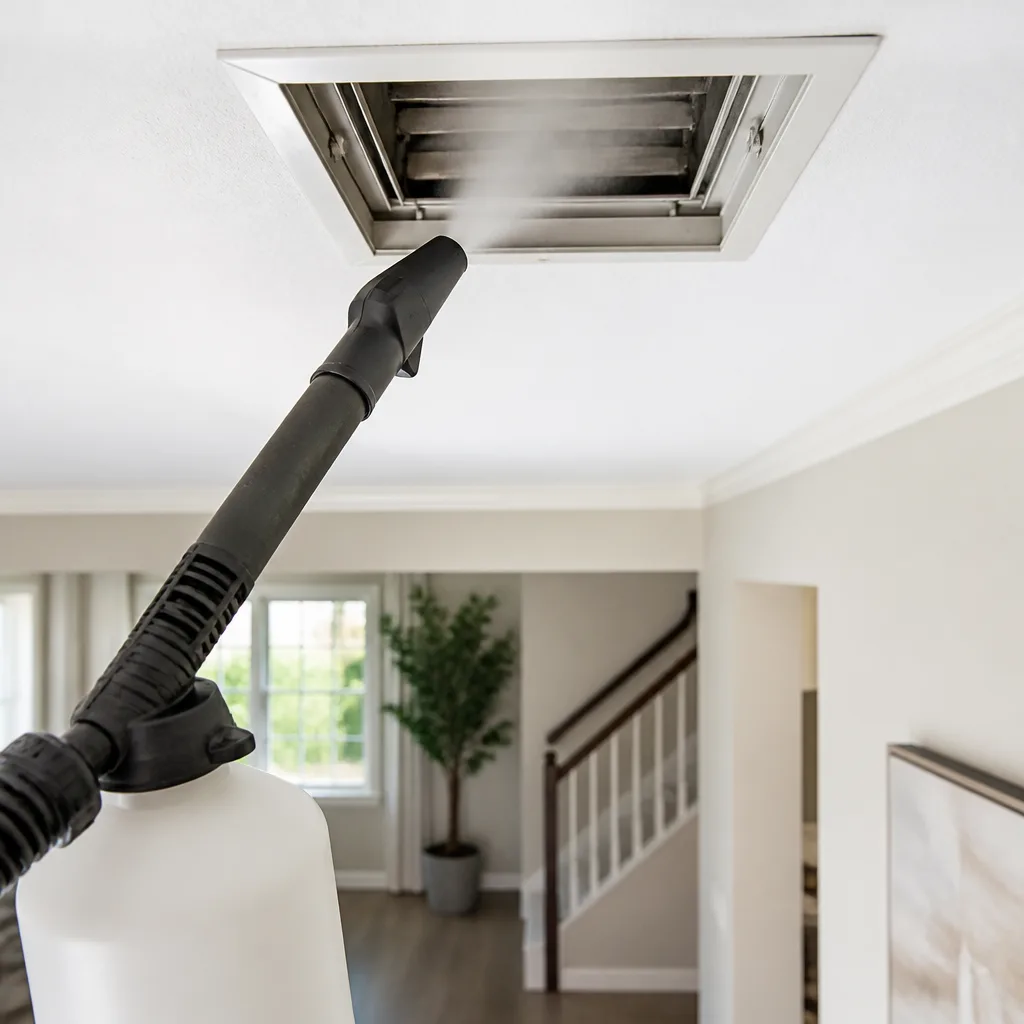 Sanitizing & deodorizing
Whole-system duct and dryer vent check with before-and-after photos - you see exactly what came out of your vents
That "$99 whole-house special" is a bait ad - the real number appears once they are in your hallway, or the "clean" is a shop-vac at the register. We photograph the inside of your ducts before and after instead.
Air Duct Cleaning Permits, Codes & Inspections in TX: What You Need to Know
If a duct cleaning company drills a new access hole in your plenum and doesn’t patch it to code, that opening can fail a City of Houston mechanical inspection during a home sale. The problem lands on you, not the contractor who created it. Most Houston homeowners assume any company that shows up with a van and a vacuum is qualified to touch their ductwork, but Texas draws a surprisingly sharp line between cleaning and modification. This guide-along with our The Complete Guide to Air Duct Cleaning in Houston-explains where that line sits, what documentation protects your HVAC warranty, and what to do when a contractor leaves your system in worse condition than they found it.
Quick Answer
Air duct cleaning itself does not require a permit in Texas, and a basic cleaning performed by a company that never cuts into or modifies the duct system falls outside TDLR contractor licensing rules. The moment a technician cuts a new access hole, removes a section of duct, applies sealant, or re-routes ductwork, the work can require a Texas HVAC contractor license and possibly a City of Houston mechanical permit. Homeowners should ask one question before any work begins: “Will you be cutting into or modifying my duct system in any way?” If the answer is yes, ask for a TDLR license number.
Styles & brands we work with
Table of Contents
- Do You Need a Permit for Air Duct Cleaning in Texas?
- TDLR Licensing: Where Cleaning Ends and Contracting Begins
- Houston Mechanical Code: Access Panels and “Restore to Original Condition”
- Duct Sealing and Encapsulation: When Cleaning Becomes a Permitted Repair
- Protecting Your HVAC Manufacturer’s Warranty
- What to Do When a Contractor Leaves Your Ducts in Non-Code Condition
- Documentation to Keep on File After Any Duct Work
- Common Mistakes to Avoid
- When to Call a Professional
Do You Need a Permit for Air Duct Cleaning in Texas?
No. A routine air duct cleaning in Houston, where a technician uses negative-air extraction and rotary brush agitation to remove debris from inside existing ducts, requires no permit from the city or the state. The work stays entirely inside the duct system, no structural modification occurs, and the system returns to service exactly as it was. Texas treats this the same way it treats carpet cleaning or pressure washing: a maintenance service, not a construction activity.
But here’s where Houston homeowners get caught. The City of Houston mechanical code applies not just to HVAC installation, but to any alteration of the air distribution system. Alteration has a specific legal meaning. Cutting a new access hole in a plenum is an alteration. Removing a duct section to clean it outside the system is an alteration. Applying mastic sealant to joints is an alteration. Each of these actions changes the system’s physical state, and from that point forward, the city has jurisdiction over how the work is performed and how cleanly it’s restored.
In our experience, the most common scenario plays out like this: a company quotes a low flat rate, arrives at the home, discovers the main trunk line has no pre-existing access ports, and decides to cut one on the spot. The homeowner never thought to ask whether cutting was part of the plan. Six months later, the house goes under contract, the buyer’s inspector finds an unsealed or improperly patched access panel, and the seller is scrambling to find a licensed HVAC contractor to fix it before closing.
Key takeaway: cleaning is permit-free. Cutting, sealing, or re-routing is not automatically permit-free. Know the difference before the first tool comes out of the van.
TDLR Licensing: Where Cleaning Ends and Contracting Begins
The Texas Department of Licensing and Regulation (TDLR) administers HVAC contractor licensing under Texas Occupations Code Chapter 1302. Here’s the rule in plain words: if you are performing “air conditioning and refrigeration contracting,” defined as designing, installing, constructing, maintaining, servicing, repairing, or modifying an air conditioning or refrigeration system, you need a TDLR license. Routine cleaning of ducts is not on that list. Cutting access panels, replacing duct sections, sealing seams, or modifying airflow pathways is.
The practical test is simple. Ask the company: “Are you a TDLR-licensed HVAC contractor?” If they say yes, ask for the license number, then verify it on the TDLR website. If they say no, the next question is: “Does your cleaning method involve cutting into or modifying the duct system in any way?” A reputable duct cleaning company that works only inside existing access points can operate without a TDLR HVAC license because they never perform contracting work. A company that cuts or modifies without a license is operating outside Texas law.
Here’s why that matters to you, the Houston homeowner:
- Recourse: If licensed work goes wrong, you have a formal complaint path through TDLR with real teeth, including fines and license suspension. If unlicensed contracting goes wrong, your options shrink to small claims court.
- Insurance: TDLR licensees carry specific liability insurance requirements. An unlicensed company cutting into your plenum may have only a basic general liability policy that won’t cover substandard duct modification.
- Code compliance: TDLR-licensed contractors are tested on and held to the adopted mechanical codes, including the International Mechanical Code provisions that Houston enforces.
We’ve walked into Houston homes where an unlicensed cleaning crew left a jagged access opening sealed with duct tape and a prayer. The homeowner paid for “cleaning” and got a code violation they didn’t discover until a licensed technician came to inspect the system for an unrelated issue.
Houston Mechanical Code: Access Panels and “Restore to Original Condition”
The City of Houston adopts the International Mechanical Code (IMC) with local amendments, and it has a phrase that matters more than most contractors realize: the requirement that any opening in a duct system be accessible, sealed, and protected when not in active use. In practice, this means every access point in your ductwork must be covered with a manufactured access panel or an airtight, code-approved patch, secured with mechanical fasteners, and sealed to prevent air leakage.
Here’s what “restore to original condition” actually means in practice, because this is where the shortcuts happen:
- Access panels must be manufactured or fabricated to standard: A scrap piece of sheet metal bent by hand and screwed over the hole is not code-compliant if it leaks. The patch must match the duct material, fit tightly, and be sealed with mastic or approved tape.
- The opening must be accessible without demolition: The point of an access panel is future access. If the patch requires cutting into drywall or removing cabinetry to reach, it fails the accessibility requirement.
- Sealant must be the right product: Duct tape, despite its name, is not permitted for duct sealing under the IMC. The code requires UL-listed tape, mastic, or mastic-plus-mesh systems. A cleaning crew with a roll of gray cloth tape is not restoring to code.
- Insulation must be restored: If the duct was insulated, the patch area must be re-insulated to the same R-value. Missing insulation at the patch site causes condensation in Houston’s humid air, leading to mold inside the duct within a season.
Houston’s climate makes this particular code requirement more urgent than in drier regions. Our Gulf Coast humidity means any air leak at an access panel pulls warm, moisture-heavy air into the duct system on the return side, where it condenses and feeds microbial growth. A leaking patch isn’t just an efficiency problem here; it’s a mold risk that develops in months, not years.
Air Duct Cleaning in Houston performed correctly never requires cutting new access points. When we encounter a system with no usable access, we tell the homeowner what a licensed contractor would need to do and stop there until they’ve made an informed decision.
Duct Sealing and Encapsulation: When Cleaning Becomes a Permitted Repair
Duct sealing and duct encapsulation are the two services most likely to blur the line between cleaning and contracting, and both deserve your full attention before you sign anything.
Duct sealing means applying mastic, tape, or aerosol sealant to close air leaks in the duct system. In Texas, sealing performed as part of a repair or modification is HVAC contracting work. It requires a TDLR license, and depending on scope, a City of Houston mechanical permit. A cleaning company that offers to “seal your ducts while we’re in there” is crossing into licensed-trade territory the moment the sealant hits the joint.
Duct encapsulation means coating the interior of the ducts with a spray-on sealant or liner material, typically marketed as a solution for older metal ducts with minor corrosion or leaks. This is not maintenance. This is a material alteration of the air distribution system. It requires a licensed HVAC contractor, and in Houston, it may require a permit. It also usually requires an inspection after completion.
What to demand from any contractor who proposes sealing or encapsulation:
- A written TDLR license number you can verify online before work begins.
- A written scope of work describing exactly which duct runs will be sealed or encapsulated, what product will be used, and the anticipated material quantity.
- A written statement confirming whether a City of Houston permit is required for the specified work, and who is responsible for pulling it.
- A post-work inspection plan: who verifies the work meets code, and what documentation you’ll receive.
- Warranty terms on the sealing material: aerosol sealants have different longevity profiles than mastic; know what you’re getting and for how long it’s expected to hold.
Here’s the honest truth from a company that offers our Air Duct Cleaning services and nothing else: if a cleaning company offers sealing as an add-on and they are not TDLR-licensed, they are not offering you a deal. They are offering you liability.
Protecting Your HVAC Manufacturer’s Warranty
Your HVAC manufacturer’s warranty is a contract, and like every contract, it has conditions you must meet to keep it enforceable. Most major manufacturers (Trane, Carrier, Lennox, Rheem, and Goodman, all commonly installed in Houston homes) include language requiring that all work on the equipment and connected duct system be performed by a licensed HVAC contractor using approved methods.
Here’s what that means in practice:
- Routine duct cleaning that never modifies the system generally does not void a manufacturer’s warranty on its own. The warranty covers the equipment; cleaning the ducts without touching the air handler or condenser typically does not implicate the warranty at all.
- Access panel cutting performed incorrectly can void the warranty if the manufacturer determines the alteration caused a system failure. An unsealed access hole allows unfiltered air into the return stream, which can damage the blower motor or evaporator coil. If the manufacturer inspects and finds an unlicensed modification as the cause, your warranty claim dies there.
- Chemical sanitizers and sealants introduced into the duct system by a non-licensed company are the fastest way to void a warranty. If a product not approved by the manufacturer ends up coating the evaporator coil or the blower, the manufacturer will deny related claims. This includes “duct sanitizing” sprays sold as add-ons by cleaning companies.
Documentation to keep on file after any duct work:
- The invoice with the exact date, scope of work, and technician name.
- The company’s TDLR license number (if the work required one) verified at the time of service.
- Photographs: before, during, and after. We recommend homeowners take their own photos of any access point before the technician covers it.
- Product data sheets for any sealant, sanitizer, or encapsulant used. If the company won’t provide them, don’t let them use the product.
- A written statement from the company confirming what was done and that no modification to the duct system occurred, if the work was cleaning-only.
At Kestrel Air Duct Houston home, every job receives a written scope statement before work begins. Our written price is in your hands before a single vent is touched, and that price includes exactly what we’ll do, nothing more. Dale Whitmore started this company in 2004 under the Kingswell Guarantee specifically because he saw too many Houston homeowners learning about warranty exclusions after the damage was done.
What to Do When a Contractor Leaves Your Ducts in Non-Code Condition
This section is for the homeowner who’s already been burned. Maybe you’re reading this after the fact: a cleaning company came, cut something, and now an inspector or a second contractor has told you the work is not up to code. Here’s the path forward, in plain steps.
Step 1: Document everything. Take photographs of the non-compliant work from multiple angles. Save every text message, email, and invoice. Write down dates, times, and names. If the company is refusing to respond, keep a log of every contact attempt. This paper trail is the foundation of every remedy that follows.
Step 2: Get a written assessment from a licensed HVAC contractor. You need someone who holds a TDLR license to state, in writing, what is wrong and what it will cost to bring the system into code compliance. This costs money, typically $100 to $200 for a diagnostic visit in Houston, but it converts your complaint from opinion into evidence.
Step 3: Send the original contractor a written demand for correction. Give them a specific deadline (14 days is standard) to fix the work at their expense. Include the licensed contractor’s assessment. Send it certified mail, return receipt requested. Many companies will fix the work at this stage because they know the next stop is worse for them.
Step 4: If the work was performed by an unlicensed company and involved contracting activity, file a complaint with TDLR. Go to the TDLR website, find the enforcement or complaints section, and submit the full documentation. TDLR has jurisdiction over unlicensed HVAC contracting in Texas and can issue cease-and-desist orders and administrative penalties. They cannot recover your money, but they can stop the operator from doing this to another family.
Step 5: If the work was performed by a TDLR-licensed contractor and is non-compliant, file a formal complaint against the license. TDLR complaint investigations can result in license suspension or revocation. A licensed contractor facing a complaint often becomes much more cooperative about making the work right.
Step 6: Consider small claims court. In Texas, justice courts handle claims up to $20,000. Bring your photographs, your written demand letter, the licensed assessment, and proof of any repair costs. Most homeowners in Houston pursue this without an attorney.
The Kingswell Way, the values code our technicians follow, exists because Dale Whitmore saw this exact scenario too many times: a homeowner paying twice for the same duct work because the first company disappeared. Our 365-Day Done Right Promise is written into every job, and if the work falls short within the guarantee period, we return and make it right at no charge. That’s not a courtesy; it’s the standard we’ve held since 2004.
Documentation to Keep on File After Any Duct Work
Whether your duct work was a simple cleaning or a permitted repair, the documentation you keep determines how well you’re protected if something goes wrong later. Houston’s resale market makes this especially important: buyers increasingly request documentation of HVAC and duct maintenance as part of the disclosure process, particularly in older homes in neighborhoods like the Heights, Montrose, and Meyerland where duct systems may be 20 to 30 years old.
Here’s what we tell every homeowner to keep, organized by category:
- Service records: Every invoice from every visit, showing company name, technician name, scope of work, and date. If the company is TDLR-licensed, the license number should appear on the invoice.
- Photographic evidence: Your own before-and-after photos of access panels, registers, and any areas the company touched. Store them digitally in a folder named for the date of service.
- Product documentation: Data sheets for any sealant, encapsulant, tape, or sanitizer used. If the company cannot provide a data sheet, do not accept the product.
- Warranty paperwork: Any written guarantee from the service company, plus your HVAC manufacturer’s warranty terms and your installation records.
- Correspondence: Emails, texts, and notes from phone calls, especially any conversation about whether cutting or modification was part of the plan.
- Permit documentation: If a permit was pulled, keep the permit number, the inspection records, and the final approval.
This might seem like a lot of paperwork for a duct cleaning. It fills one folder and takes ten minutes to organize. The alternative is standing in front of a home inspector with a shrug and a credit card receipt while your closing date slips.
Common Mistakes to Avoid
- Assuming all duct companies are licensed the same way. A duct cleaning company and an HVAC contractor are different businesses with different regulatory frameworks. Before any work, ask whether cutting or modification is planned, and if so, demand a TDLR license number.
- Letting a technician cut an access hole without discussing it first. The decision to cut into a duct system is a modification, not a routine part of cleaning. It should be explained, priced, and approved by you before it happens.
- Accepting duct tape as a patch material. Duct tape is not an approved sealing material under the International Mechanical Code, and it will fail in Houston’s heat and humidity. If you see a roll of gray cloth tape coming out of the van, stop the work.
- Paying for “duct sanitizing” sprays without seeing the product data sheet. Many sanitizers contain chemicals not approved for use inside air distribution systems, and some void HVAC manufacturer warranties. No data sheet, no spray.
- Skipping photographs before and after the work. Your own photo of the access panel before it’s covered is the single best piece of evidence you’ll have if the work is later found non-compliant.
- Hiring based on price alone. In Houston’s duct cleaning market, the lowest price often means a company that cuts corners on restoration because it can’t afford to do the work properly. The written price matters, but so does the written scope.
When to Call a Professional
Some duct work decisions are clear-cut. If your ducts have never been cleaned, you’ve noticed dust buildup at the registers, or your home has been through a renovation with drywall dust in the system, a professional cleaning is the right call. If you’ve had water damage, smoke damage, or a pest infestation in the ducts, never attempt to address it yourself. If a previous contractor left your system in questionable condition, you need a second opinion from a licensed professional who can document what they find. In all of these situations, the cost of a professional visit is small compared to the cost of undiagnosed problems.
Kestrel Air Duct Houston offers free estimates in Houston. Call (254) 347-2738 and a live person answers, any time of day or night, not a voicemail queue. We’ll give you a written price before any work begins, we show up in the window we gave you, and every job carries the 365-Day Done Right Promise in writing. Our technicians are background-checked and uniformed, and they use Rotobrush rotary brush systems for agitation, Nikro negative-pressure units for extraction, and Abatement Technologies HEPA filtration to keep loosened particles out of your living space. If it’s not done right, we make it right. That’s been the standard since Dale Whitmore founded the company in 2004, and it’s not changing.
See the difference
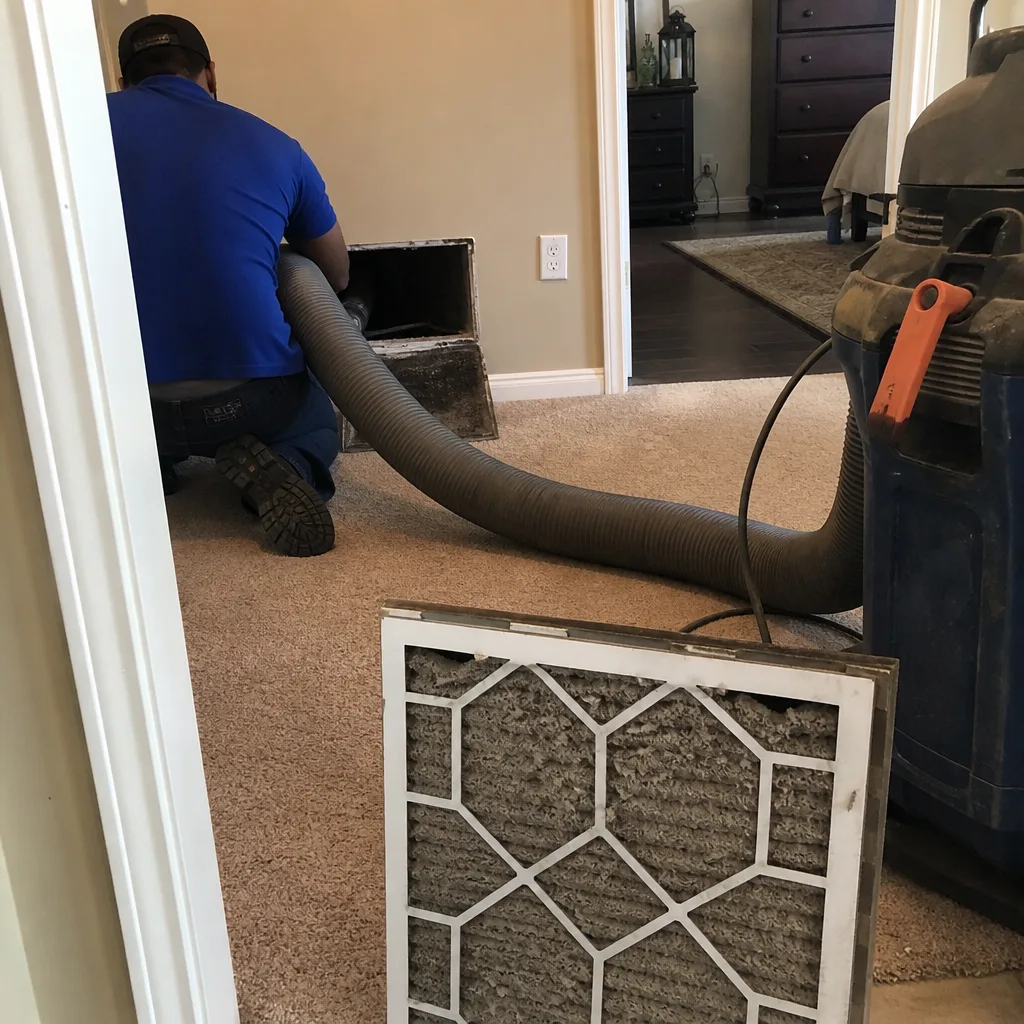 Before
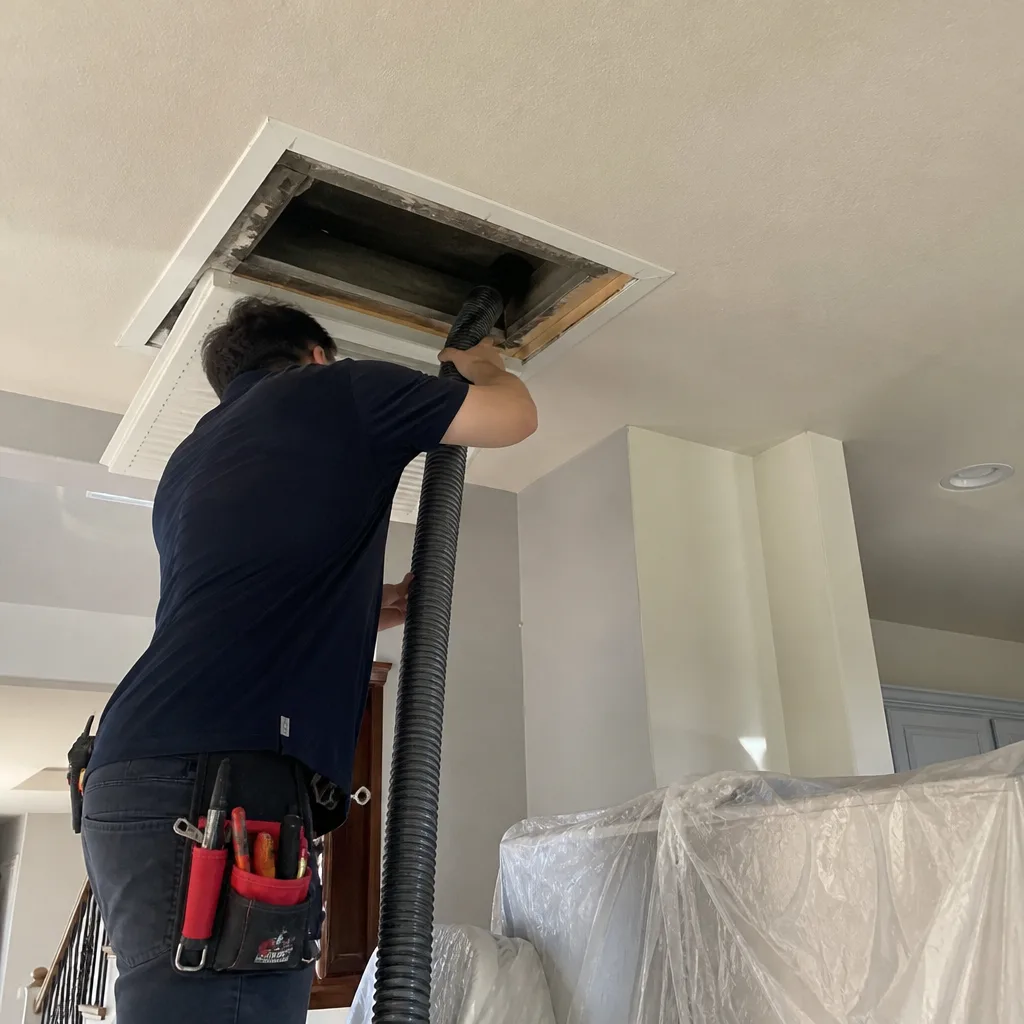 After
After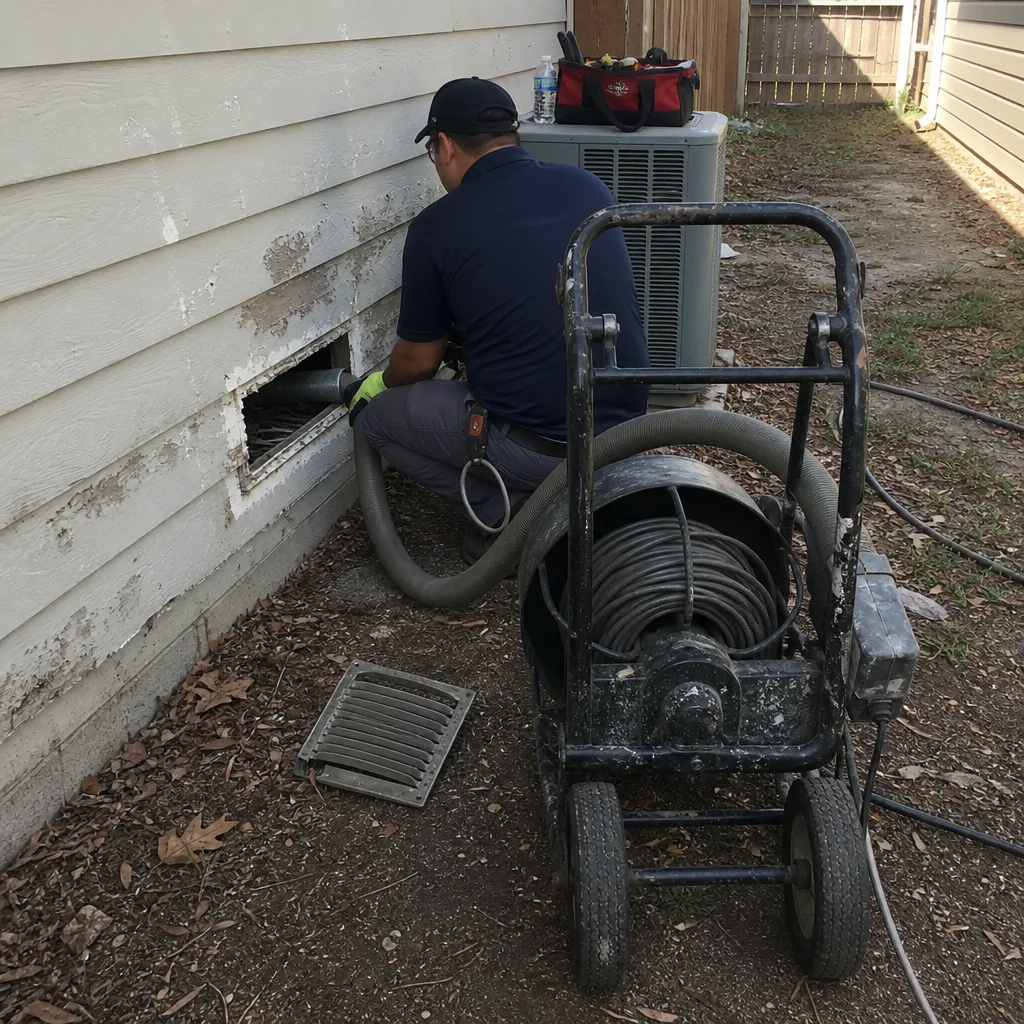 Before
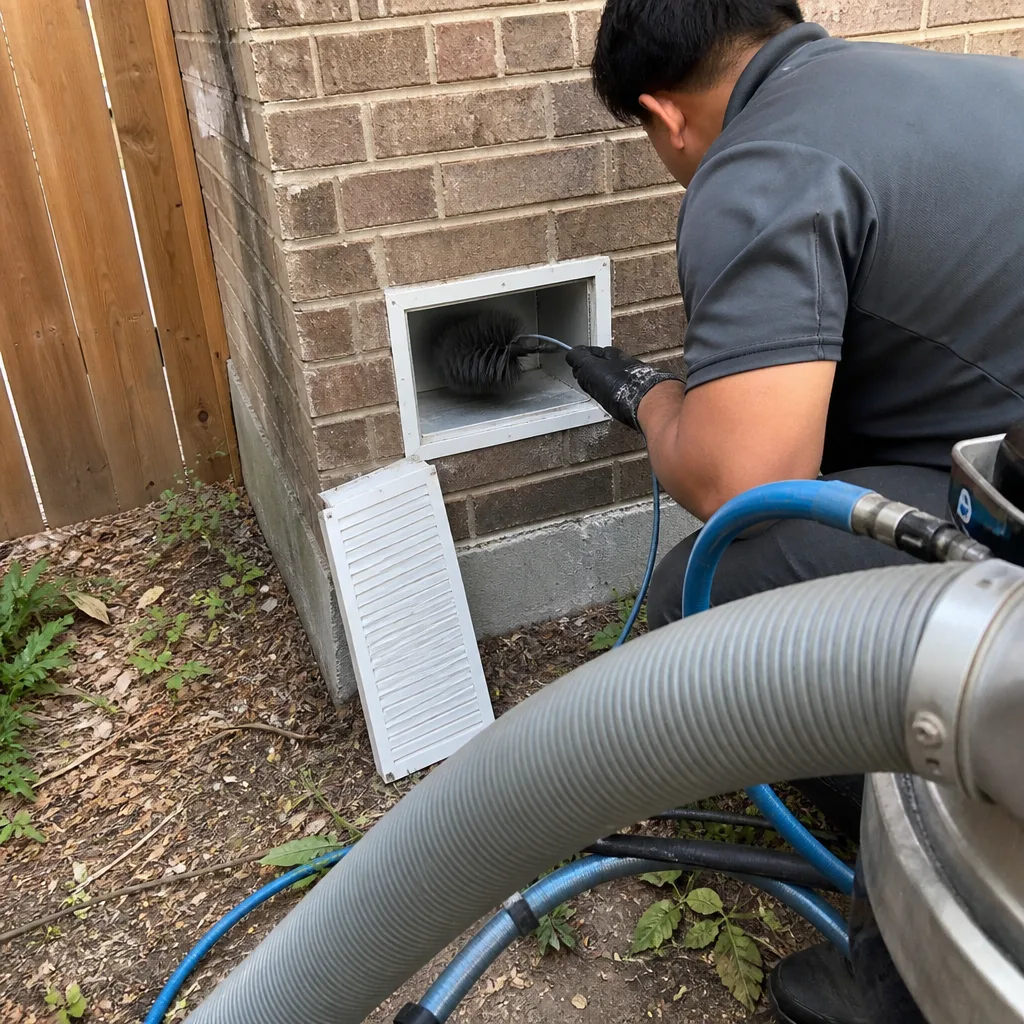 After
After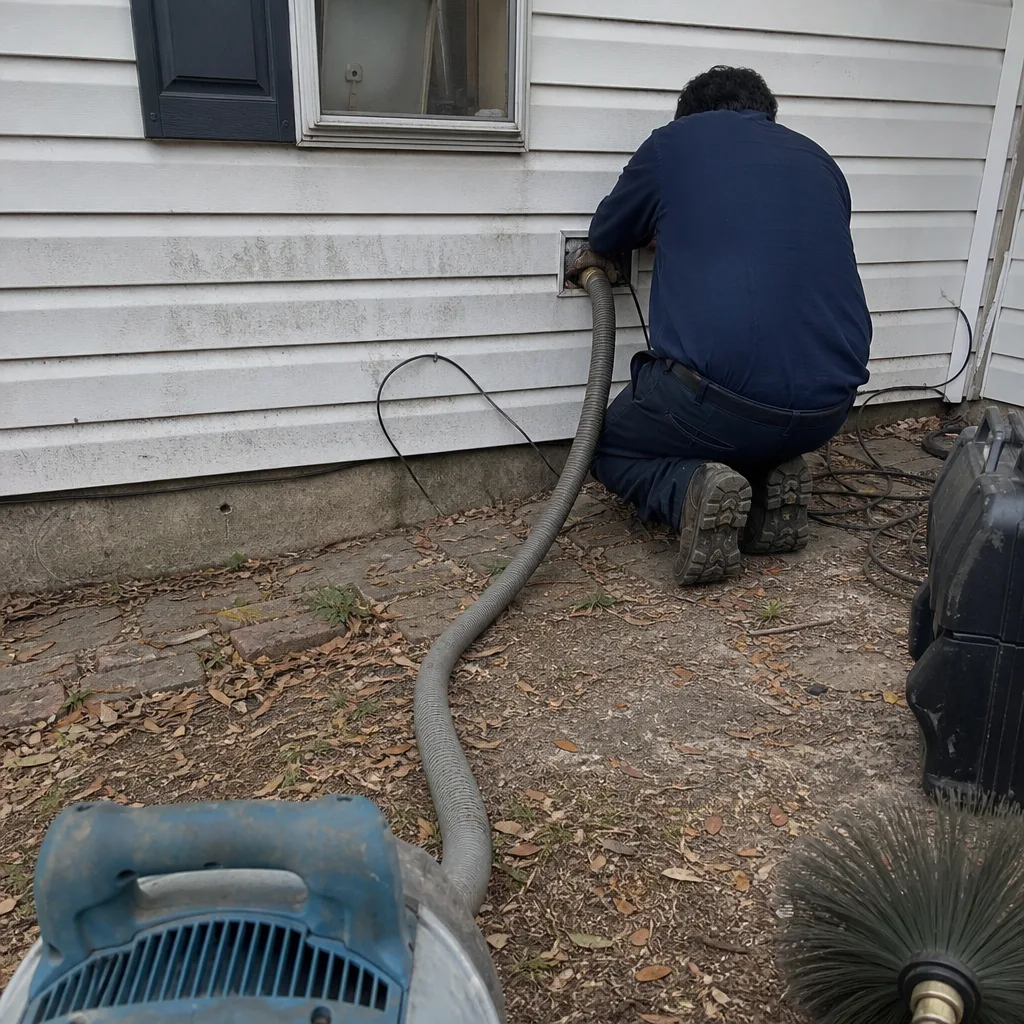 Before
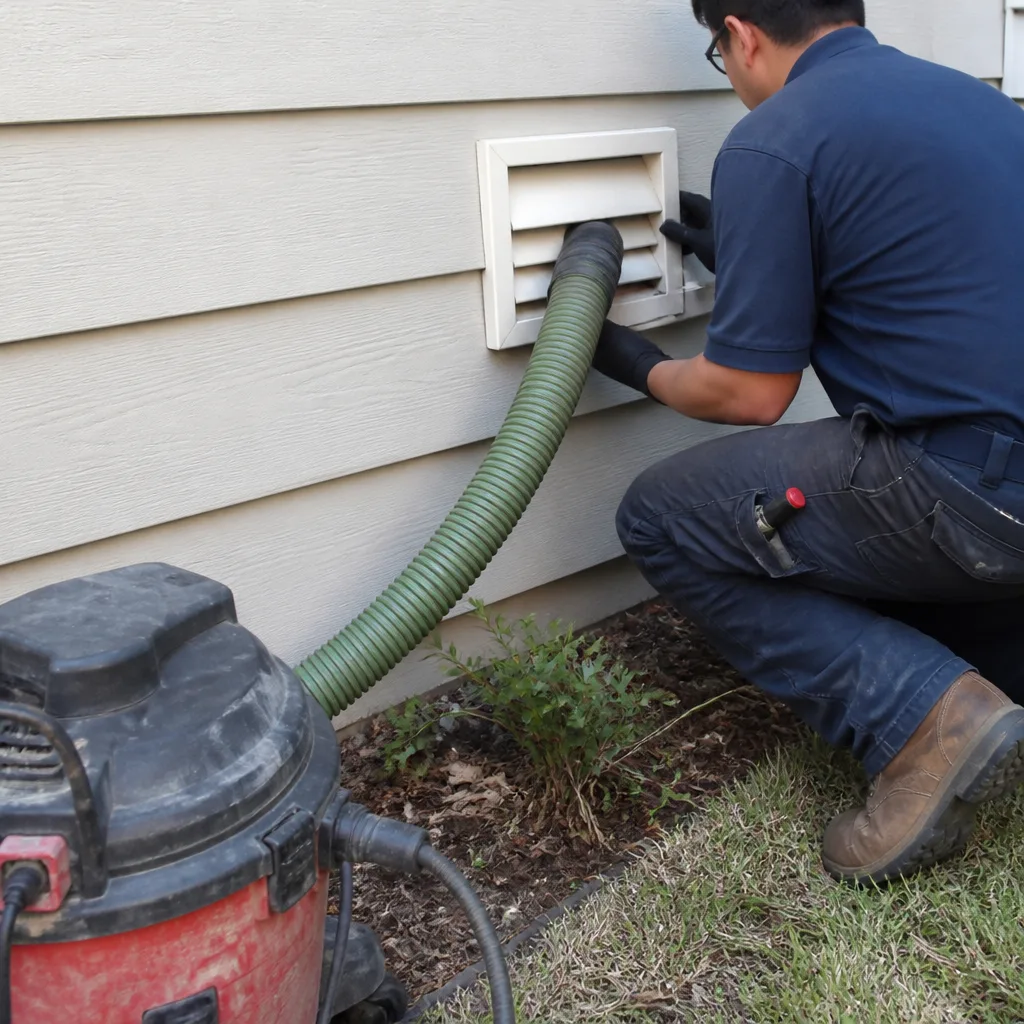 After
AfterFrequently Asked Questions
No, routine air duct cleaning that stays entirely inside existing ducts requires no permit in Texas or in Houston. The permit requirement is triggered only when a company cuts into the duct system, removes duct sections, applies sealant, or otherwise modifies the system, at which point a City of Houston mechanical permit and a TDLR HVAC contractor license may be required.
Air duct cleaning itself is not regulated by TDLR as HVAC contracting, but the moment a cleaning company cuts an access panel, seals duct joints, or modifies airflow, that work falls under TDLR’s definition of air conditioning contracting and requires a license. Ask any company proposing these services for their TDLR license number and verify it online before work starts.
Technically, yes, but only if they are TDLR-licensed to perform HVAC contracting work, and even then, the cut creates a modification that must be restored to code: a proper access panel, mechanically fastened and sealed with approved materials, with insulation restored. We recommend asking before any work begins whether cutting is part of the plan, and if it is, requiring a written scope and license verification.
Most Houston homes run between $350 and $650 for a complete whole-system air duct cleaning, depending on home size and the number of systems. A single-system home with one air handler and standard duct runs typically falls in the $350 to $500 range. Larger homes with two systems or extensive ductwork can reach $600 to $800. Be wary of quotes below $200: that price typically assumes access ports already exist and doesn’t account for the thorough cleaning a dirty system actually needs. Call (254) 347-2738 for a written quote on your specific home.
Document the damage with photographs, obtain a written assessment from a TDLR-licensed HVAC contractor, send a written demand for correction by certified mail, and if the company refuses or disappears, file a complaint with TDLR and pursue small claims court. The full step-by-step process is outlined in the section above titled “What to Do When a Contractor Leaves Your Ducts in Non-Code Condition.”
For most Houston homes, every 3 to 5 years is appropriate, though homes with pets, smokers, recent renovation, or high dust loads may benefit from more frequent cleaning. Houston’s humidity also means that if you’ve had any condensation issues or visible mold growth at the registers, you should address the source of the moisture first and then have the ducts cleaned immediately. More frequent cleaning than every 3 years generally provides no additional benefit unless a specific event, like drywall sanding or water intrusion, has introduced contamination.
The Bottom Line
Air duct cleaning in Texas is legal without a permit, but the line between cleaning and contracting is drawn in a place most homeowners never see until it’s too late. The moment a technician cuts, seals, or modifies, the rules change. The protection you walk away with comes down to what you ask before the work starts: what exactly will be done, whether any modification is planned, whether the company is TDLR-licensed if modification is required, and what documentation you’ll receive. Houston’s resale market and its humid climate punish undocumented, non-compliant duct work more severely than almost any other home system. Ask the questions. Keep the paperwork. And if you want a company that answers the phone, shows up when it says it will, and puts its guarantees in writing, call Kestrel Air Duct Houston at (254) 347-2738. We’ve served Houston and the surrounding area since 2004 under the Kingswell Guarantee, and the Dryer Vent Cleaning in Houston service we offer carries the same written standards. A live person answers, every time.
Written by Dale Whitmore, Owner at Kestrel Air Duct Houston, serving Houston since 2004. Explore more guides & resources from our team.