
Last updated October 15, 2026
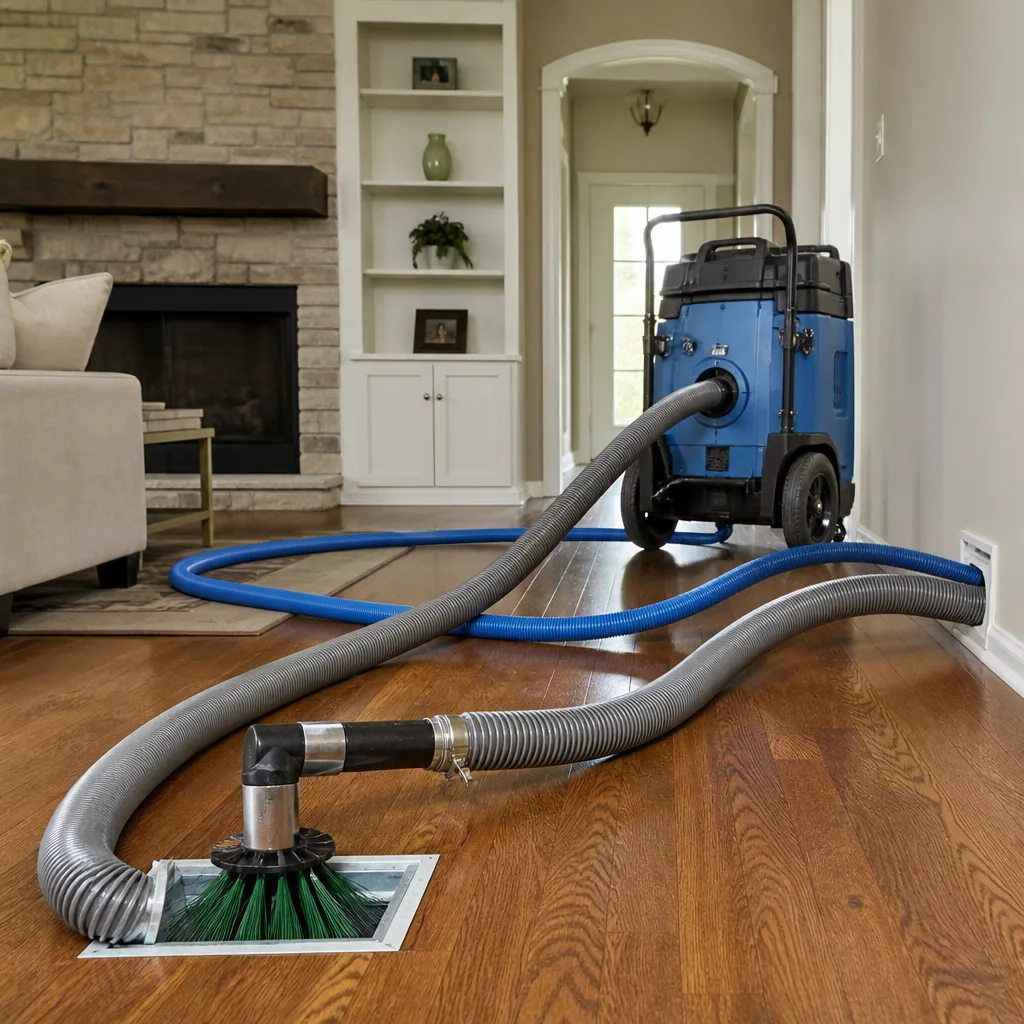 Whole-home duct cleaning
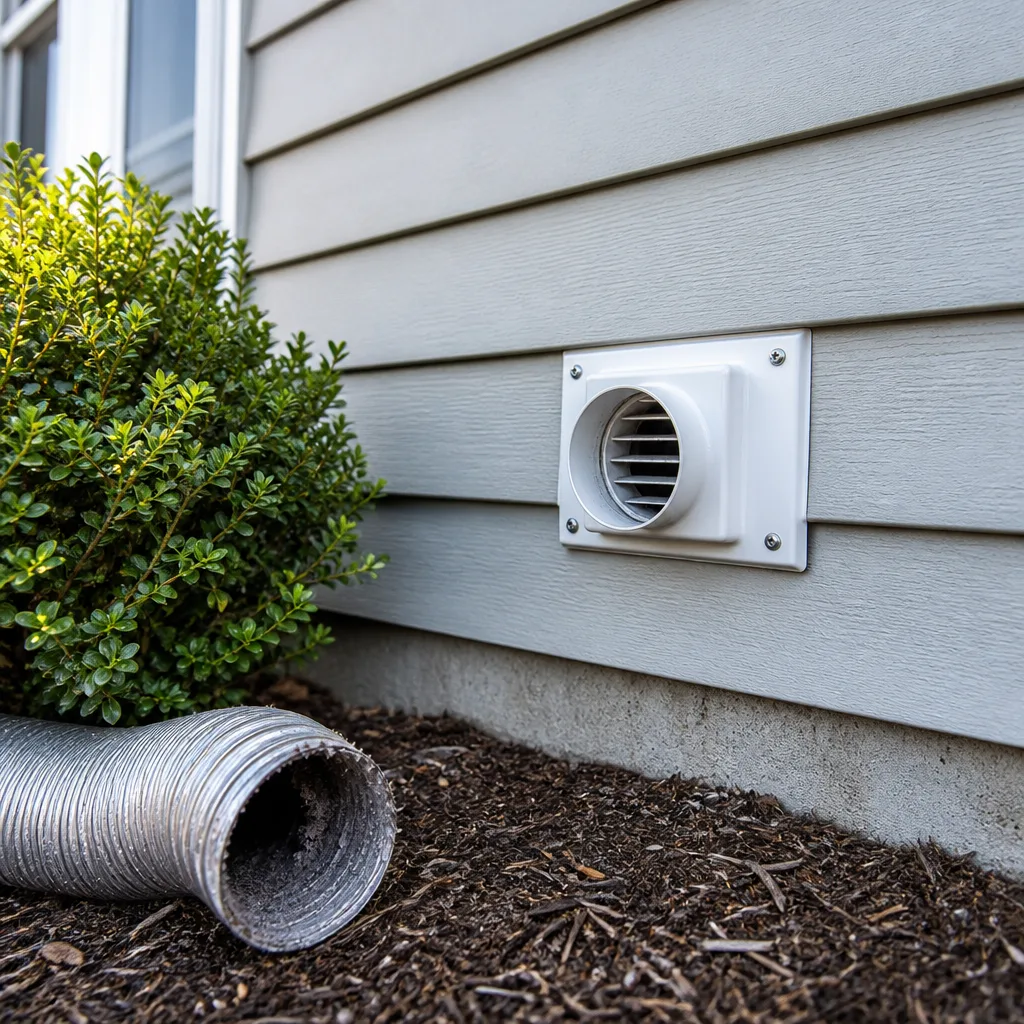 Dryer vent cleaning
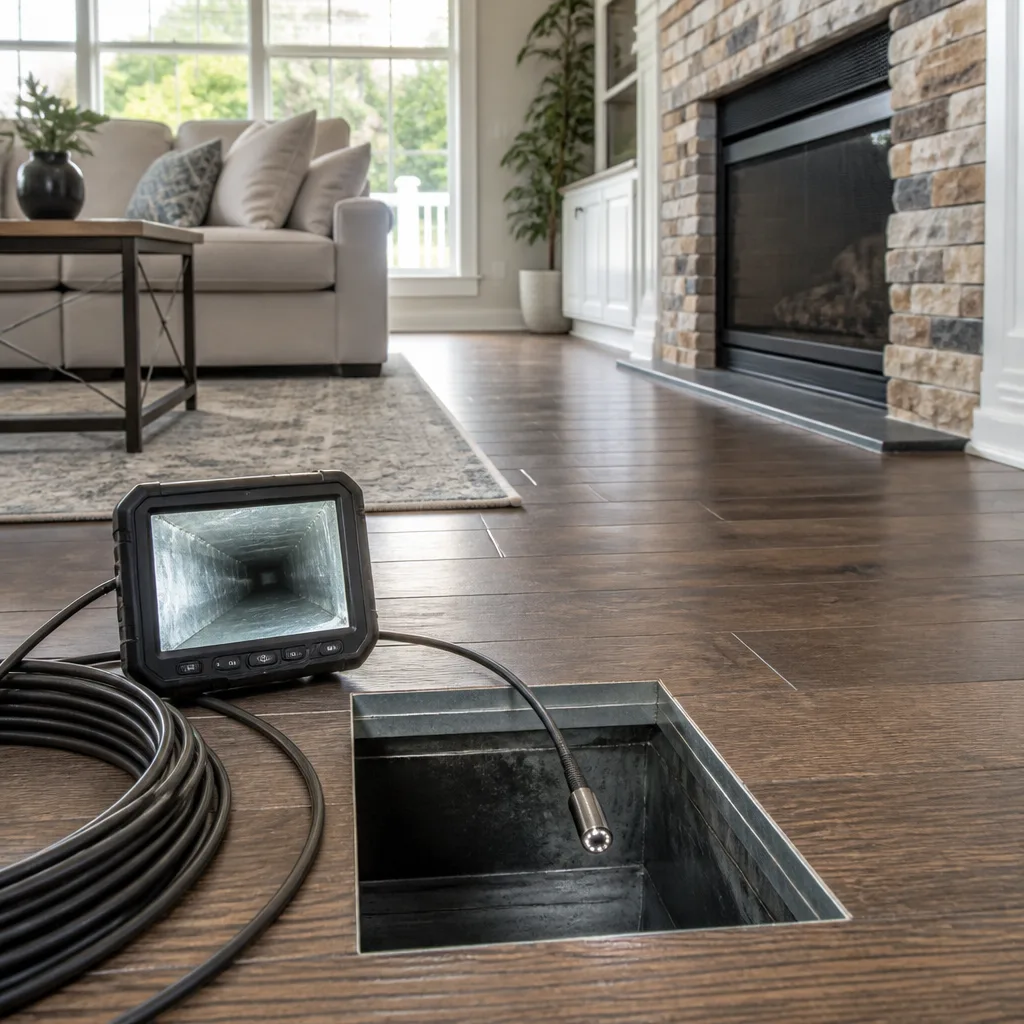 Camera inspection
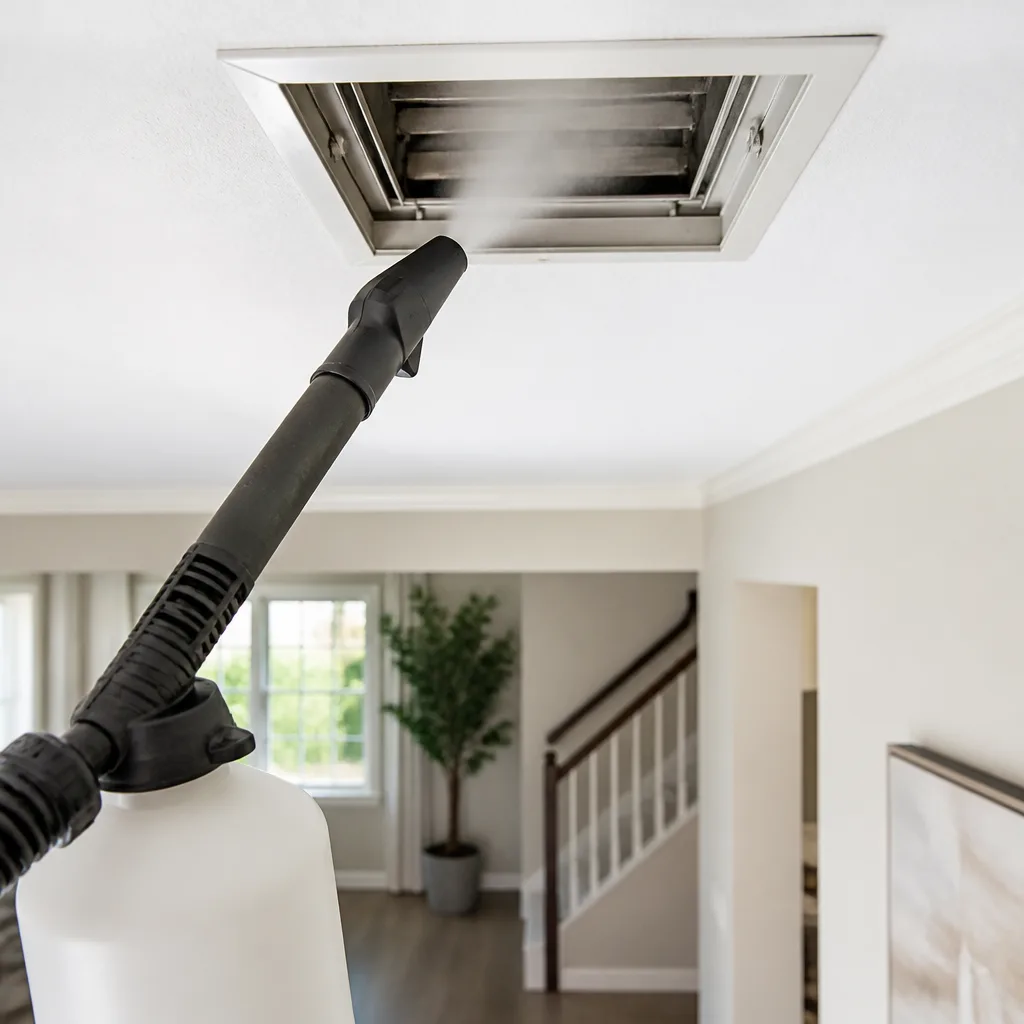 Sanitizing & deodorizing
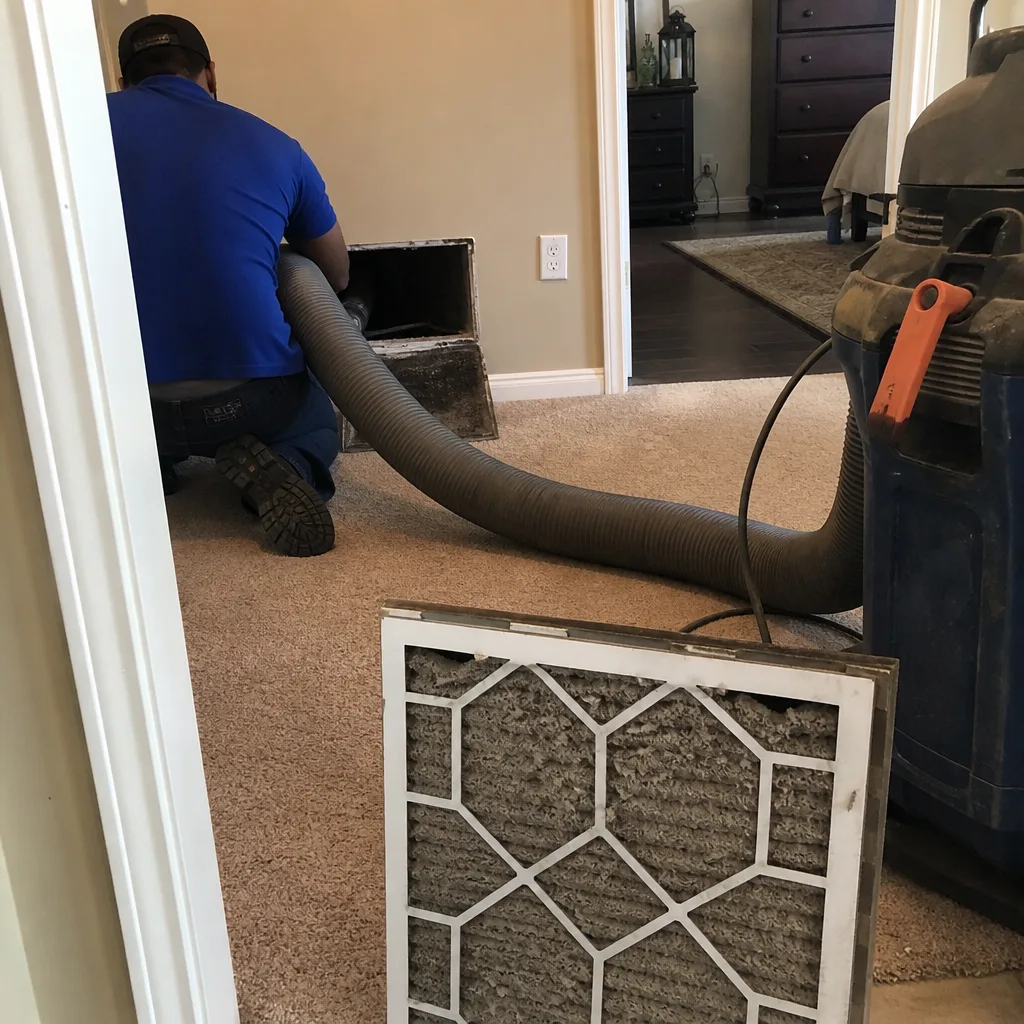
Whole-system duct and dryer vent check with before-and-after photos - you see exactly what came out of your vents
That "$99 whole-house special" is a bait ad - the real number appears once they are in your hallway, or the "clean" is a shop-vac at the register. We photograph the inside of your ducts before and after instead.
Air Duct Cleaning Warning Signs: A Houston Homeowner’s Reference Guide
Here’s a number that surprises most Houston homeowners: the air inside a typical home moves through the duct system about five to seven times every single day. That means whatever is living in your ductwork gets stirred up, pushed through your living room, and pulled back in again, constantly. A sudden jump in your Centerpoint Energy bill with no change in thermostat settings is one of the earliest indicators of duct obstruction, but almost no one connects it to air ducts until the problem is far more serious. This guide from Kestrel Air Duct Houston home walks you through the warning signs that show up months before the obvious ones, the Houston-specific triggers that accelerate contamination, and a plain triage framework for knowing what’s urgent and what can wait.
Quick Answer
The earliest air duct cleaning warning signs in Houston are invisible: a rising energy bill with unchanged thermostat settings, uneven room temperatures, and allergy symptoms that flare only when the air conditioning runs. Visible dust and musty odors come later, after contamination is already advanced. If your supply registers show dust streaks on the ceiling or condensation beads on the metal, or your HVAC system short-cycles on hot afternoons, schedule an inspection with a professional rather than waiting for a full system failure.
Styles & brands we work with
Table of Contents
- The Five Pre-Obvious Warning Signs
- Houston-Specific Warning Signs After Weather Events
- Dirty Ducts vs. Failing HVAC: How to Tell the Difference
- The Flashlight Inspection: What Normal Looks Like
- Triage: Same-Week Service vs. Scheduled Appointment
- What Clean Ducts Should Look Like After a Proper Cleaning
- Common Mistakes to Avoid
- When to Call a Professional
- Frequently Asked Questions
The Five Pre-Obvious Warning Signs
Most articles about air duct cleaning in Houston tell you to watch for visible dust and musty odors. By the time those show up in a Houston home, the contamination problem has usually been building for a year or longer. Here are the five earlier signals we’ve learned to recognize in two decades of cleaning ducts across Houston’s climate zones.
1. Unexplained Energy Bill Increases
When your ductwork is partially obstructed by dust, pet hair, construction debris, or a collapsed section, your air handler has to work harder to push conditioned air through the system. That additional resistance shows up on your Centerpoint Energy bill as a gradual or sudden increase with no corresponding change in your thermostat settings. One Houston homeowner in the Energy Corridor saw a 22% summer bill jump over two months, with the same set point of 74 degrees. The culprit was a return duct roughly 40% blocked by a combination of construction dust from a 2019 kitchen remodel, years of pet dander, and a collapsed flex-duct section in the attic. What makes this warning sign so easy to miss is that Houston summers are brutally hot anyway; most people assume the bill went up because July was July. But if you compare year-over-year usage for the same billing period, adjusted for the actual cooling degree days, a duct obstruction shows up as an efficiency loss that normal weather variation can’t explain.
2. Uneven Room Temperatures With All Vents Open
Walk through your house on a hot afternoon. If the thermostat says 74 and the living room feels 74, but the back bedroom is noticeably warmer, most homeowners adjust the damper, close a vent, or add a window unit. Before you do any of that, check whether all the supply registers are open. If they are, and the temperature difference between rooms is more than about 4 degrees, that imbalance usually points to an airflow restriction in the duct branch serving the warmer room. In Houston slab-on-grade homes, which make up a large share of the older housing stock inside the Loop and in neighborhoods like Sharpstown and Meyerland, ducts running through the slab can develop cracks or accumulate debris that reduces airflow to far rooms. The air handler is still producing conditioned air, but not enough of it is reaching the far end of the system.
3. Condensation on Supply Registers
In Houston’s humidity, condensation on the outside of a supply register is a clear early signal that something is restricting airflow. Here’s why: when airflow through a register is reduced due to a blockage deeper in the duct run, the metal register face stays colder for longer, because less warm room air is moving across it. That colder surface meets Houston’s humid indoor air and beads up with condensation. Over time, that moisture can soak into the surrounding drywall or ceiling, creating a damp ring around the register, which then grows mold. This is different from normal air conditioning condensation, which happens at the coil inside the air handler and drains away. Condensation on the register itself, especially on a register that’s been dry for years, means something changed inside the duct. It might be debris buildup, a disconnected section, or a kinked flex duct.
4. HVAC Short-Cycling During Peak Heat
Short-cycling is when your air conditioner turns on, runs for a few minutes, shuts off, and then restarts shortly after. In Houston’s summer, short-cycling is often blamed on an oversized AC unit or a refrigerant charge problem, and those are real possibilities. But a restricted return duct can cause the same symptom. If the return side of the system can’t pull enough air across the evaporator coil, the coil gets too cold and triggers a freeze protection sensor that shuts the compressor off. As the ice melts and the sensor resets, the system starts again. The cycle repeats. If you notice your outdoor unit shutting down while the indoor blower continues to run, and you’ve already had a technician check the refrigerant charge, look at the return side of the duct system next.
5. Allergy Symptoms Only When the Air Handler Runs
This one is subtle but telling. Many Houston homeowners run their air conditioning nearly year-round, so it’s hard to notice a pattern. But during the mild weeks of November or March, when the windows might be open and the system is off, notice whether your sneezing, itchy eyes, or sinus pressure improves. If symptoms return the day you switch the thermostat from “off” to “cool,” the system is likely recirculating allergens that have settled in the ductwork: dust mite debris, pet dander, pollen tracked in from the yard, or mold spores that grew in a humid duct section. A properly cleaned duct system with a quality filtration setup, such as a Honeywell or Aprilaire media filter installed at the air handler, should allow you to run the AC without triggering the same allergic response you’d get from spending an afternoon raking leaves.
Houston-Specific Warning Signs After Weather Events
Houston’s climate and weather patterns create duct contamination triggers that homeowners in drier cities never face. If you’ve lived in Houston for more than a couple of years, you’ve likely dealt with at least one of the following scenarios.
After a Tropical Storm or Flooding Event
Harvey in 2017. Imelda in 2019. Beryl in 2024. Houston homeowners know the drill: water rises, power goes out for days or weeks, and the humidity inside a shuttered house climbs to levels that would make a rainforest blush. Even if your house didn’t take on floodwater, an extended power outage means no dehumidification for as long as the AC is down. During that period, the inside of your ductwork, especially in the attic where surface temperatures can exceed 130 degrees on a summer day, becomes a warm, stagnant, humid environment. Mold needs three things: an organic food source, moisture above about 60% relative humidity, and time. Dust and skin cells in a duct provide the food. A Houston summer provides the heat. A hurricane outage provides the moisture and the time. If you went through a multi-day outage after a storm, add this to your inspection checklist: about two weeks after power is restored, smell the air coming out of the supply registers during the first five minutes of a cooling cycle. A damp, earthy smell that fades after the system runs for a while suggests mold growth inside the ducts that should be addressed.
After a Wildfire Season
Each year, smoke from Texas wildfires and occasionally from western fires drifts over the Houston area. That smoke carries fine particulate matter, and when your AC pulls smoky outdoor air through the return, much of that particulate settles inside the duct system. Even a few days of visibly hazy skies can deposit enough fine ash and soot in the ducts to recirculate for months afterward. Houston’s flat, coastal geography means smoke hangs around longer than it does in areas with more wind. If you notice a faint campfire smell indoors weeks after the last smoky day, your ducts are likely holding onto wildfire residue.
After a Home Renovation
This is not Houston-specific in terms of weather, but it’s common enough in Houston’s rapidly renovating neighborhoods, Oak Forest, Garden Oaks, Timbergrove, Bellaire, that it deserves a mention. During a kitchen remodel, bathroom update, or room addition, drywall dust, sawdust, and construction debris get pulled into the return ducts if the contractor doesn’t seal off the work area. An HVAC system is a whole-house vacuum pump; every time the blower runs during construction, it’s pulling whatever is in the air into the return side of the ductwork. Six months after the renovation is finished, you notice dust reappearing on surfaces two days after you wipe them down. That dust is coming from the ducts. Every time you run a construction project, a duct cleaning should be part of the closeout punch list, not an afterthought.
Dirty Ducts vs. Failing HVAC: How to Tell the Difference
Misdiagnosing a failing HVAC component as dirty ducts, or vice versa, wastes real money. Our DIY vs Professional Air Duct Cleaning guide can help you decide when to call a pro. A full duct cleaning on a typical Houston home runs between $400 and $800. A new blower motor or a refrigerant leak repair runs $800 to $2,500. Calling the wrong contractor for the wrong problem means you pay twice. Here is a framework for telling them apart.
Signs That Point to the Ductwork
- Dust streaks on the ceiling around supply registers. The air handler pushes dust-laden air through the registers at high velocity, and the heavier particles stick to the ceiling texture. An HVAC mechanical problem won’t do this.
- Visible debris inside a duct when you remove a register and look in with a flashlight. Dust, pet hair, or construction debris sitting inside the duct itself is a duct problem, not an equipment problem.
- Family members with allergies feel worse when the system runs, but a technician’s inspection of the coil, blower, and filter shows no mold. If the mechanical side is clean but symptoms persist, the reservoir of allergens is in the ducts.
- Uneven temperatures with all dampers and registers open. If a specific room is consistently warm and the duct branch serving it is accessible, reduced airflow is usually a duct issue.
Signs That Point to the HVAC Equipment
- The outdoor unit runs but the air coming out of every register is warm. This points to a refrigerant leak, a failed compressor, or a reversing valve problem. Duct issues won’t make every vent blow warm air simultaneously.
- Strange noises coming from the air handler or condenser unit itself. Buzzing, grinding, or hissing from the mechanical cabinet is equipment failure. Duct debris rattles around inside the ducts instead.
- Water pooling on the floor around the indoor air handler. This is typically a clogged condensate drain line or a frozen and thawing coil. While restricted airflow from dirty ducts can contribute to coil freezing, standing water at the unit itself deserves a mechanical diagnosis first.
- The system trips a breaker repeatedly. Electrical problems are equipment problems. Call an HVAC technician.
When in doubt, call a duct cleaning professional who does a visual inspection with a camera before quoting any work. A reputable contractor will show you the inside of the duct before recommending a cleaning. If someone quotes a duct cleaning price without ever looking inside the ductwork, that’s a red flag.
The Flashlight Inspection: What Normal Looks Like
You don’t need a professional camera inspection to gather useful information about your duct system. A phone flashlight and five minutes can tell you a lot. Here’s the step-by-step process we recommend for any Houston homeowner.
Step 1: Turn Off the HVAC System at the Thermostat
You want still air so that dust isn’t blowing in your face while you look. Set the thermostat to “off” and give the blower a minute to stop.
Step 2: Remove the Supply Register Cover
Most register covers in Houston homes either lift straight off or have two small screws. Use a screwdriver or butter knife if needed. Place the screws somewhere you won’t lose them.
Step 3: Shine the Flashlight Into the Duct Opening
Angle the light so you can see the inside surface of the duct as far back as the light will reach. In a flex duct, the surface should be smooth, slightly shiny, and clean enough to see the spiral wire reinforcement. In a metal duct, the surface should be smooth silver or galvalume color with no visible coating.
Step 4: Run a Clean White Cloth or Paper Towel Along the Inside Surface Near the Opening
Use a dry cloth and press it firmly against the duct wall for a few seconds, then pull it out. If the cloth comes back with a light gray smudge, that’s normal house dust; every home has some. If the cloth comes back dark gray or black, or comes back with visible clumps of dust and hair, the buildup is significant.
Step 5: Repeat at a Return Register
Return registers pull air back to the air handler, so they see all the unfiltered debris first. The return side usually looks dirtier than the supply side. That’s expected. But if you see a thick felt-like mat of dust coating the return duct walls, or if you can see debris sitting in the bottom of the duct, the system needs attention.
What Warrants a Call
- Dark gray or black residue on the test cloth
- Visible clumps of pet hair, lint, or construction debris inside the duct
- A visible film of growth that looks textured or fuzzy on the duct surface
- A damp or musty smell coming from the duct opening
- Signs of pest activity: droppings, nesting material, or a dead insect or rodent
- Standing water in a low section of ductwork
What’s Normal
- A light gray dust film on the duct surface that wipes away with a cloth
- Minor dust around the register opening itself
- An older home can have some dust in the ducts and still be functioning fine
- Discoloration in fiberglass duct board is not necessarily mold; it can be aged resin
This inspection does not replace a professional camera inspection, but it gives you the context to have an informed conversation when you call a Houston air duct cleaning company. If the contractor tells you the ducts are heavily contaminated, you’ll have seen it with your own eyes before anyone arrived.
Triage: Same-Week Service vs. Scheduled Appointment
Not every warning sign requires immediate action. Here’s the framework we’ve developed from two decades of field experience in Houston, and we share it because most homeowners get this wrong in both directions: some panic and call for same-week service on a minor dust concern, while others ignore a register condensation problem until the drywall is soft and the mold remediation bill is four times the cost of a duct cleaning.
Call for Same-Week Service If:
- You see condensation and moisture damage around any register, especially on the ceiling. Moisture migrating into drywall is a mold invitation in Houston’s humidity. Every week of delay increases the area affected. This is not a cosmetic issue.
- You smell a damp, musty, or earthy odor from the supply vents every time the AC runs. This indicates active microbial growth inside the ductwork. It will not resolve on its own.
- You find evidence of rodents or insects in the ductwork. Droppings, nesting material, or a dead animal in the duct is a health issue. It should be cleaned immediately and the entry point sealed.
- Your energy bill jumped 25% or more month-over-month with no thermostat change and no new heat-generating appliance. A restriction that severe is costing you real money every single day you wait.
Can Wait for a Scheduled Appointment:
- Light dust buildup visible at the register opening but no moisture, odor, or pest evidence. This is normal aging. Book a standard cleaning on a schedule that works for you, ideally before the next cooling season starts.
- Dust streaks on the ceiling that have been there for years and haven’t changed. The system is pushing dust but at a steady rate. This can be addressed in a routine cleaning.
- Mild allergy symptoms only during peak pollen season. This might be more about outdoor pollen entering the home than duct contamination. A thorough cleaning plus a high-grade filtration upgrade is the fix, but it’s not urgent.
- Uneven temperatures of 3 to 4 degrees in certain rooms that has been consistent for multiple seasons. This is a chronic airflow imbalance, not a sudden failure. Schedule a diagnostic and cleaning at a convenient time.
The principle is simple: water, microbial growth, pests, and sudden utility cost spikes are urgent. Dust and minor allergy discomfort can be scheduled. In our experience, the homeowners who follow this framework rarely end up with the five-figure mold or drywall repairs that shocked them.
What Clean Ducts Should Look Like After a Proper Cleaning
We are including this section because in Houston, the difference between a thorough duct cleaning and a surface-level vacuum job is enormous, and knowing what to expect protects you from paying for work that was never done. After a proper cleaning, here is what you should see and what should happen.
What You Should See During the Job
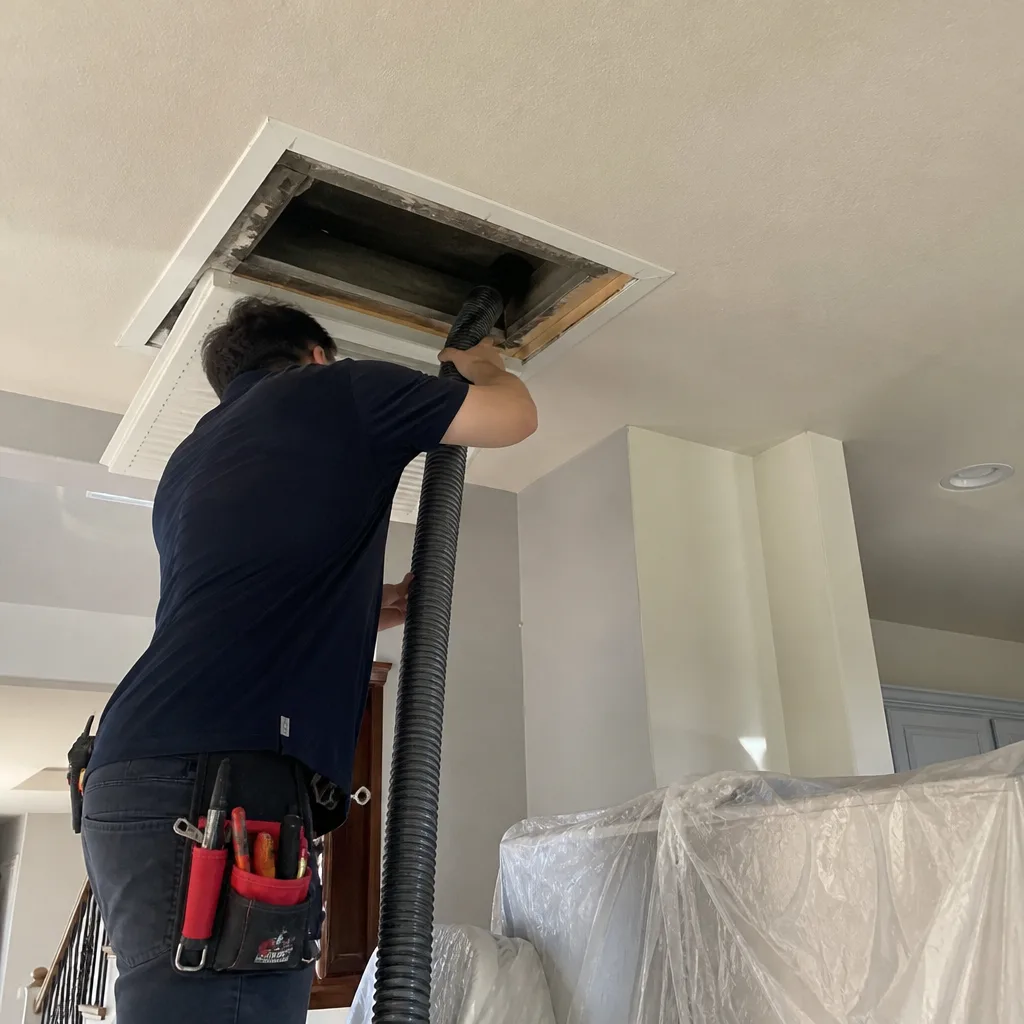
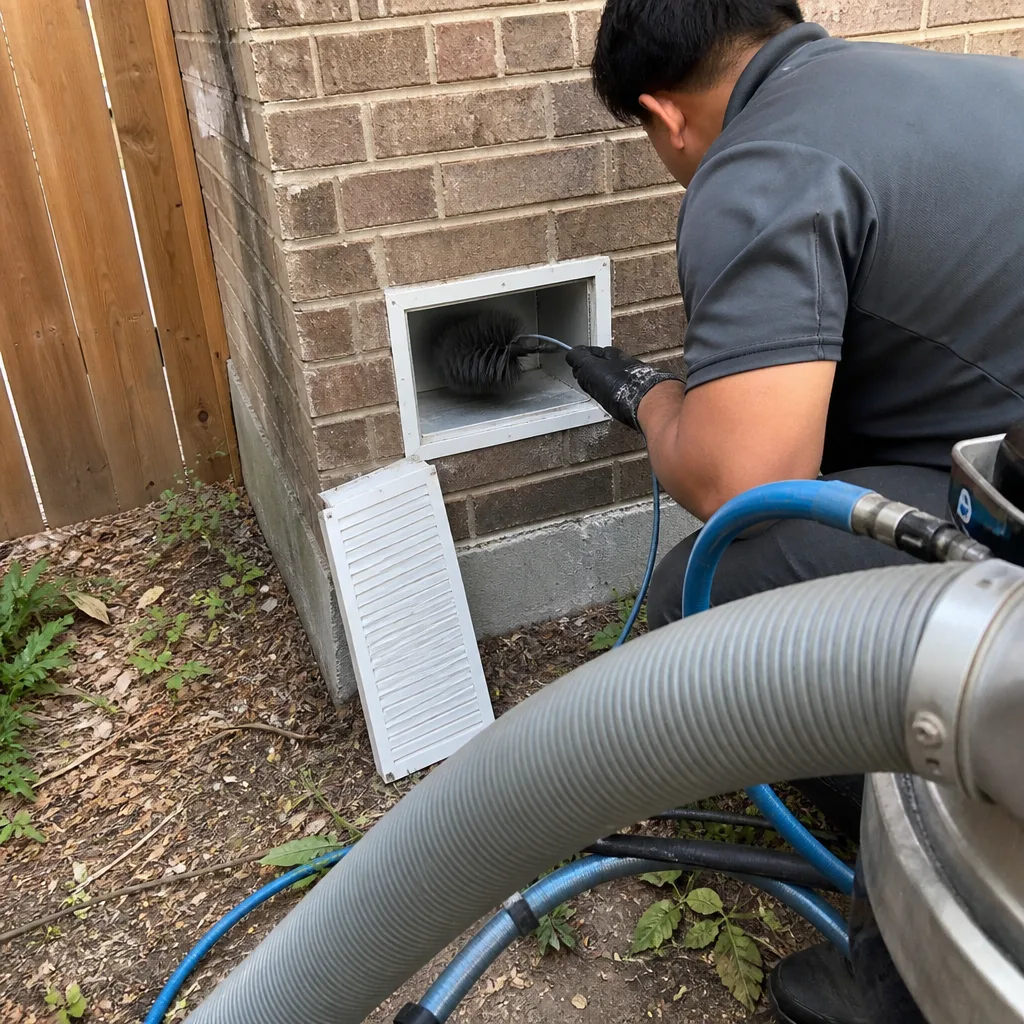
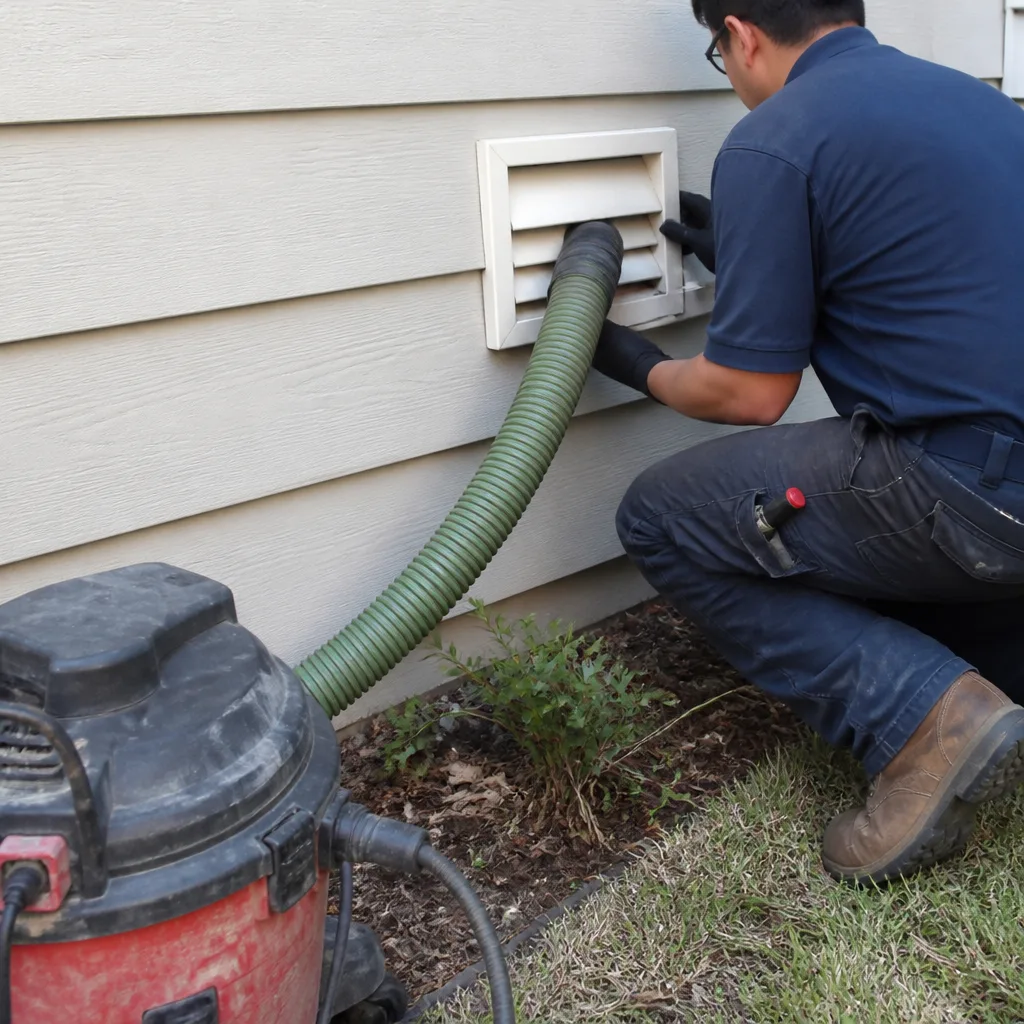
A professional air duct cleaning in Houston uses real equipment, not a box-store shop vac. At Kestrel Air Duct Houston, our technicians use Rotobrush rotary brush systems to dislodge debris from the duct walls, Nikro negative-pressure extraction units to pull contaminants out of the system, and Abatement Technologies HEPA filtration to keep loosened particles from re-entering the living space. You should see a technician physically agitate the inside of the ducts with a brush or compressed air while a powerful vacuum pulls the debris out. If someone shows up with only a vacuum hose and “cleans” the registers by vacuuming the first two feet of each run, you are not getting a duct cleaning.
What You Should See After the Job
- The inside of the ducts, when inspected with a flashlight, should show bare metal on metal systems or clean, smooth flex duct surfaces.
- The register covers should be wiped clean or replaced if they were heavily soiled.
- The areas around the registers should be clean. A good technician leaves the job site as clean as or cleaner than they found it. This is part of the Kingswell Way: leave the place cleaner than you found it, and put the guarantee in writing.
- You should receive documentation of what was done, including before and after photos or videos if the company uses camera inspection equipment.
The Guarantee That Backs the Work
Every job Kestrel Air Duct Houston performs carries a 365-Day Done Right Promise in writing. If the work is not done right within the guarantee period, we return and make it right at no charge. That’s not a courtesy extended on a case-by-case basis. It’s a written guarantee on every single job, part of the same standard the company has operated under since it was founded in 2004 under the Kingswell Guarantee. A contractor who won’t put a guarantee in writing before the work begins is a contractor you should not hire.
Homeowners who want to maintain clean air between service visits should also consider filtration upgrades. We offer Honeywell and Aprilaire media filters and Guardsman IAQ products for homeowners who want a better line of defense at the filter cabinet. A pleated media filter with a MERV 11 or better rating will catch much of the debris that would otherwise end up in the duct system.
Common Mistakes to Avoid
- Waiting for visible dust clouds before acting. By the time you see dust blowing from the registers, the duct contamination is severe. Most of the warning signs in this guide appear months earlier and cost less to address.
- Cleaning the registers but not the ducts. Wiping down register covers makes the room look cleaner but does nothing for the ductwork behind them. The dust comes right back because the source is upstream.
- Using a shop vac or household vacuum on the ducts yourself. Household vacuums do not have enough suction to pull debris from deep in a duct run, and without HEPA filtration, they often blow fine particles back into the room. In Houston homes with older systems, attempting DIY duct cleaning can also damage flex duct or knock sections loose.
- Sealing the registers in unused rooms to save energy. This is a persistent myth. Closing too many registers increases static pressure in the duct system, which stresses the blower motor and can cause ducts to separate at the joints. In a Houston summer, that’s a fast path to a hot attic full of conditioned air that never reaches the living space.
- Assuming the previous owner or landlord cleaned the ducts. There’s no legal requirement for duct cleaning at a property sale or rental turnover in Texas. If you bought a home or moved into a rental and there’s no documentation of duct cleaning, assume it hasn’t been done.
- Hiring the cheapest bid without checking the scope of work. In Houston, duct cleaning prices range from $300 to $900 for a typical single-family home, but not all quotes include the same work. Some low bids cover only the main trunk line and skip the branch runs to individual rooms. Some don’t include the return side. Ask what’s included before you agree.
- Misreading condensation as a plumbing leak. A wet ring around a ceiling register is often condensation from restricted airflow, not a roof or pipe leak. Before you call a roofer or plumber, check the register face and the duct behind it. Fixing the duct problem might solve the moisture issue entirely.
When to Call a Professional
Call a professional for Air Duct Cleaning services when you see moisture damage around a register, smell a persistent musty or damp odor from the vents, find pest evidence in the ductwork, or experience a sudden utility bill spike you cannot explain. Call when your flashlight inspection reveals dark, thick buildup inside the ducts, or when you’ve renovated and know construction debris entered the return system. A professional can also tell you whether the problem is actually in the ducts or in the HVAC equipment, saving you from paying for the wrong repair. Kestrel Air Duct Houston offers free estimates in Houston. Call (254) 347-2738 and a live person will answer, day or night. We’ll inspect the system, show you what we find, and put a written price in your hands before any work begins.
Frequently Asked Questions
Air duct cleaning in Houston typically costs between $400 and $800 for a standard single-family home with one HVAC system. Homes with multiple systems, extensive duct runs, or heavy contamination can run higher, up to $1,200 or more. The price depends on the size of the home, the number of supply and return runs, the level of contamination, and the accessibility of the ductwork. Be wary of quotes under $300 that promise whole-home cleaning; they usually cover only a portion of the system or rely on high-pressure upsells once the technician is in the home. Call (254) 347-2738 for a free estimate with a written price before any work begins.
Cheaper quotes in Houston usually reflect a narrower scope of work. A $199 duct cleaning might cover only the main trunk line, not the branch runs to individual rooms, or might skip the return side entirely. It might also use a portable vacuum with an insufficient CFM rating rather than a truck-mounted or industrial negative-air extraction unit. Low-ball quotes often serve as a door-opener for upsell pressure on filter sales, sanitizing treatments, or “emergency” mold remediation. You can avoid this by getting a written price that spells out exactly what’s included before the technician arrives. Ask whether the price covers all supply runs, the return side, the plenum, and the blower compartment.
A reputable duct cleaning company in Houston will show you before and after photos or video of the inside of the ductwork, taken during the job. You should also be able to see the difference yourself with the same flashlight inspection described in this guide: the ducts should look bare and clean after the work, not dusty. Kestrel Air Duct Houston documents every job with before and after inspection, and every job carries the 365-Day Done Right Promise in writing. If you’re not satisfied that the cleaning was done thoroughly within the guarantee period, we return and make it right at no charge.
For most Houston homes, every 3 to 5 years is the right interval. Homes with multiple shedding pets, homes where occupants smoke, homes that have undergone renovation, and homes in high-pollen areas like the ones near Memorial Park or the pine forests north of the city might need cleaning every 2 to 3 years. Homes with excellent filtration at the air handler and disciplined filter changes can sometimes go 5 to 7 years. There is no regulatory requirement for duct cleaning on a fixed schedule in Texas; the right interval depends on what’s actually in the ducts. Have them inspected during your spring AC tune-up and clean when there’s evidence of buildup.
Yes. Dirty ducts recirculate allergens that have settled inside the ductwork: dust mite debris, pet dander, pollen, and mold spores. Every time the air handler runs, it picks up some of that material and distributes it through the supply registers. Houstonians with seasonal allergies often notice the difference most clearly during the transition weeks in November and March, when the AC cycles less often and symptoms improve, then worsen when cooling season starts again. If your allergy symptoms track with when the system runs, the ducts are a likely reservoir. Combining a thorough duct cleaning with a high-efficiency filter from Honeywell or Aprilaire often produces a measurable improvement.
Air duct cleaning addresses the HVAC ductwork that carries heated and cooled air through the home. Dryer vent cleaning addresses the exhaust pipe that carries hot, lint-filled air from the clothes dryer to the outside. They are different systems with different contamination profiles. A clogged dryer vent is a fire hazard; Houston sees structure fires every year caused by lint accumulation in dryer exhaust ducts. A dirty HVAC duct system is an indoor air quality and efficiency problem. Both services are distinct, and a homeowner should not assume that hiring one covers the other. Get a Houston dryer vent cleaning on its own schedule, generally every 1 to 2 years depending on laundry volume.
The Bottom Line
The earliest warning signs of duct contamination in a Houston home are invisible unless you know where to look: a rising energy bill, uneven room temperatures, condensation on registers, short-cycling on hot afternoons, and allergy symptoms that track with the AC. For more guides & resources on maintaining your home’s air quality, explore our blog. Houston’s climate makes the problem worse, with hurricane-season power outages, wildfire smoke, and construction dust all accelerating contamination in ways normal wear never does. The flashlight inspection gives any homeowner a baseline understanding of their own system. When the signs point to the ducts rather than the equipment, call a professional who will show you the evidence, put a written price in your hands, and stand behind the work in writing. Dale Whitmore and the team at Kestrel Air Duct Houston have served Houston homeowners since 2004 under the Kingswell Guarantee: a written price before work begins, a defined arrival window, a clean job site, and a written 365-Day Done Right Promise on every job. Call (254) 347-2738 for a free estimate. A live person will answer.
Written by Dale Whitmore, Owner at Kestrel Air Duct Houston, serving Houston since 2004.
See the difference
 Before
 After
After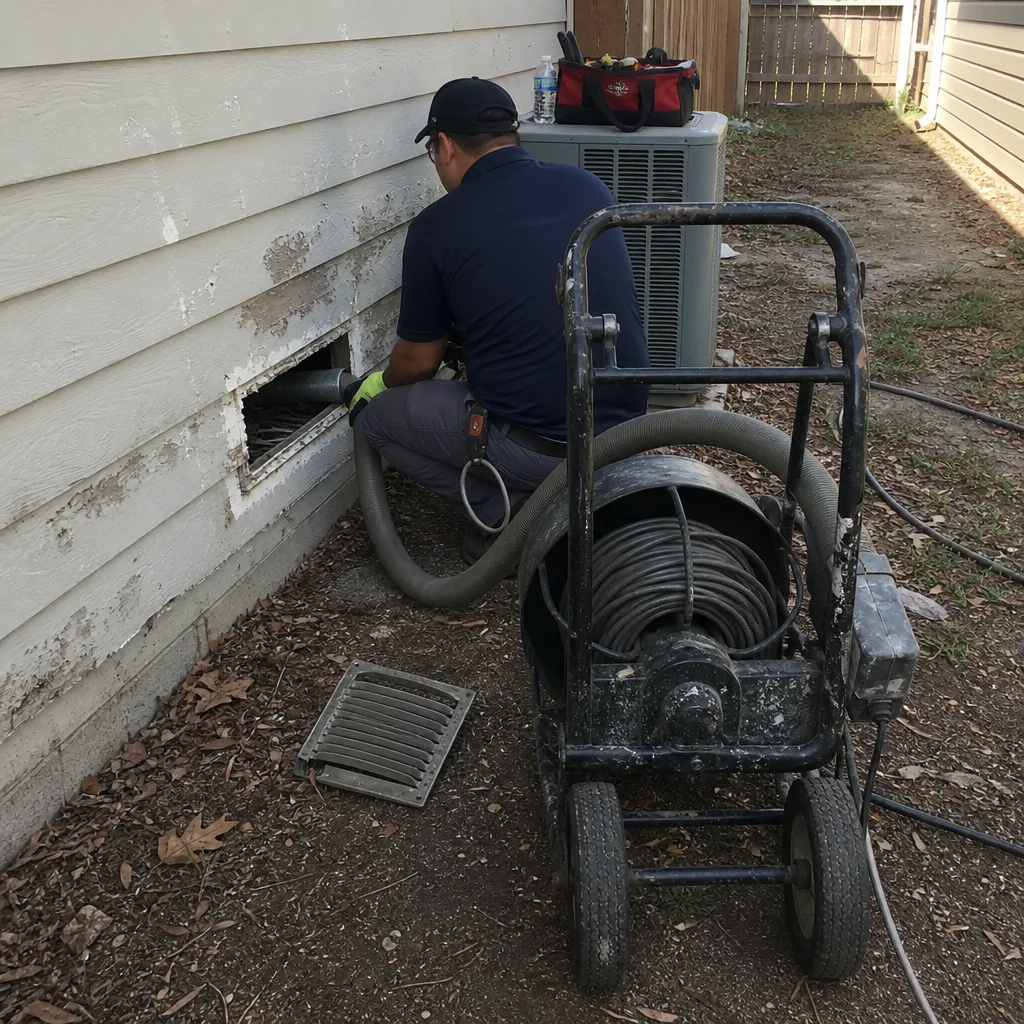 Before
 After
After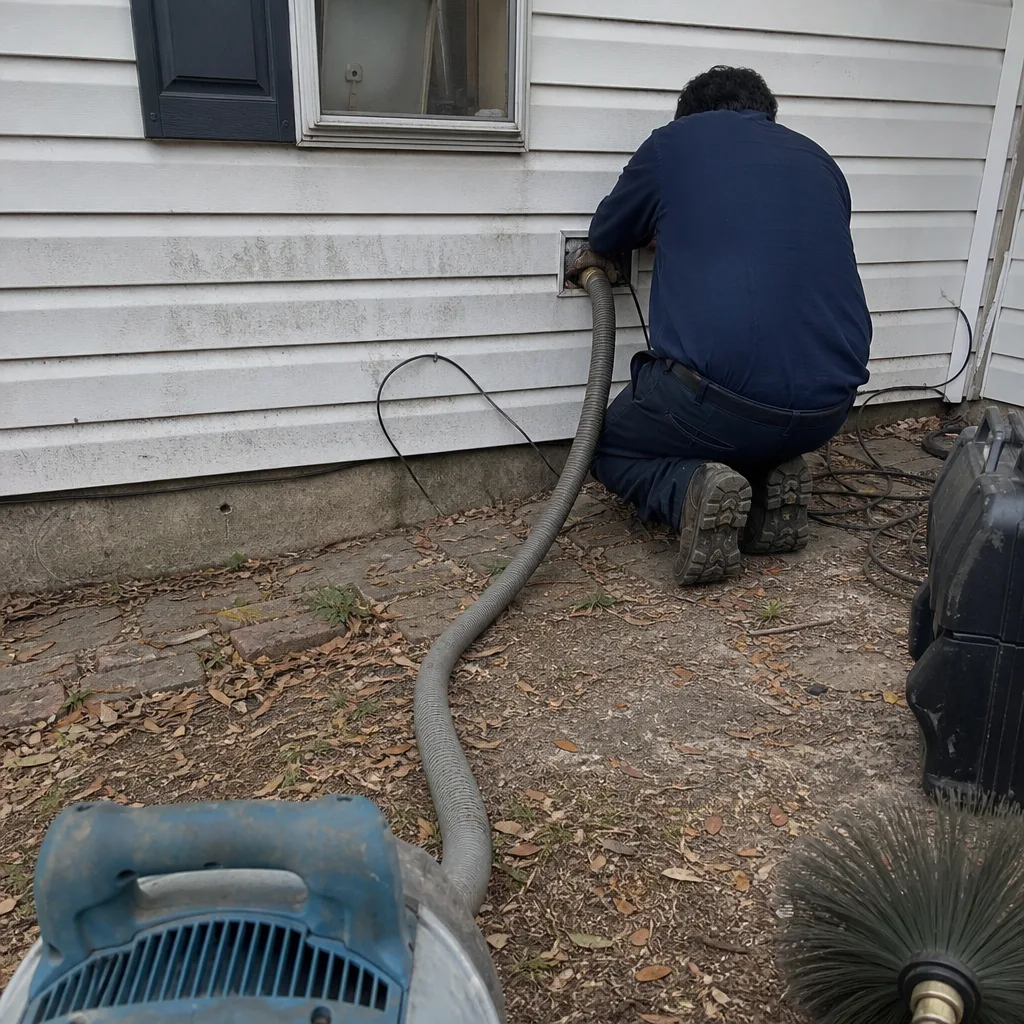 Before
 After
After