
Last updated October 15, 2026
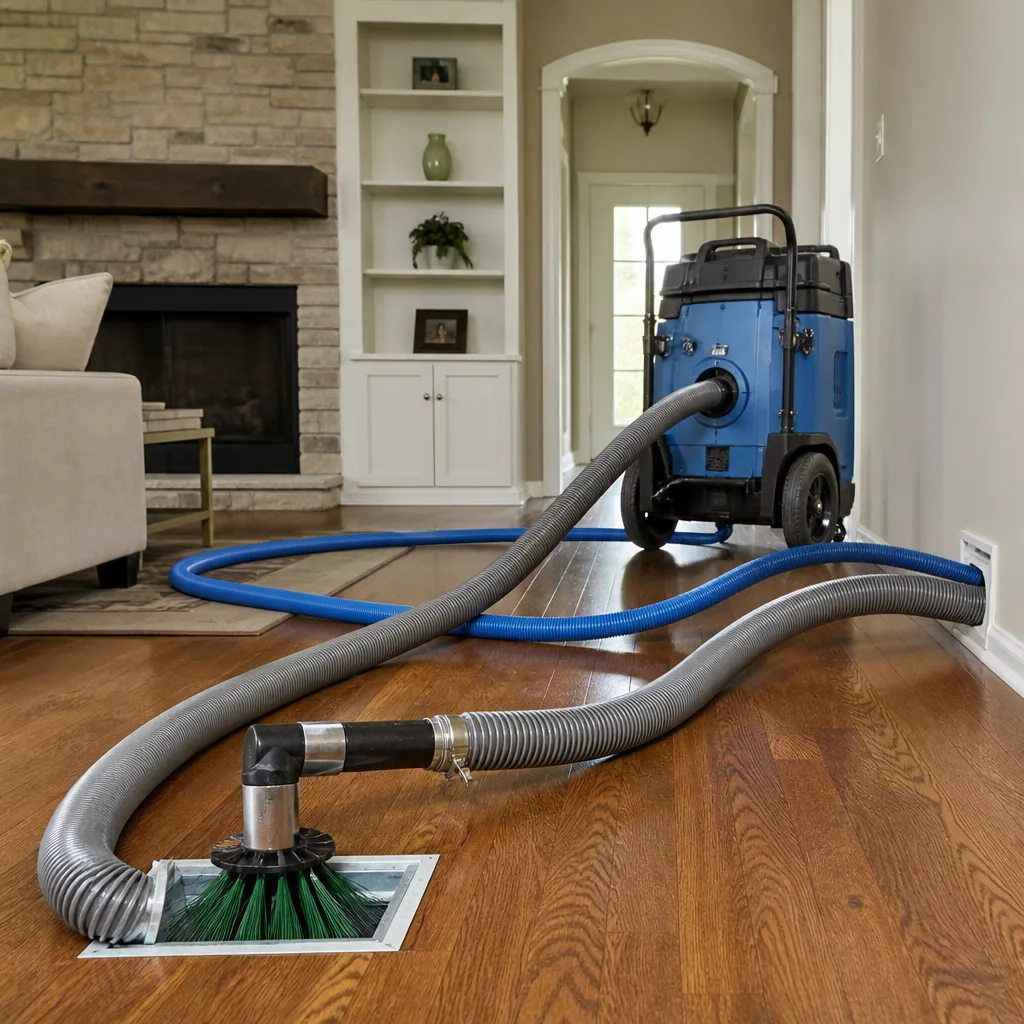 Whole-home duct cleaning
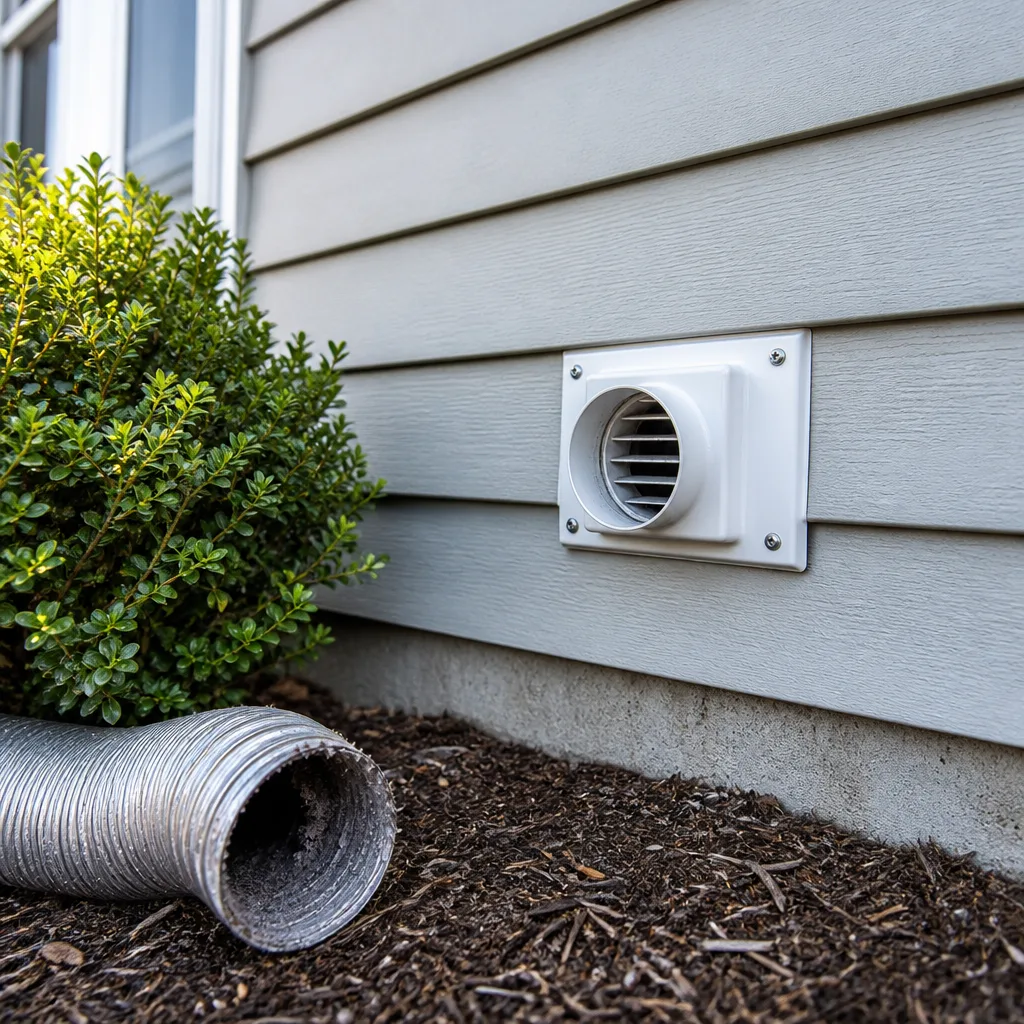 Dryer vent cleaning
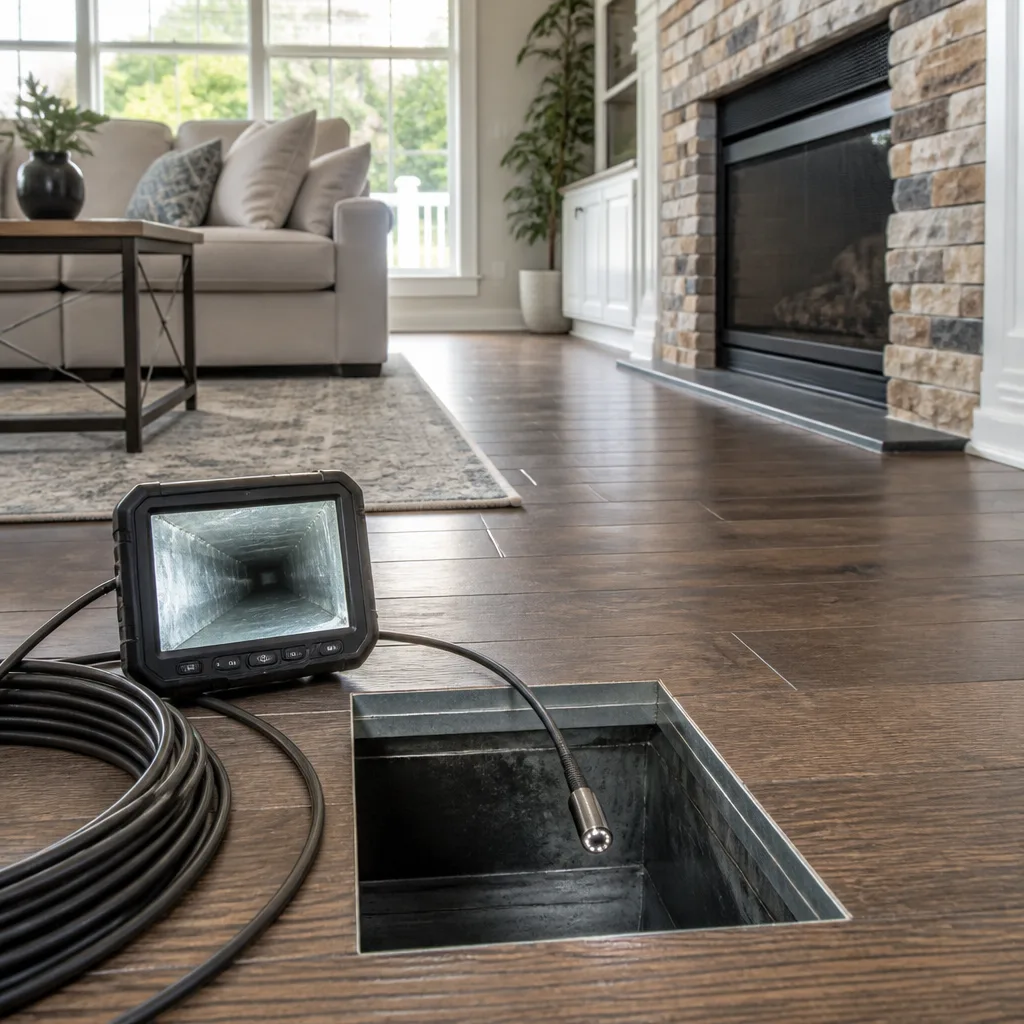 Camera inspection
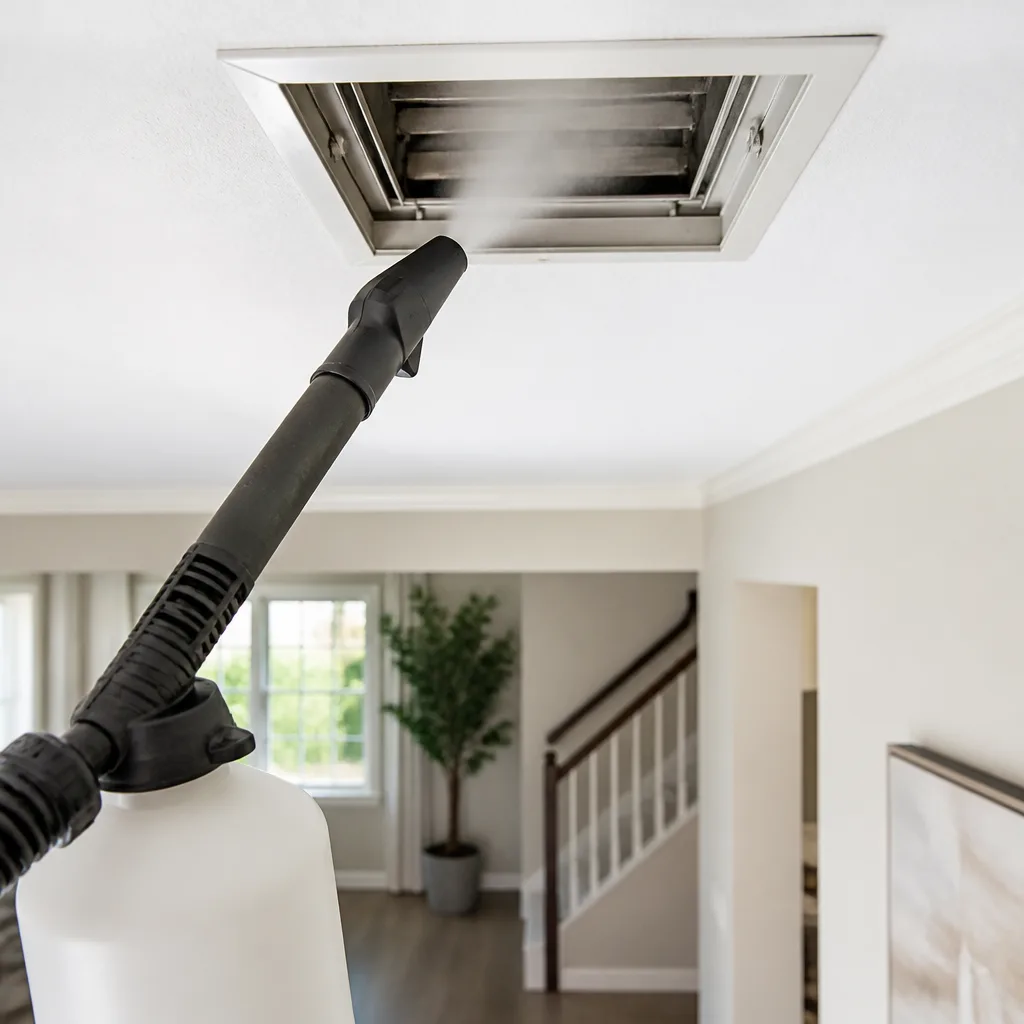 Sanitizing & deodorizing
Whole-system duct and dryer vent check with before-and-after photos - you see exactly what came out of your vents
That "$99 whole-house special" is a bait ad - the real number appears once they are in your hallway, or the "clean" is a shop-vac at the register. We photograph the inside of your ducts before and after instead.
DIY vs Professional Air Duct Cleaning: The Houston Homeowner’s Decision Guide
Every hardware store in Houston sells a duct cleaning brush kit for under forty dollars. Walk the aisles of any big-box retailer and you’ll see them hanging next to the furnace filters: flexible rods, nylon bristles, a cheap plastic handle. The pitch is simple enough. Hook it to your drill, run it down the vent, save a few hundred bucks. But here’s what the packaging never mentions. Most HVAC technicians in Houston report that homeowners who attempt a DIY duct cleaning first often leave their systems harder to remediate than if they’d never touched them at all. The reason isn’t lack of effort or skill. It’s equipment physics. This guide explains exactly why that is, what the real differences are between do-it-yourself methods and professional Air Duct Cleaning, and how Houston’s humidity turns an annoyance into a genuine health and efficiency problem when the wrong approach is used.
Styles & brands we work with
Quick Answer
For most Houston homeowners, professional air duct cleaning is worth the cost because consumer vacuums simply cannot generate the negative pressure required to pull debris out of a duct system. DIY is genuinely useful for specific tasks: register and grille cleaning, filter replacement, visual inspection, and clearing dryer vent lint at the exterior cap. But anything deeper than the first few inches of a register belongs in the hands of a professional with negative-air equipment, particularly in Houston’s humid climate where disturbed mold spores and organic debris spread quickly through living spaces.
Table of Contents
- The Equipment Physics Difference: Negative Air vs. Positive Pressure
- What DIY Duct Cleaning Can Actually Accomplish
- When DIY Duct Cleaning Is Risky in Houston
- The Honest Cost Comparison: Rental Equipment vs. Hiring a Pro
- How to Tell If a Contractor’s Equipment Is Actually Professional Grade
- Why Houston’s Climate Changes the Duct Cleaning Math
- Common Mistakes to Avoid
- When to Call a Professional
- Frequently Asked Questions
- The Bottom Line
The Equipment Physics Difference: Negative Air vs. Positive Pressure
Before you spend a dollar on any duct cleaning approach, understand the single concept that separates effective cleaning from expensive futility. Duct cleaning works in one of two physical directions, and only one of them removes contamination from your home.
A shop vac, household vacuum, or any consumer-grade machine operates by pushing air through a hose. When you connect that hose to your duct system, you create positive pressure at the point of contact. The air blows into the duct from the open end. That pressure doesn’t pull debris toward you; it pushes it further down the line. The dust, hair, and lint that have settled in the first few feet of your ductwork get shoved deeper into the system, away from the register you’re working on. Some of it will be captured by the vacuum’s filter. A meaningful portion will not. It will relocate to the main trunk line, where it’s inaccessible without professional equipment and where it continues to circulate through your home every time the blower runs.
Professional negative-air extraction works in the opposite direction. A truck-mounted or portable negative-pressure unit, such as the Nikro systems used by our Houston air duct cleaning team, connects to the main trunk of your duct system and draws 2,000 to 4,000 cubic feet per minute of air through it. That sustained negative pressure does something no consumer vacuum can match: it reverses the air flow through every branch line simultaneously. Debris in the duct walls is pulled toward the collection point and captured in the unit’s filtration system, not redistributed into the living space or deeper into the system. The physics is the same reason a dentist uses suction during a procedure rather than simply blowing compressed air around the patient’s mouth. Direction matters.
In Houston specifically, this distinction matters more than in drier climates. Organic debris in a humid duct system becomes sticky. It adheres to surfaces rather than floating freely. Agitating it with a brush attached to a drill without adequate extraction capacity simply re-suspends those particles and lets them settle elsewhere, often in a film that’s more difficult to remove than the original buildup. Professional equipment pairs brush agitation with concurrent negative-air extraction. The Rotobrush rotary brush systems our technicians use dislodge debris at the duct wall while the Nikro unit pulls it out of the system in the same pass. The two actions are simultaneous, which is the entire point. Brushing alone is just moving the problem around.
What DIY Duct Cleaning Can Actually Accomplish
None of this means homeowners should never touch their ductwork. There are several maintenance tasks that are genuinely appropriate for a homeowner to perform, and doing them regularly reduces the frequency with which professional cleaning is needed. These tasks require no special equipment beyond what you likely already own, and they carry effectively zero risk of damaging your system or contaminating your living space.
Here’s what DIY duct maintenance looks like when it’s done correctly:
- Register and grille cleaning. Remove the metal registers from your walls and floors, wash them in warm soapy water, dry them completely, and reinstall them. This removes the visible dust and grime that accumulates on the grille face, which is the part of the system you see and breathe past every day. In Houston homes, grille buildup is often a mix of dust, skin cells, and humidity-trapped pollen. Cleaning the registers twice a year keeps that layer from working its way into the boot where it’s harder to reach.
- Visual inspection. With a flashlight and a phone camera, you can see the first six to twelve inches of most supply ducts. Look for visible dust accumulation, moisture stains, pest droppings, or anything that looks like mold. Document what you see with photos. If the duct walls look clean at the register opening, that’s a meaningful data point. If you see moisture or discoloration, that’s information you’ll want to share with a professional when you call.
- Filter replacement. This is the highest-leverage DIY maintenance task in any HVAC system, and it’s one Houston homeowners need to take more seriously than most. The humidity here causes filters to load faster than in dry climates, and many Houston homes run their air conditioning ten or eleven months of the year. A clogged filter doesn’t just reduce efficiency; it changes the pressure balance of the entire system, which affects how debris distributes through the ductwork. Replace your filter every 30 to 60 days during cooling season, and check it monthly.
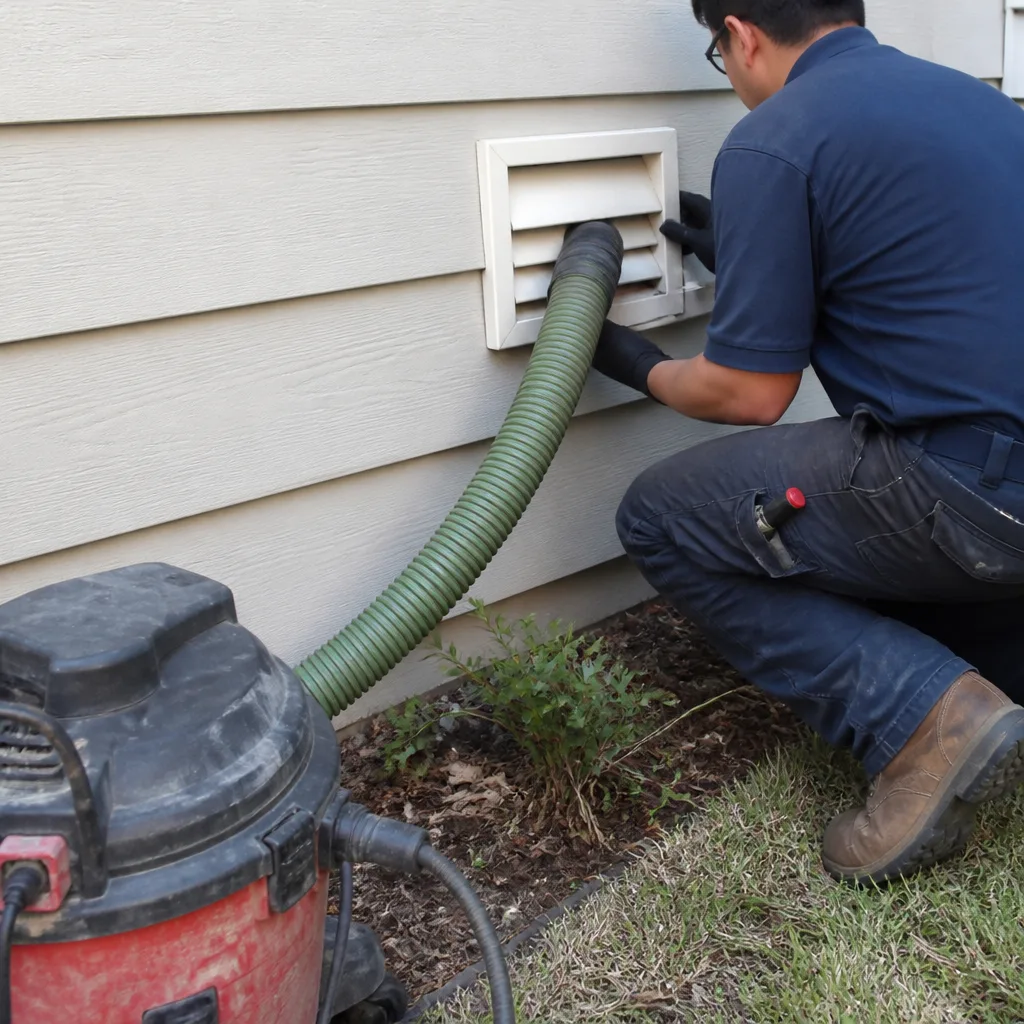
- Dryer vent lint clearing at the exterior cap. The final section of a dryer vent run, where the duct terminates outside the home, is accessible to any homeowner with a screwdriver and a brush. Removing the exterior vent hood and clearing the lint that accumulates there improves dryer performance and reduces fire risk between professional dryer vent cleanings in Houston. This is a genuinely useful task because that exterior cap is where birds nest, where lint cakes in the humid Houston air, and where airflow restrictions most often begin. But understand its limits: it clears the last few feet of the run, not the twenty or thirty feet of pipe running through your walls and attic.
These four tasks, done regularly, will keep your system running better between professional cleanings. They will not replace professional cleaning. Think of them as the equivalent of brushing your teeth between dental visits: necessary, valuable, and insufficient on their own.
When DIY Duct Cleaning Is Risky in Houston
There are specific circumstances where a DIY duct cleaning attempt in a Houston home is not merely ineffective but actively dangerous to your property and your family’s health. These aren’t edge cases. Given Houston’s climate and housing stock, they describe a significant portion of the homes in the metro area.
The first category is any home that has experienced water intrusion. Houston’s flood history is written into the walls and crawlspaces of thousands of homes, and even homes that have never flooded during a named storm deal with AC condensate leaks, roof penetrations, and the simple reality of 75% average relative humidity. When water enters a duct system, it creates conditions where organic growth occurs quickly. Agitating that growth with a brush and a drill without proper filtration disperses spores throughout the living space. This is not an overstatement: mold spores settle into carpet, upholstery, and bedding, and they’re extremely difficult to eliminate once distributed. If you suspect mold in your ducts, do not attempt any DIY agitation. A professional assessment with proper containment and HEPA filtration, such as the Abatement Technologies units our Kestrel Air Duct Houston home team uses, is the only responsible approach.
The second category is homes with flexible ductwork. A meaningful portion of Houston’s suburban housing stock uses flex duct for at least part of the system, particularly in attic runs. Flex duct is a wire-reinforced plastic tube with a thin inner liner, and that liner tears easily. The stiff nylon brushes sold in hardware store kits are sized for rigid metal ductwork. Run one through flex duct and you’ll find the brush catches on the wire spiral, rips the liner, and creates a leak that draws hot Houston attic air directly into your air conditioning, wasting energy and pulling insulation particles into the airflow. Once a flex duct liner is torn, the only proper repair is replacing that section of duct. The cost of that repair exceeds the cost of a professional cleaning by a wide margin.
The third category is any home with a zoned system, which is common in larger Houston homes. Zoned systems use motorized dampers inside the ductwork to direct conditioned air to different parts of the house. Those dampers are controlled by actuators that can be damaged by a brush run through them. If you damage a zone damper, your system will no longer heat or cool that zone properly, and the diagnostic process to identify and repair the damage can be expensive. Professional cleaning with negative-air equipment works around dampers rather than through them, preserving the components in the process.
The Honest Cost Comparison: Rental Equipment vs. Hiring a Pro
The DIY math often looks compelling on the surface. A brush kit from a hardware store costs $25 to $40. A professional duct cleaning in Houston runs between $300 and $600 for a typical single-family home, depending on the number of systems, the size of the home, and the accessibility of the ductwork. On paper, DIY saves you at least a few hundred dollars. The problem is that the comparison isn’t actually between a brush kit and a professional cleaning. It’s between the brush kit and renting professional-grade equipment, because the brush kit doesn’t do the same job.
Here’s an honest cost breakdown for the Houston homeowner who wants to do this properly without hiring a company:
- Professional-grade portable negative-air unit rental: $150 to $250 per day, where they’re available at all. Houston equipment rental houses generally stock these for restoration contractors, not for homeowners, and availability is inconsistent.
- HEPA filtration upgrade: $40 to $80 per day if the base unit doesn’t include it. Given Houston’s humidity and the organic load in most local duct systems, running without HEPA filtration is a poor decision.
- Rotary brush system compatible with your duct dimensions: $75 to $150 per day. The consumer-grade brush kits are not compatible with professional negative-air units, and they don’t provide the same agitation quality.
- Access tools, drop cloths, sealing materials, and safety equipment: $60 to $120. You’ll need to seal off every register except the one you’re working, contain the area around the main access point, and protect flooring and furnishings throughout the work area.
- Your time: A first-time operator should expect the job to take a full day for a typical 2,000 square-foot Houston home. That’s if you have the access you need, which may not be the case. Many Houston homes have furnace or air handler installations in attics with limited headroom, which complicates access considerably.
That totals $325 to $600 in rental costs plus a full day of your labor, and the result is still not equivalent to hiring an experienced professional. When we clean ducts in Houston, our technicians bring thousands of hours of combined experience to the job. They know how to access systems in tight attic spaces, they know how to identify and work around zone dampers and other internal components, and they carry the professional air duct cleaning equipment to do the job thoroughly. More importantly, the job is done under the Kingswell Guarantee: a written price before work begins, arrival within the defined window, a clean job site, and a written guarantee on the work. If the job falls short within the guarantee period, we return and make it right at no charge. That’s a backstop no equipment rental counter offers.
How to Tell If a Contractor’s Equipment Is Actually Professional Grade
Not every company that calls itself a professional air duct cleaner in Houston is actually operating professional-grade equipment. The industry has a low barrier to entry, and there are operators who charge professional rates while running the same class of equipment you could buy at a hardware store. Dale Whitmore, who has led Kestrel Air Duct Houston since the company’s founding under the Kingswell Guarantee in 2004, has seen what happens when homeowners don’t ask the right questions. Here’s how to protect yourself before you book.
First, ask what equipment the technician will bring to your home, and insist on a specific answer. A legitimate professional will name their equipment without hesitation. Rotobrush rotary brush systems, Nikro negative-pressure units, and Abatement Technologies HEPA filtration are established, recognized brands in the industry, and those are precisely the tools our Houston technicians run on every job. If the company answers with vague language or describes a “special vacuum system” without specifics, that’s a red flag. Ask for the make and model of their primary extraction unit. A company running real equipment will know it off the top of their head.
Second, ask about the airflow capacity of their extraction unit. Professional-grade negative-air machines move 2,000 cubic feet per minute or more. This is not a marketing number; it’s the physical specification that determines whether the system can reverse airflow through an entire duct network or merely pull debris from one branch at a time. A portable unit that moves 400 or 600 CFM is meaningfully better than a shop vac and still not adequate for a whole-home cleaning. If the company can’t tell you the CFM rating of their equipment, they probably don’t know it, which means they probably don’t have equipment worth bragging about.
Third, ask about their process for containing debris during cleaning. A legitimate professional will describe sealing registers, maintaining negative pressure throughout the cleaning process, and using HEPA filtration to keep loosened particles out of the living space. If their answer amounts to “we vacuum the vents,” that’s a shop vac operation with extra steps. The whole point of professional equipment is that it removes contamination from your home entirely rather than redistributing it. Any company that doesn’t understand that distinction doesn’t understand the service they’re selling.
Why Houston’s Climate Changes the Duct Cleaning Math
Duct cleaning advice written for a homeowner in Phoenix or Denver doesn’t always translate to Houston, and the reason is simple: moisture. For Seasonal Air Duct Cleaning Care for Houston: Year-Round Homeowner’s Guide, understanding this local factor is essential. Houston averages 75% relative humidity in the mornings, even during the driest months of the year. That humidity has real consequences for what lives and grows in your ductwork, and it changes both the frequency with which cleaning is needed and the risks associated with doing it wrong.
In dry climates, the debris that accumulates in ducts is predominantly inorganic: dust, sand, fiberglass particles from insulation, pet dander. It’s unpleasant but relatively inert. In Houston, the dust load in a typical duct system includes organic material: mold spores, mildew, pollen, and the sticky matrix that forms when those particles bind with ambient moisture. That film adheres to duct walls and resists simple air movement. It requires mechanical agitation to dislodge, and once dislodged, it requires concurrent negative-air extraction to remove. A brush kit without adequate extraction doesn’t remove this material; it breaks it loose and lets it circulate through your living space.
Houston’s cooling season also runs dramatically longer than most parts of the country. Many Houston HVAC systems run air conditioning from March through November, which means the system is moving air through the ductwork for nine or ten months a year. That’s significantly more annual air movement than a system in a temperate climate, which means more debris in transit, more deposition on internal surfaces, and more opportunity for that debris to interact with the condensed moisture that forms on the coil and inside the supply plenum during humid conditions. The same home in a drier climate might reasonably go five to seven years between duct cleanings. A Houston home with pets, high system runtime, and a few years since the last cleaning is a different situation entirely.
There’s also the post-storm factor. Houston’s weather, from spring thunderstorms to hurricane season, forces water into places it doesn’t belong with regularity. Attics leak, soffit vents fail, and the humid air itself condenses inside uninsulated duct runs in unconditioned attic spaces. When that happens, the resulting moisture creates conditions where organic growth occurs within days, not months. A duct system that was clean and dry before a storm can be a problem after one. That’s a Houston reality no guide written for a national audience will tell you about, and it’s one reason we recommend Houston homeowners schedule a visual inspection of their ductwork once a year, particularly if they’ve had any water intrusion event in the previous twelve months.
Common Mistakes to Avoid
- Running a brush through flex duct with a consumer kit. The stiff nylon bristles on hardware store brush kits are designed for rigid metal ductwork. In flex duct, they catch the wire spiral and tear the inner liner, creating leaks that draw hot, dusty attic air into your conditioned space. Houston’s hot attics make this problem worse, since the air being drawn in is 130 degrees or more in summer.
- Using a shop vac connected to a register without sealing the rest of the system. A registered professional system works under negative pressure across the entire duct network. A shop vac at one register just pulls air from the path of least resistance, which is usually the register right next to it. The majority of the system remains untouched.
- Ignoring the return side of the system. Homeowners typically focus on the supply registers, the ones that blow air into rooms. But the return side, where air is pulled back to the air handler, often carries a heavier dust load. A DIY cleaning that addresses supplies only leaves the returns untouched, and the system will redistribute that debris within weeks.
- Disturbing suspected mold without professional containment. If you see discoloration in your ducts and you disturb it with a brush, you’re releasing spores into the air your family breathes. In Houston’s climate, those spores find moisture and organic material easily, and they settle quickly into fabrics and carpets. Professional assessment with proper containment is not optional in this scenario.
- Assuming the AC coil is clean because the ducts are. The evaporator coil is the component where condensation forms every time your AC runs, and it’s the most common site for biological growth in the entire system. Duct cleaning doesn’t clean the coil. A professional cleaning can and should include coil inspection, but a DIY duct cleaning never touches it.
- Skipping dryer vent cleaning because the ducts were just done. Duct cleaning and dryer vent cleaning are separate services that address separate systems. Your HVAC ducts and your dryer vent are not connected. If Kestrel cleaned your air ducts, your dryer vent still needs its own professional dryer vent cleaning in Houston on its regular schedule.
- Trusting a cheap quote without checking equipment. The Houston market has operators who charge professional rates and run consumer-class equipment. If the price seems substantially lower than the $300 to $600 range for a typical home, ask hard questions about what equipment is actually coming to your house. A cheap cleaning that redistributes debris is more expensive than a proper cleaning in the long run.
When to Call a Professional
There are situations where the decision isn’t really a decision. If you’ve had water intrusion of any kind, including a roof leak, an AC condensate overflow, or a flood event, you need a professional assessment before you do anything else. If you see visible mold growth on or inside your registers, close them and call a professional. If you’re experiencing symptoms in your home that align with poor indoor air quality, such as persistent allergy symptoms, sinus irritation, or unexplained dust accumulation on surfaces within days of cleaning them, the duct system is a likely contributor and deserves a professional evaluation.
If you’re in the Houston area and want an honest assessment of whether your ducts actually need cleaning, Kestrel Air Duct Houston offers free estimates. Call (254) 347-2738 and a live person will answer, any time of day. Dale Whitmore built this company under the Kingswell Guarantee starting in 2004, and the standard hasn’t changed: a written price before work begins, arrival within the window we gave you, a clean job site when we leave, and a written guarantee on the work. If it’s not done right, we make it right, or we come back and do it again at no charge.
Frequently Asked Questions
Professional air duct cleaning in Houston typically costs between $300 and $600 for a single-family home with one HVAC system. Larger homes, zoned systems, and systems that haven’t been cleaned in many years can run higher. At Kestrel Air Duct Houston, every job operates under the Kingswell Guarantee, which means the written price is in your hands before a single vent is touched. No surprises, no door-step revisions. Call (254) 347-2738 for a free estimate on your specific home.
Yes, for specific maintenance tasks, and no for actual duct cleaning. Homeowners should clean their registers and grilles, replace filters regularly, do visual inspections, and clear dryer vent lint at the exterior cap. Those tasks are safe, effective, and genuinely useful. But anything that involves agitating debris inside the duct walls without professional negative-air extraction is a poor idea, because consumer vacuums simply don’t have the airflow capacity to remove what they dislodge.
Look at your registers with a flashlight. If you see visible dust accumulation on the duct walls behind the register, that’s a sign the system is due for cleaning. Other indicators include excessive dust on household surfaces within days of cleaning, unexplained allergy symptoms at home, visible mold growth in or around registers, and any history of water intrusion, which is common in Houston homes. If you’re not sure, a free estimate from a professional will give you a straight answer without obligation.
Yes, it’s possible to rent professional-grade negative-air machines and rotary brush systems from equipment rental houses in Houston, but availability is inconsistent and the total cost lands between $325 and $600 for a one-day job. That’s the same range as hiring a professional, and when you factor in the experience gap, the access challenges of Houston attics, and the guarantee a professional provides, the rental route rarely makes sense for a homeowner doing this once.
A consumer drill brush kit is a stiff brush on a flexible rod. It agitates debris but has no extraction capability, meaning it redistributes dust deeper into the system. A Rotobrush system combines rotary brush agitation with concurrent vacuum extraction in a single tool, dislodging debris at the duct wall and pulling it out of the system in the same pass. That combination is what makes professional cleaning categorically different from a DIY attempt. Kestrel Air Duct Houston technicians run Rotobrush rotary brush systems, Nikro negative-pressure units, and Abatement Technologies HEPA filtration on every job.
Most Houston homes benefit from professional duct cleaning every 3 to 5 years, though homes with pets, high system runtime, recent renovation work, or water intrusion history may need it more often. Houston’s long cooling season and high humidity mean more air movement and more organic debris than drier climates, so the interval here tends to skew shorter than the national average of 5 to 7 years. A visual inspection once a year is a good practice regardless of cleaning schedule.
The Bottom Line
The DIY versus professional debate for air duct cleaning in Houston comes down to physics, not effort. Consumer vacuums push air into duct systems; professional negative-air machines pull it out. That single difference determines whether a cleaning removes contamination from your home or redistributes it through your living space. DIY has its place: registers, filters, visual inspections, and exterior dryer vent clearing are all worthwhile homeowner tasks. But the moment debris inside the duct walls needs to be dislodged, you need extraction capacity that no hardware store tool provides. In Houston’s humidity, getting this wrong means spreading organic material through your home rather than removing it. The math favors professional cleaning, and the guarantee backing that work is what separates a one-time job from a standard you can hold a company to. See our more guides & resources for additional homeowner advice.
Written by Dale Whitmore, Owner at Kestrel Air Duct Houston, serving Houston since 2004.
See the difference
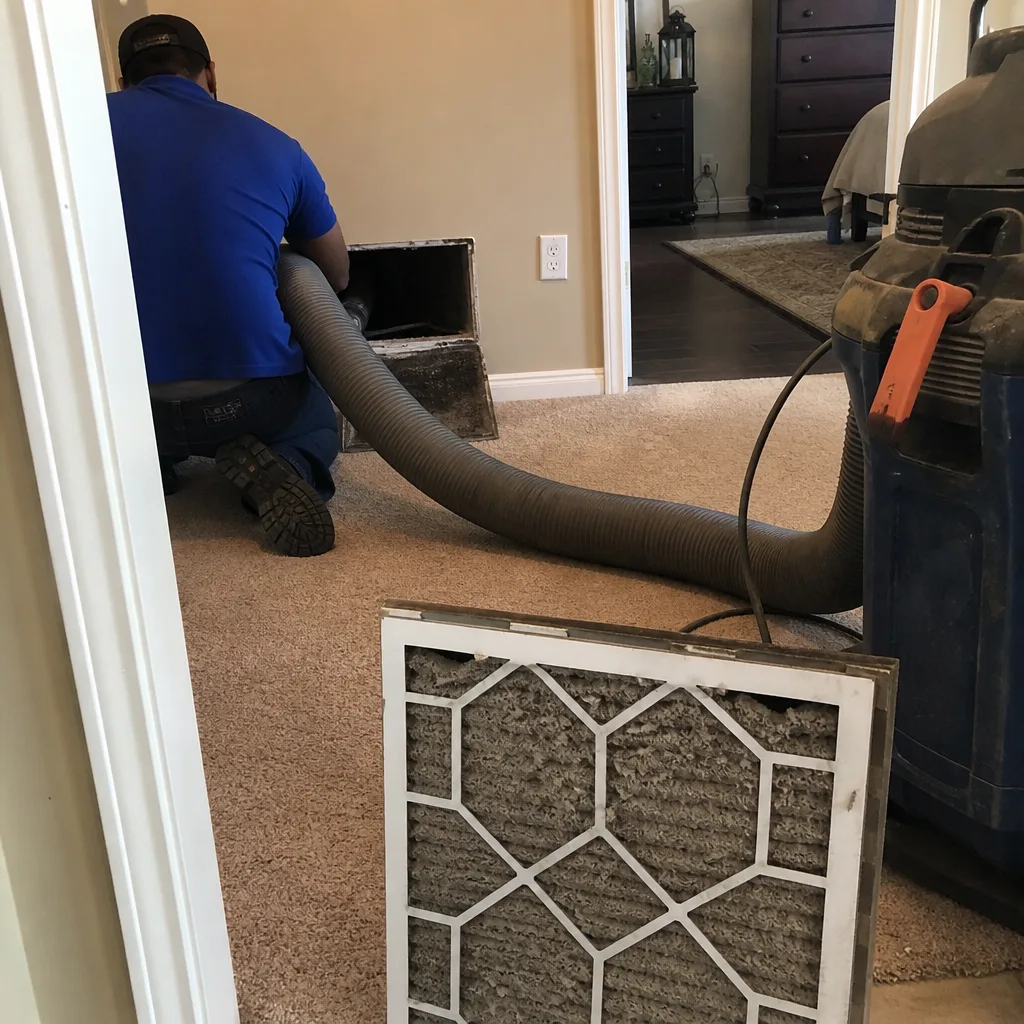 Before
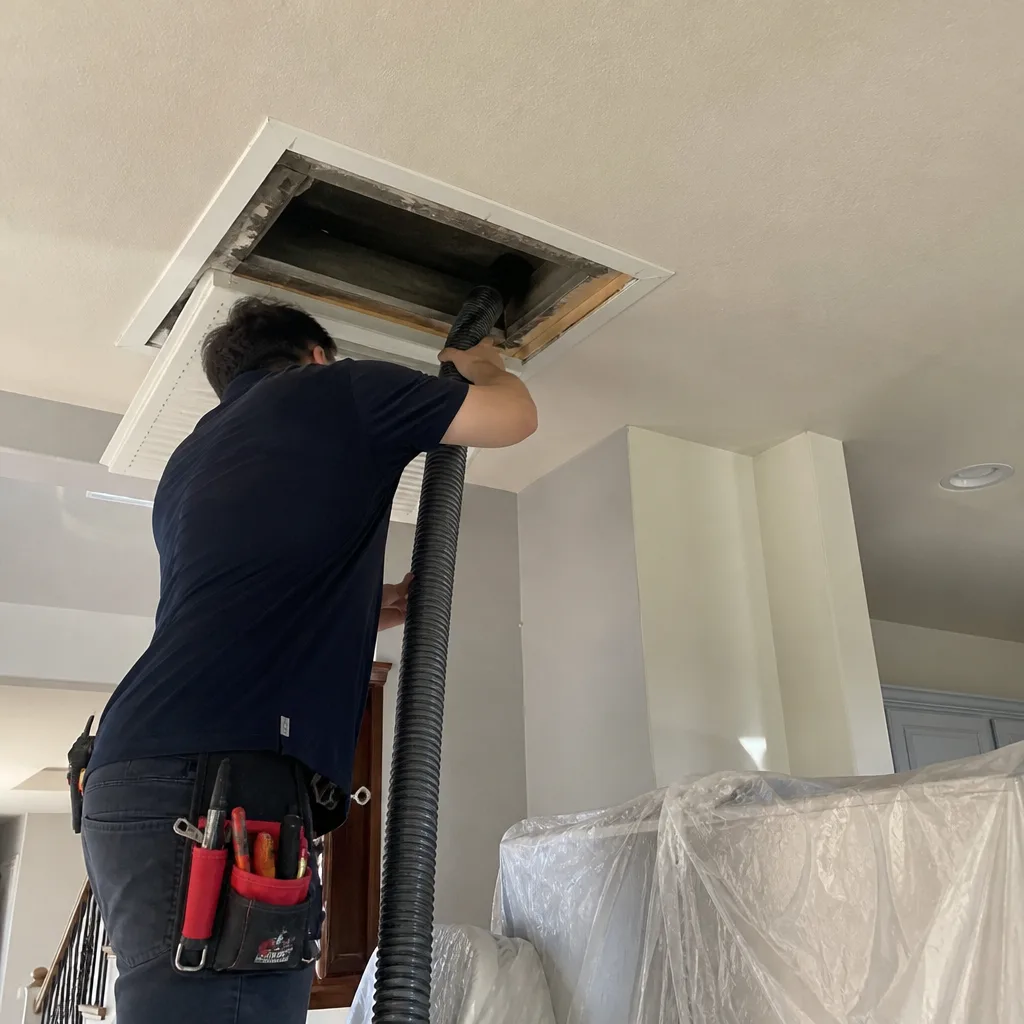 After
After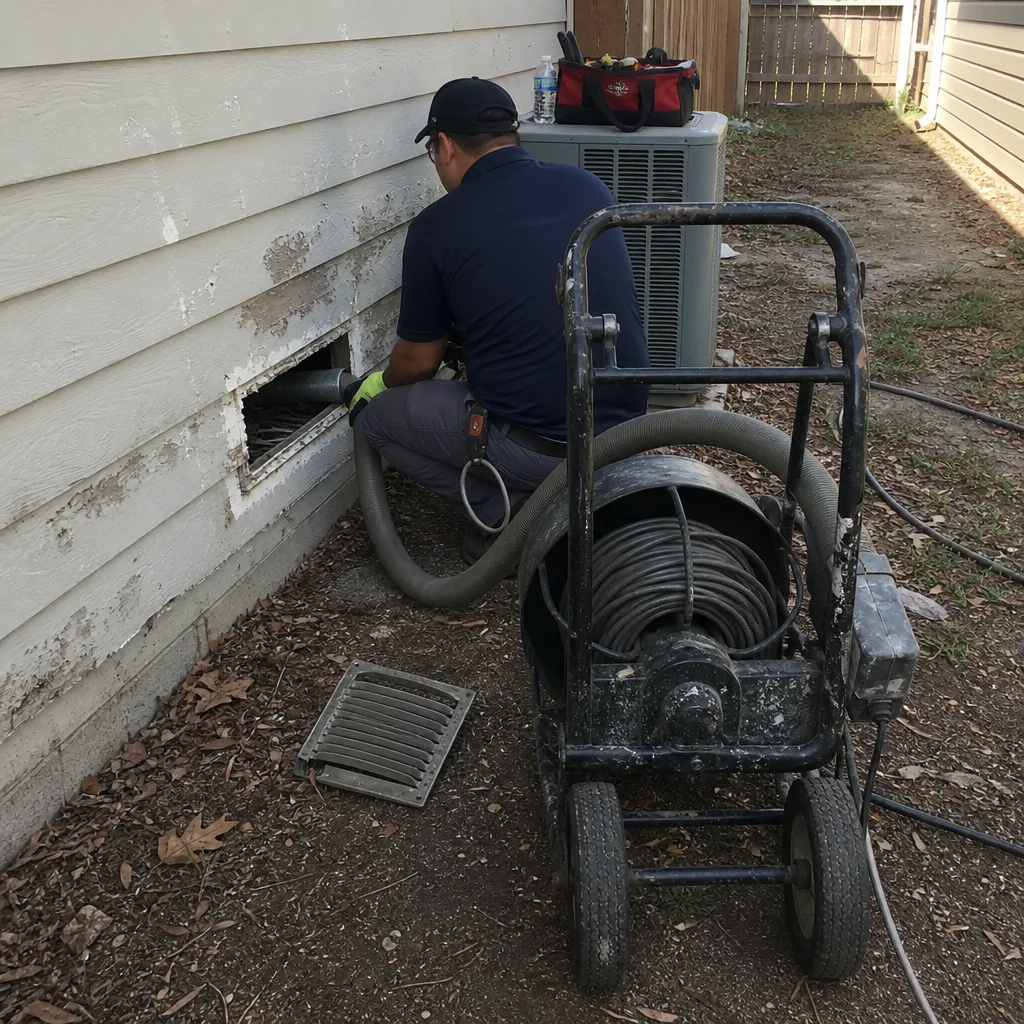 Before
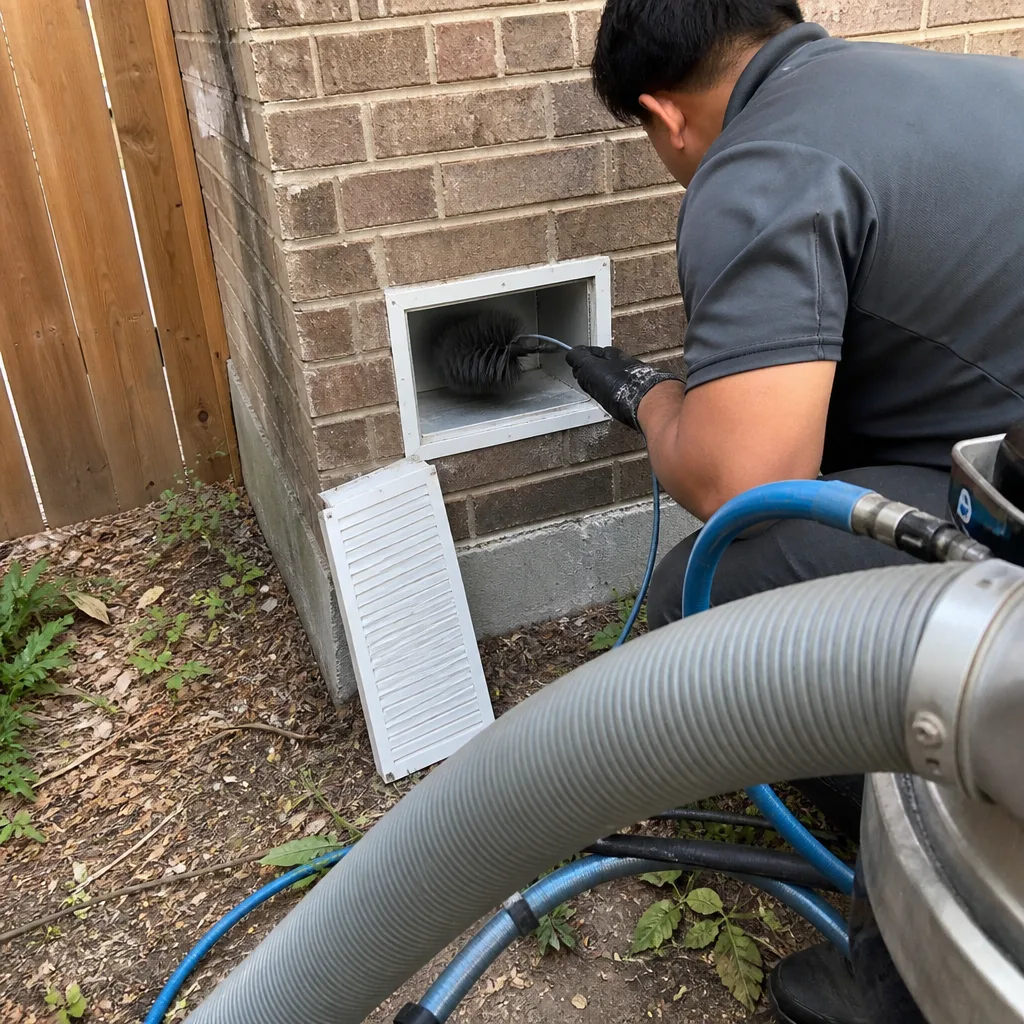 After
After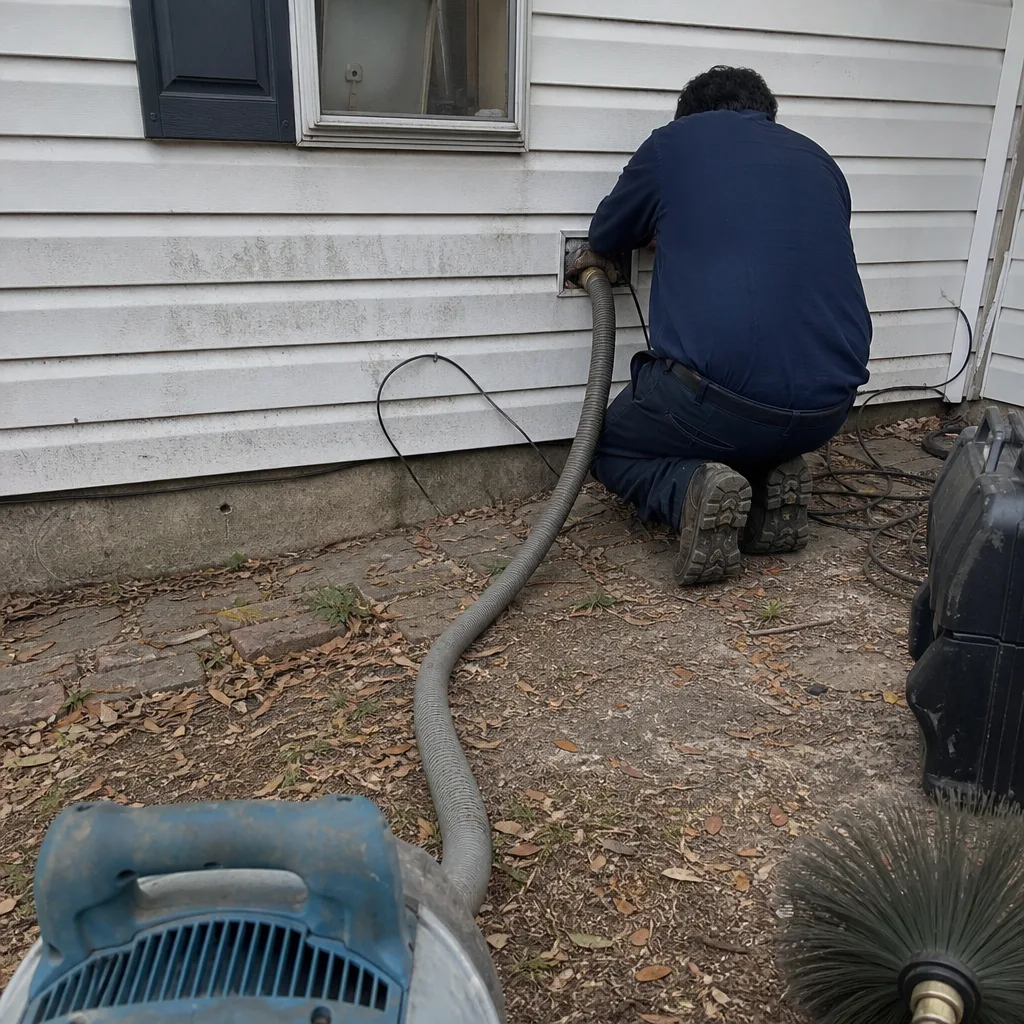 Before
 After
After